REVIEW · TENERIFE
Tenerife: Teide and Stars
Book on GetYourGuide →Operated by Volcano Teide · Bookable on GetYourGuide
Teide at night turns the whole sky into a classroom. What I like most is the Starlight Foundation-certified guiding and the chance to watch the sky after one of Tenerife’s best sunsets. The second big win: you get real astronomy gear (long-range telescopes) and explanations that actually land. One thing to consider is that it’s cold up high, and the rules are strict about clothing and shoes—so packing lightly can ruin the mood fast.
I also appreciate that the experience is built around how Teide changes as the light fades: early evening in Teide National Park, then a transition through plant layers as you head toward sunset viewpoints. You choose how the day ends, with either a cable car ascent for sunset from higher up or a late-afternoon stop at the Teide Solar Observatory. The guide team I saw praised most were Abel and Josef, and that matters here—stargazing goes from cool to unforgettable when the person pointing things out knows their stuff.
In This Review
- Key points before you go
- Why Teide at Night Feels Different Than a Typical Stargazing Tour
- Two Options: Cable Car Sunset Views vs Teide Solar Observatory Workshop
- Option 1: Cable car to altitude, with sunset from a viewpoint
- Option 2: Late-afternoon Teide Observatory visit, then stargazing
- The Early-Evening Teide National Park Part You Shouldn’t Rush
- Sunset at Teide: What You’re Really Paying For
- Stargazing with Long-Range Telescopes and Starlight Guides
- Price and Value: Is This $86 Ticket a Good Deal?
- Timing, Temperature, and the Logistics That Actually Matter
- What to Pack and Wear (Because Rules Are Strict)
- Who This Experience Suits Best (and Who Might Find It Tough)
- Should You Book Teide and Stars?
- FAQ
- How long is the Teide and Stars experience?
- What’s included in the stargazing part?
- Do I get food during the tour?
- Which languages are the guides?
- Are children allowed?
- What should I wear and bring?
- Who should avoid the observatory or cable car option?
Key points before you go
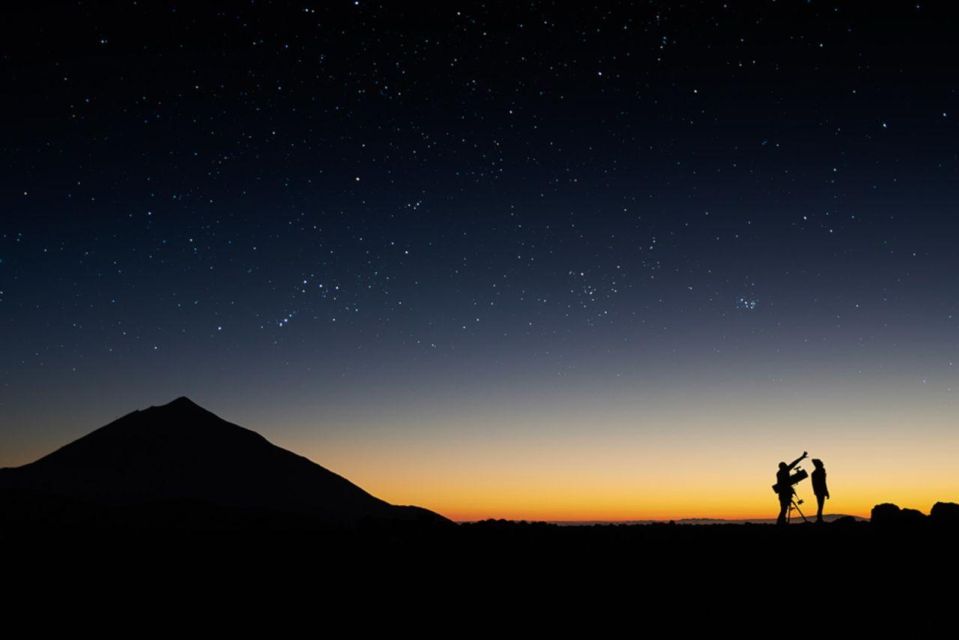
- Starlight-certified astronomy guides run the observing, so you’re not just looking through equipment with no context.
- Long-range telescopes help you see far more than the naked eye in a high-altitude setting.
- Two add-on paths: cable car for a higher sunset view, or the Teide Solar Observatory workshop in the afternoon.
- Teide National Park shifts fast with elevation, from rural areas up toward pine forest before the sky show.
- Bring warm layers and closed-toe shoes—low temperatures are part of the deal.
Why Teide at Night Feels Different Than a Typical Stargazing Tour
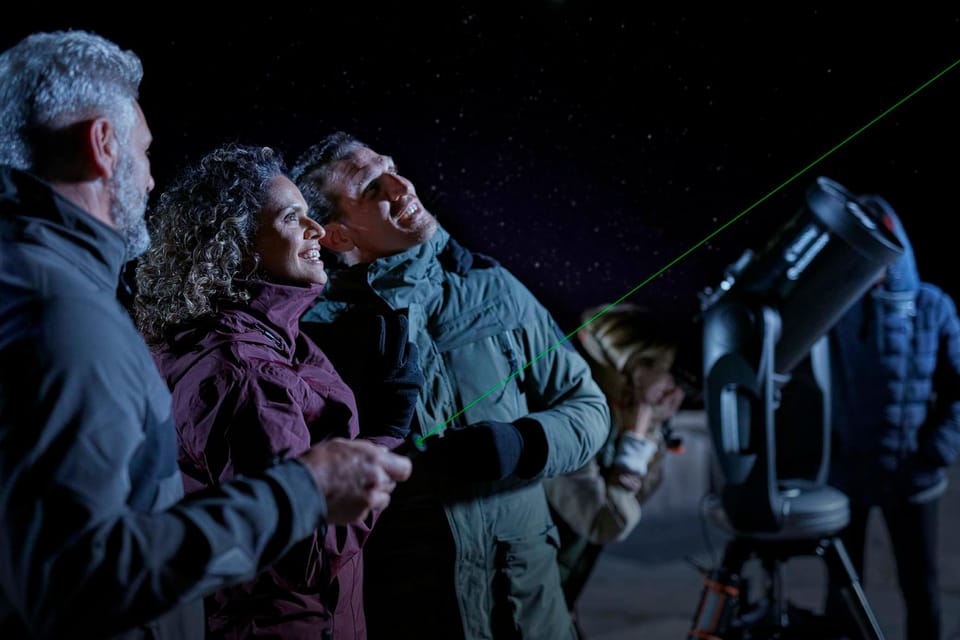
Teide is already special in daylight, but at night it becomes something else. The big reason is the combination of elevation and the way the park sits above the cloud line. When the sun drops, the air and sky get cleaner, and your eyes have a real chance to adjust.
I also like how the experience is not only about the stars. You start in Teide National Park during early evening, then you watch the light shift through real terrain: vegetation changes with altitude, and the air feels thinner as you go higher. That “build-up” makes the stargazing portion feel earned.
There’s a fun, educational tone to the observing too. The astronomy guides are certified by the Starlight Foundation, and they’re set up to explain what you’re seeing in a way that’s approachable, not lecture-heavy. If you’ve ever left a planetarium impressed but confused, this style tends to work better.
You can also read our reviews of more tours and experiences in Tenerife.

Two Options: Cable Car Sunset Views vs Teide Solar Observatory Workshop
This experience has two distinct add-ons, and they change the feel of your day.
Option 1: Cable car to altitude, with sunset from a viewpoint
If you want the classic Teide drama, pick the cable car option. You ascend and descend by cable car, reaching 3,555 metres. From there, you watch the sun go down over Las Cañadas caldera and the Teide volcano, with views stretching to La Gomera, La Palma, and El Hierro.
A nice touch: this option also includes time that can feel like a proper break before stargazing. After you return to the base station, you’ll have time for a picnic-style Teide dinner (food is only included with this cable car ticket option). Then you shift from “look at the planet” to “look at the universe.”
Option 2: Late-afternoon Teide Observatory visit, then stargazing
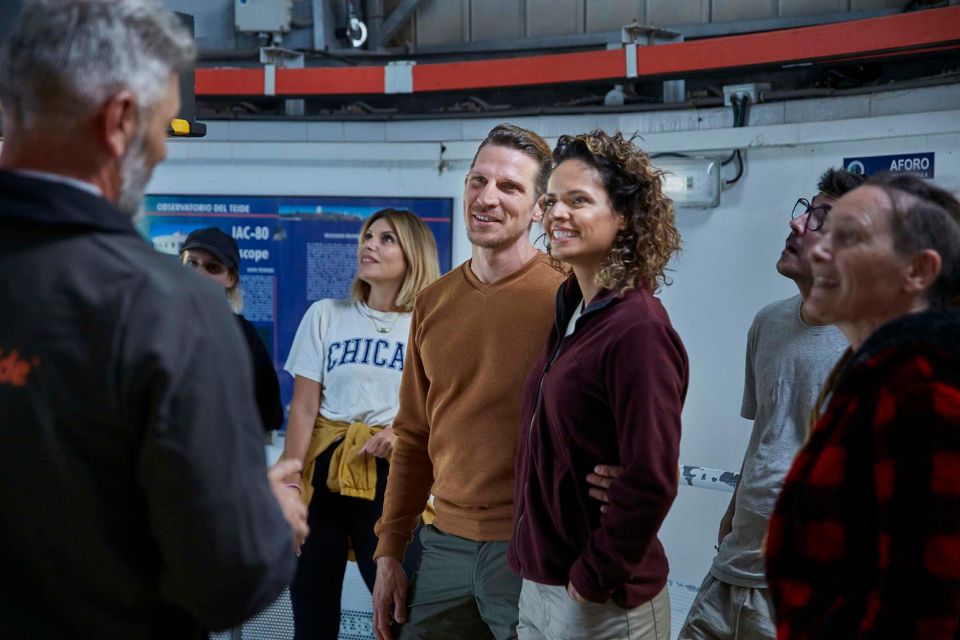
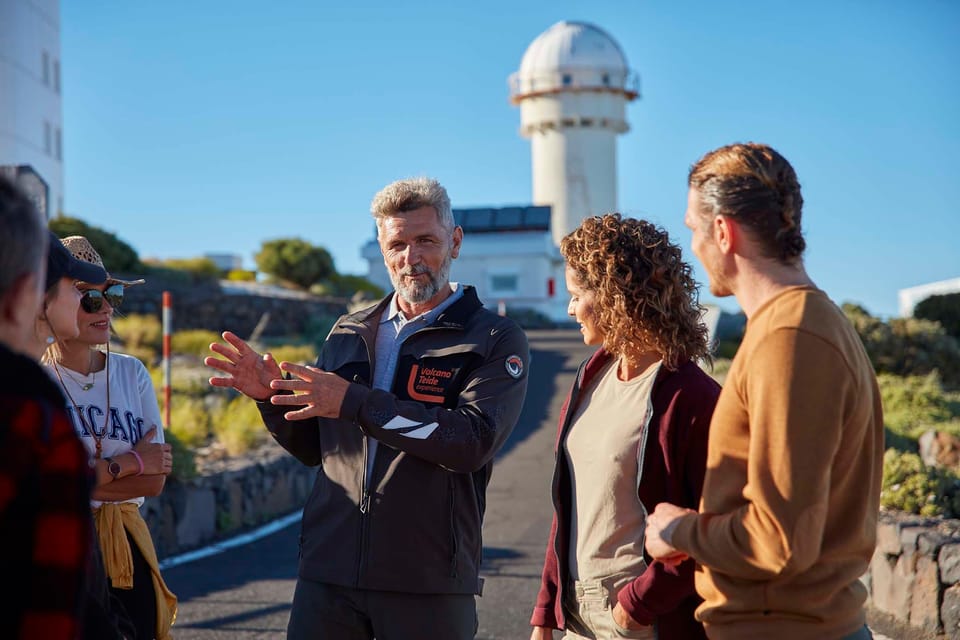
If you’d rather learn first and observe second, the Teide Solar Observatory option is the smarter match. You visit in the late afternoon, when you can experience astrophysics through hands-on elements and telescope time.
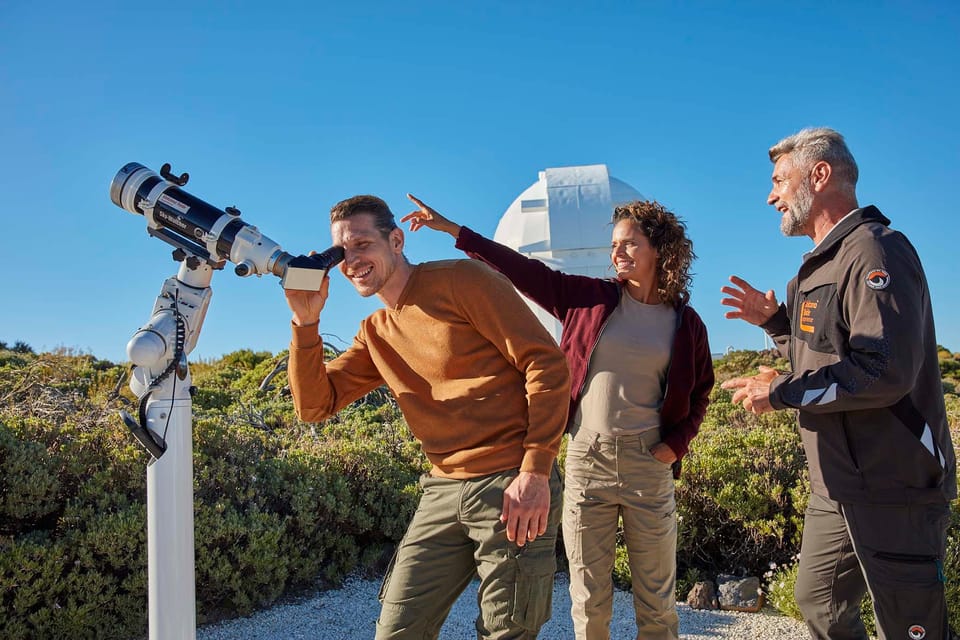
What you do there is specific: a guided tour includes a fun workshop about projects at the Canary Islands Institute of Astrophysics, plus observing solar flares and sunspots through a solar telescope. You also get to explore inside a nocturnal telescope, which sets you up well for what happens later when the sky turns dark.
One practical note: the observatory option involves walking and stairs, and it’s not recommended if you have issues like anemia, heart or breathing problems, or reduced mobility.
The Early-Evening Teide National Park Part You Shouldn’t Rush
Your evening begins in Teide National Park before it’s fully dark. You’ll be there as the park shifts from daytime normal into night-mode, which is exactly when your eyes start to notice things: shadows lengthen, colors cool, and the air feels crisp.
The experience is designed around changing elevation and vegetation. As you ascend toward higher points, you move through different layers, including rural terrain, high mountain plant life, and eventually pine forests. It’s not just scenery; it’s a real reminder that Teide’s height creates different microclimates.
For me, this matters because it helps you stop thinking of stargazing as a single event. Instead, it’s a sequence. You start in the park’s “in-between” time, you get your sunset, and then the telescopes come out when the sky is ready.
Sunset at Teide: What You’re Really Paying For
Sunset is listed as a highlight for a reason. Teide is known for dramatic light, and the way it sits above Tenerife often gives you a view that feels bigger than it should from an island.
If you choose the cable car path, you get that sunset from higher elevation—watching the caldera and volcano as the light fades. If you don’t, you still get a dedicated sunset moment inside the national park from a fabulous viewpoint (plus time to transition into the observing phase).
Here’s my practical advice: treat sunset like the main act, even if you came for the stars. The first time you see Tenerife’s sky turn after a strong sunset, it changes how you experience the night. It also buys you time for your eyes to adjust once darkness arrives.
Stargazing with Long-Range Telescopes and Starlight Guides
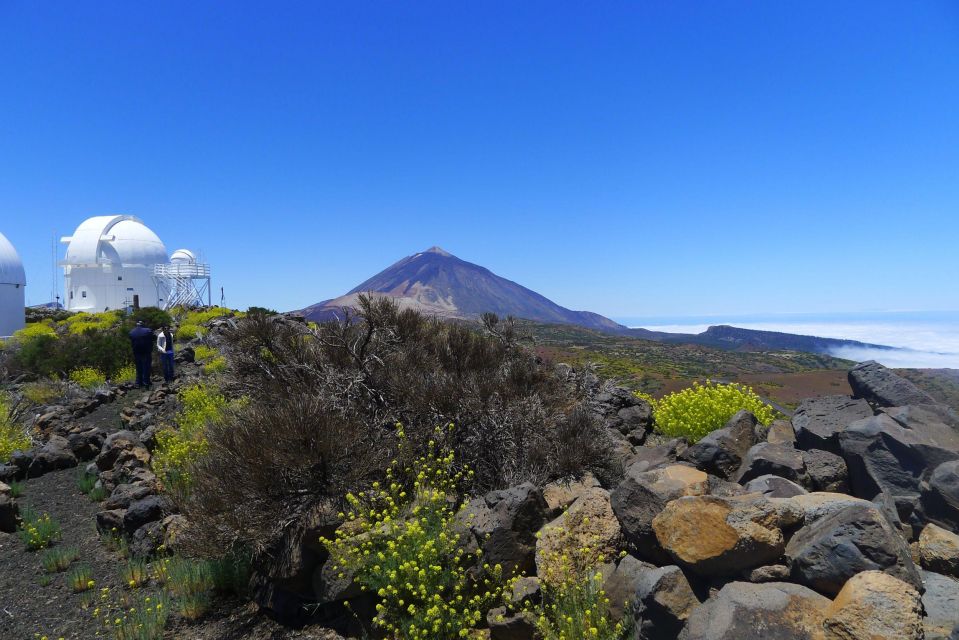
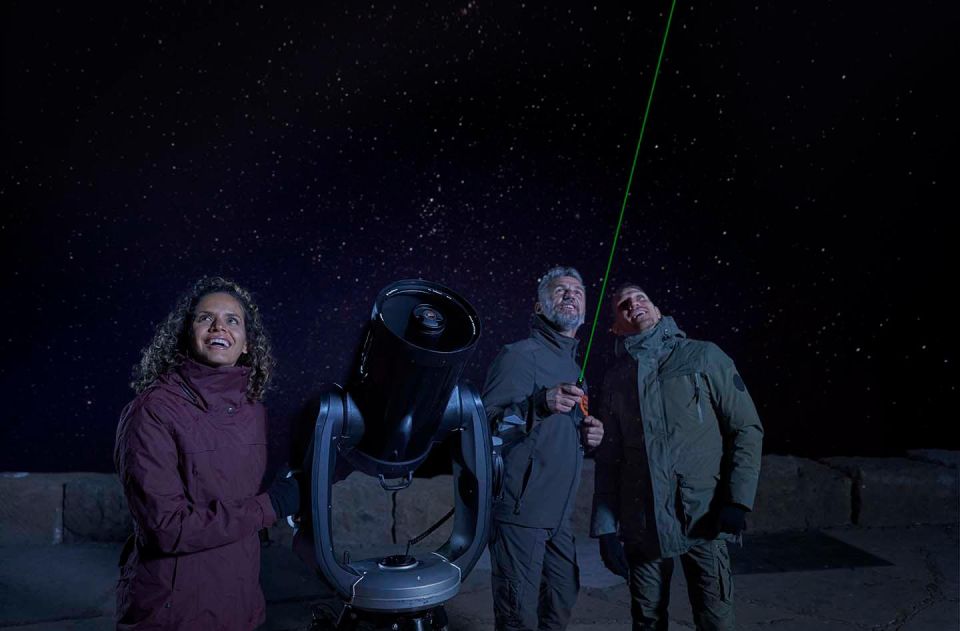
Once it’s dark enough, you’ll observe with long-range telescopes and certified astronomy guides. This is the core of the tour, and it’s where the experience usually wins or loses.
The guides’ job is to make the sky make sense. They don’t just point and hope you recognize something. The format is designed to be fun and educational, and that’s a big deal because the night sky can look empty if you don’t know what you’re hunting for.
One more reason the telescopes matter: you’re at high altitude, which helps with visibility. Add well-maintained observing equipment and guides trained to interpret what you’re seeing, and you get something more satisfying than a quick peek.
Also, the tour is explicitly built around the idea that Teide’s night sky is among the best. That’s exactly why the trip exists in the first place: you come to a place famous for clear skies, and you pair it with real astronomy support.
Price and Value: Is This $86 Ticket a Good Deal?
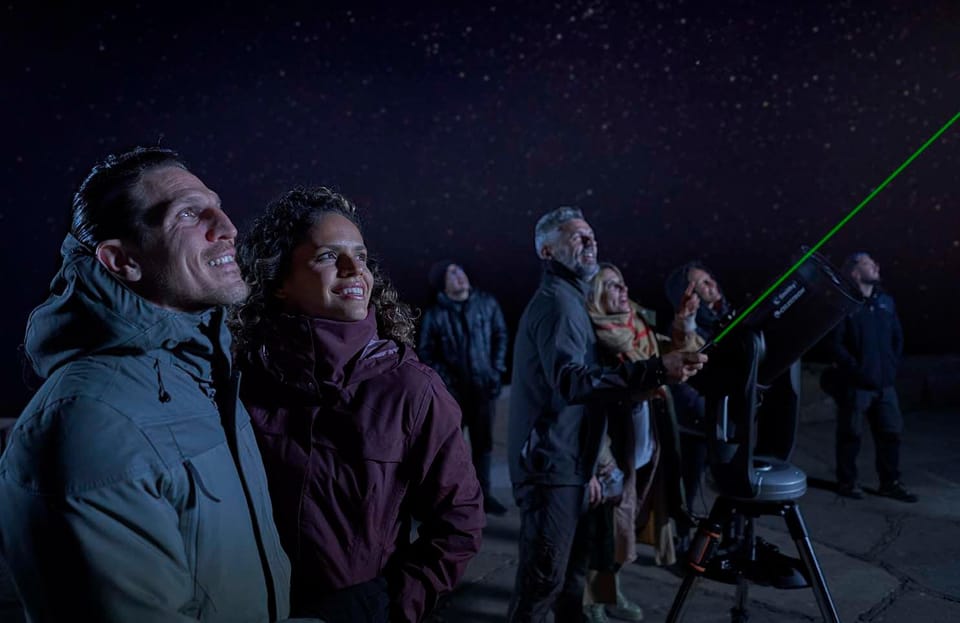
At about $86 per person for a 6.5 to 8 hour experience, you’re paying for a lot that’s hard to DIY:
- Round-trip transport from both north and south Tenerife
- A sunset stop in Teide National Park
- Guided observing with long-range telescopes
- Starlight-certified astronomy guides
That’s a strong bundle for one night. And because your time is managed—park first, sunset second, telescopes last—you don’t have to figure out timing, access, or what to do once you get there.
That said, there’s a value warning worth taking seriously. In feedback I saw, at least one person felt the observatory piece didn’t happen when they expected it, and another wanted a clearer timetable. So the value is best when you confirm your exact option and understand how the schedule flows for your chosen add-on.
If you want the cable car sunset plus dinner, the included food is part of the value. If you choose the observatory option, understand it’s a different experience with more walking and stairs—and not everyone will feel good doing that in the late afternoon.
Timing, Temperature, and the Logistics That Actually Matter
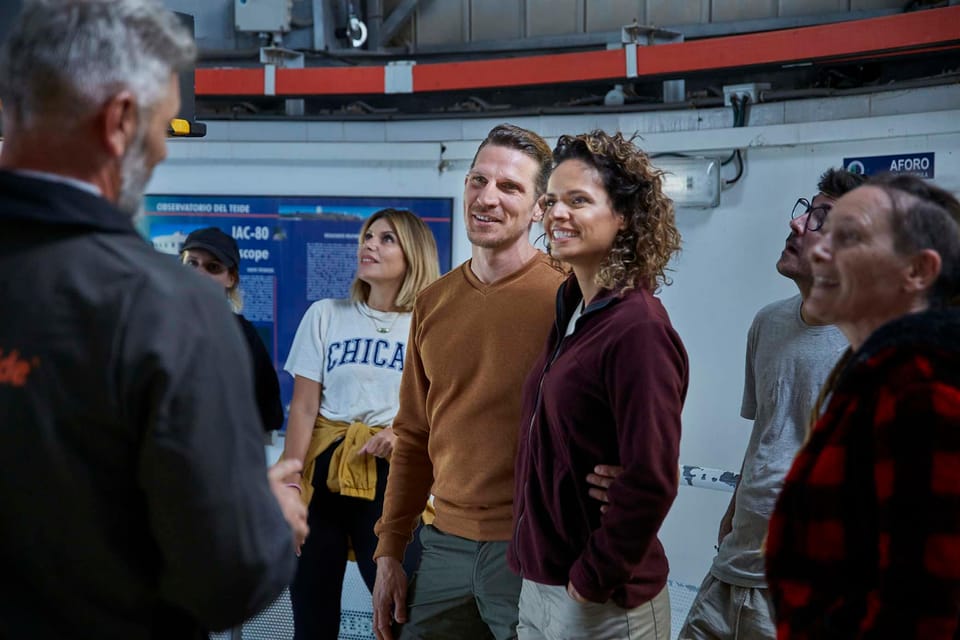
This tour runs 6.5 to 8 hours, and the difference is basically which option you pick. Cable car changes the structure, and the observatory visit adds another block in the afternoon.
The bigger practical issue is temperature. I’ve seen people assume “bring warm clothing” means a light jacket. On Teide at night, you should treat it as proper cold weather. Plan for roughly around 10°C, and dress like you’ll be standing still for a while.
Also keep in mind the clothing rules are real:
- No sandals or flip flops
- No shorts
- No open-toe shoes
Closed-toe shoes matter. Warm layers matter more. A hat helps too.
If you’re sensitive to cold, consider this your reminder that the stars come after a cold wait.
What to Pack and Wear (Because Rules Are Strict)
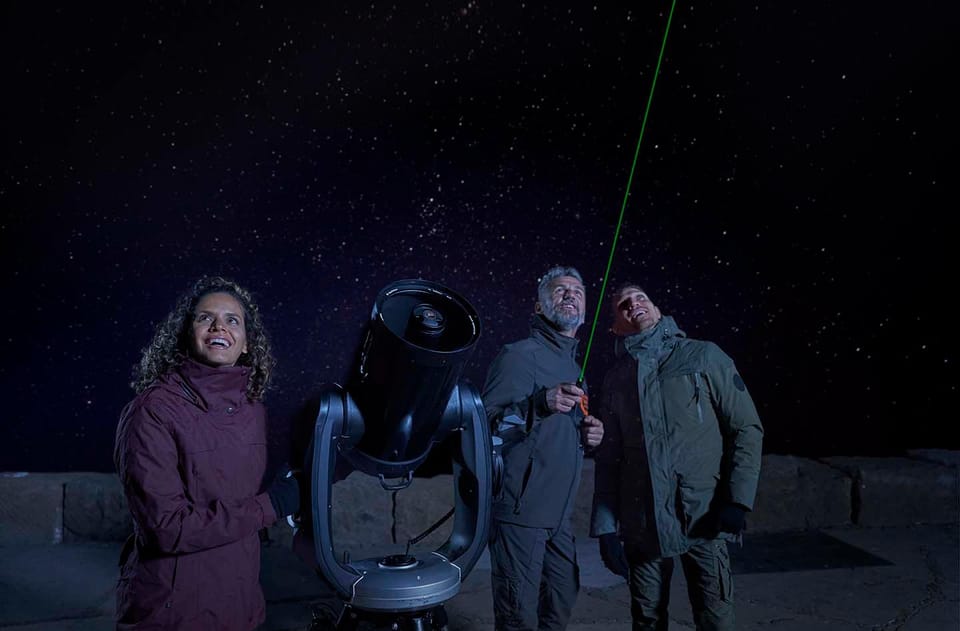
Bring:
- Warm clothing
- Hat
- Water
- Comfortable clothes
- Closed-toe shoes
Don’t bring:
- Sandals or flip flops
- Shorts
- Open-toed shoes
And the rules extend to who can join. Children under 8 aren’t allowed, and proof of age is required. Pets aren’t allowed either.
For the observatory option, avoid it if you have physical health concerns like anemia, heart or breathing problems, or reduced mobility, since you’ll move between places using paths and stairs.
For the cable car option, there are additional restrictions for safety at altitude. It’s not open to people with heart conditions, pregnant women, or certain physical disabilities or motor impairments due to evacuation risk requirements.
Who This Experience Suits Best (and Who Might Find It Tough)
This is a great match if you:
- Want an actual astronomy guide, not just a scenic night outing
- Love the combo of sunset + telescopes
- Prefer structured time and included transport
- Like learning, even if you’re not an astronomy nerd
You might reconsider if:
- You hate cold or don’t pack for it
- You need step-free access or have breathing/heart concerns (especially for the observatory option)
- You’re counting on the observatory visit but you chose an option that only includes sunset and telescopes
If you’re traveling with someone who gets overwhelmed by schedules, I’d still say this tour is doable, but I’d bring expectations into line. The experience moves through distinct phases, and it’s not meant to be a slow wander.
Should You Book Teide and Stars?
I’d book it if you want a night with real purpose: sunset views, guided observing, and equipment you don’t have to source yourself. The Starlight-certified guidance and telescope use are exactly what make the experience feel worth the effort.
I’d also book with two smart checks:
- Confirm which add-on you selected: cable car versus Teide Solar Observatory
- Plan for real cold and follow the footwear rules
One other tip: if you’re hoping for the observatory portion, don’t assume it’s guaranteed on every day. Road closures and local disruptions can happen, and the safest move is to double-check your exact inclusion before you go.
If those boxes are clear, this is a strong way to experience Tenerife at the hour when most people are asleep—and the sky is finally ready to show off.
FAQ
How long is the Teide and Stars experience?
It typically lasts between 6.5 and 8 hours, depending on which option you choose.
What’s included in the stargazing part?
You’ll have professional observation of the universe using long-range telescopes with astronomy guides certified by the Starlight Foundation. Transport and sunset in Teide National Park are also included.
Do I get food during the tour?
Food is not included unless you choose the option with a cable car ticket to ascend and descend, which includes a picnic-style Teide dinner.
Which languages are the guides?
The tour offers live guiding in English and Spanish. The Teide Observatory option isn’t available in French.
Are children allowed?
Children under 8 are not allowed, and proof of age is required.
What should I wear and bring?
Bring warm clothing, a hat, water, and comfortable clothes plus closed-toe shoes. Sandals/flip flops, shorts, and open-toed shoes are not allowed.
Who should avoid the observatory or cable car option?
The observatory visit isn’t recommended for people with certain health conditions (such as anemia, heart or breathing problems) or reduced mobility due to walking and stairs. The cable car option isn’t open to people with heart conditions, pregnant women, or certain mobility/evacuation-related limitations.