REVIEW · TENERIFE
Rock climbing in natural space.
Book on Viator →Operated by Adrenaline adventure Tenerfie · Bookable on Viator
Volcanic walls and calm coaching on Tenerife. I love how this trip blends a short walk into the barranco del Rey with hands-on climbing on real volcanic rock. You’ll feel the place quickly: an emblematic ravine over 200 meters, plus caves tied to ancient Guanche aborigines. Volcanic rock and a small max group of four make it feel personal instead of rushed.
My favorite part is the way the experience stays safety-first without killing the fun. Helmets, harnesses, rope, and carabiners are included, and you’re always secured to the rope as you climb. The guide (often highlighted for his steady, practical approach, including Igor) keeps you oriented and moving at a good pace, even if you’re new.
One thing to consider: this activity needs good weather. If conditions aren’t right, you’ll be offered a different date or a full refund, so keep your schedule flexible.
In This Review
- Key highlights at a glance
- Barranco del Rey: the real Tenerife setting for climbing
- How the 3-hour session actually flows
- Safety first, without turning it into a lecture
- Volcanic walls up to 20 meters: choosing routes that build skills
- Personalized attention in a group of four
- Price ($156.03) and whether it’s good value
- What to bring (and what not to count on)
- Weather, reschedules, and the one real catch
- Who should book this Tenerife rock climbing day
- Should you book this rock climbing experience in Tenerife’s barranco del Rey?
- FAQ
- How long is the rock climbing experience?
- What’s the maximum height you’ll climb?
- What safety gear is included?
- Is pickup and drop-off included?
- Do I need good weather?
- Is bottled water included?
- What language is the tour in?
Key highlights at a glance
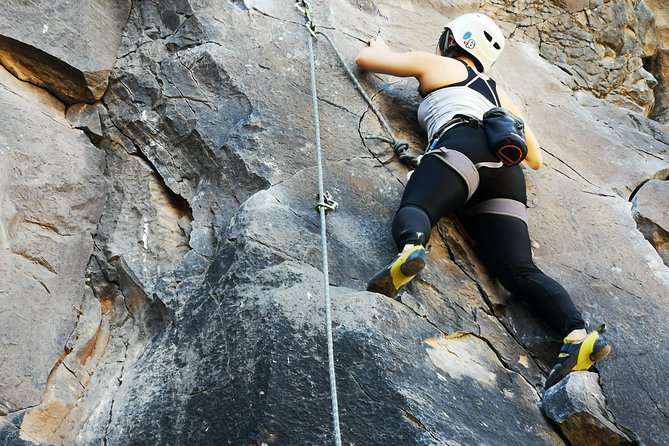
- Barranco del Rey setting: a ravine above 200 meters with caves linked to the Guanche past
- Up to 20 meters of climbing: multiple routes with different difficulty levels
- Always clipped in: helmets, harness, rope, and carabiners included for a secure feeling
- Small-group attention: limited to four travelers, so you get direct guidance when you need it
- Guides who teach, not just watch: routes chosen and paced for real skill-building
- Pickup and drop-off: transport included, returning you to the meeting point
Barranco del Rey: the real Tenerife setting for climbing
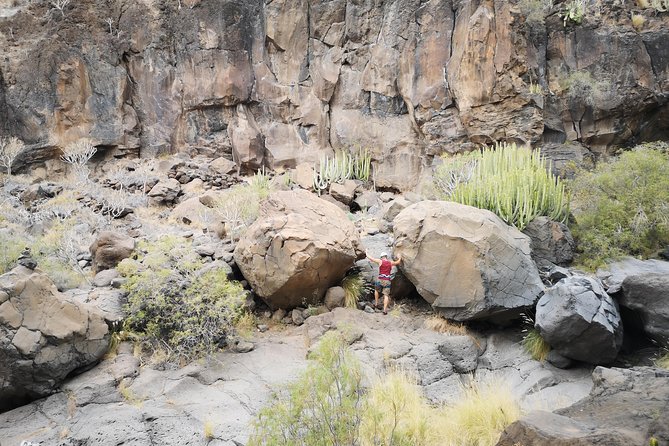
This is not a “stand around and look cool” type of climbing trip. You start by heading into the barranco del Rey area in Arona, and the experience begins with movement. There’s about a 20-minute walk along an old trail through the ravine, and that walk matters because it frames the climbing—slowly revealing the rock, the walls, and the setting around you.
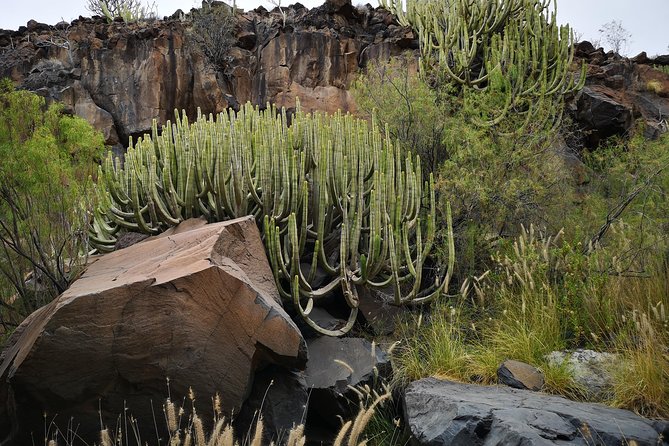
What makes this place special is the scale and the layers. The barranco del Rey is more than 200 meters high, and it’s associated with caves from ancient Guanche aborigines. Even if you don’t know the details of that history, you’ll feel why people settled here long ago: shelter, dramatic cliffs, and a landscape shaped by volcanic power.
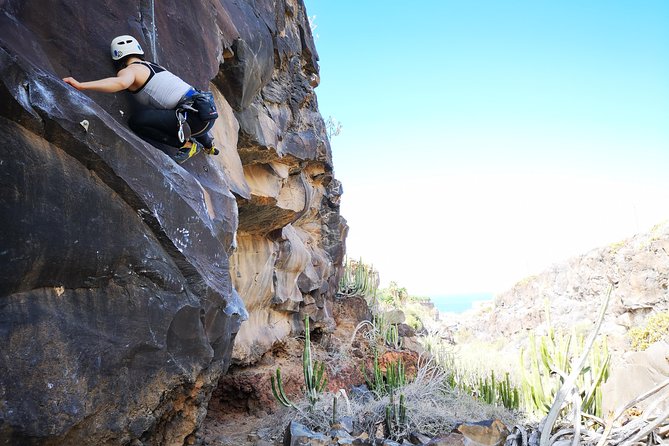
Then you arrive at the climbing walls, and the “where” changes from scenery to action. Volcanic rock is the star, with multiple walls built for different comfort levels. Instead of one big test, you get several attempts—enough to build confidence and learn how your body handles the holds.
You can also read our reviews of more tours and experiences in Tenerife.

How the 3-hour session actually flows
You’re looking at roughly three hours total, and the timeline is straightforward. The start time is 9:00 am, and the activity ends back at the meeting point, so you’re not left guessing about logistics.
The flow looks like this in practice:
1) Quick entry via the trail
You walk into the ravine for about 20 minutes. This is the calm-up part. It’s also when you’ll get the basics of what you’re about to do, so you don’t feel thrown straight onto a wall.
2) Gear-up and climbing setup
Once you’re at the climbing area, you’ll be fitted with the included safety gear: helmet, harness, and rope with carabiners. You’ll learn how you connect to the system and what to watch for while moving on the rock.
3) Try several walls, matched to your level
The walls reach up to about 20 meters, with different difficulty levels. You won’t just climb one route. You’ll test multiple walls so you can compare how technique and confidence change with height and route demands.
4) Wrap-up with a steady pace
The pacing is part of what people love. The guiding style described in reviews points to a pace that feels challenging but not frantic. That matters because the best learning moments often come when you get enough time to process what you just felt, not when everything is rushed.
A nice touch in the overall experience: the group is small enough that instructions don’t feel generic. You’re not competing for attention.
Safety first, without turning it into a lecture
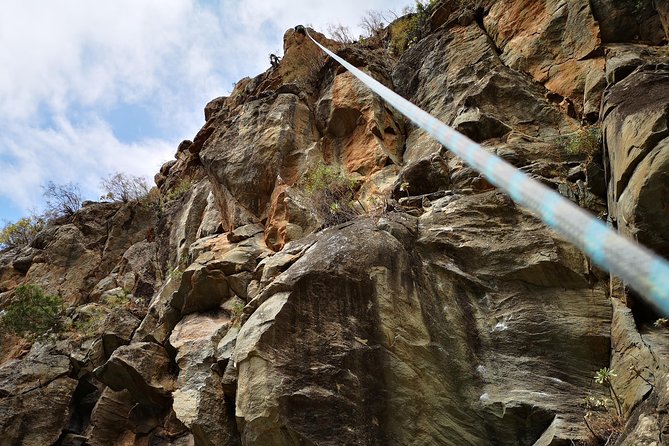
If you’re even slightly nervous about climbing, this setup is designed to calm your brain. The experience includes the core safety kit—helmets, harness, rope, and carabiners—and you stay connected as you climb.
That “always attached to the rope” detail sounds technical, but it turns into something practical: you can focus on balance, hand placement, and footwork instead of constantly worrying about the fall. It’s the difference between pretending you’re brave and actually feeling secure while you learn.
Also, the guidance style is repeatedly praised. One review calls out Igor specifically: a professional with around 30 years of experience, meeting people on time in his Volkswagen van and teaching in a calm way. Another review highlights a guide who is professional and steady, with clear communication and routes that fit your ability.
In other words, the safety isn’t just gear. It’s how the guide runs the session: explain, demonstrate, then help you get moving with confidence.
Volcanic walls up to 20 meters: choosing routes that build skills
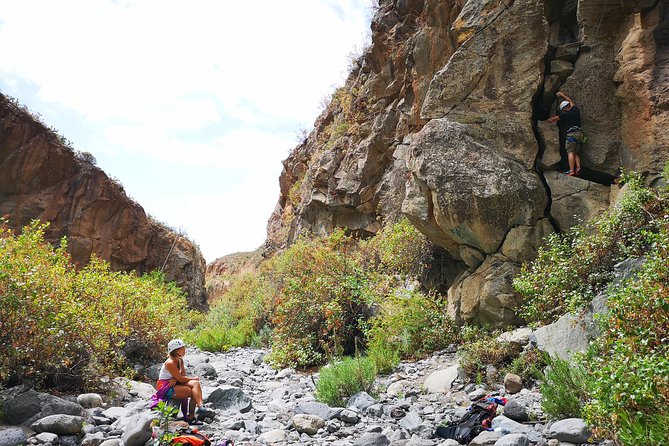
This isn’t a single-line stunt. You’ll climb volcanic rock walls with different heights and difficulty levels, up to roughly 20 meters. That range is ideal for beginners who want a real vertical feeling, and it’s also useful if you already have climbing experience because you can compare techniques on local rock.
Here’s why this route variety is valuable:
- Different walls teach different body habits. Some routes reward smooth foot placement, others reward controlled grip and body positioning.
- Multiple tries reduce the fear factor. Instead of one “make or break” climb, you get reps.
- You can progress in stages. You might start a bit lower or easier, then move to harder options as you feel steadier.
You’ll also get to experience what it feels like to climb with the emotions of free climbing, but with the security of the safety system. That blend is exactly why this kind of activity is so satisfying: it feels adventurous without feeling reckless.
One practical note: you’ll want a mindset that’s okay with small mistakes. On volcanic rock, movement is physical and sometimes requires quick adjustment. That’s where coaching helps most—when your guide corrects posture or grip, and suddenly the route feels doable.
Personalized attention in a group of four
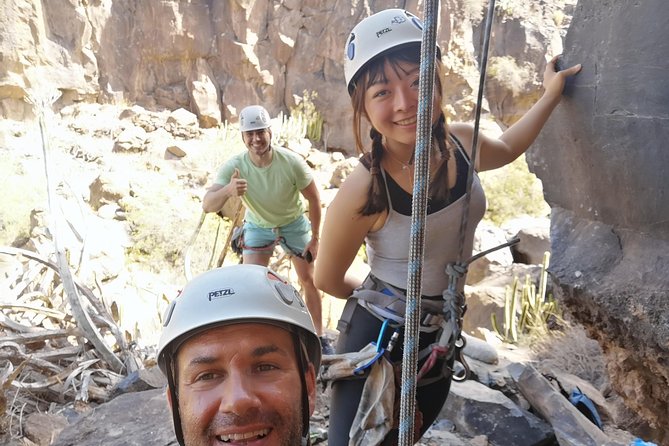
A big part of the value here is the group size. The experience is limited to four travelers, which changes the entire rhythm of the session.
In a bigger group, one person gets instructions while others wait. Here, you’re more likely to get immediate help when you hit a confusing section or need reassurance. That’s especially important if you’re new to climbing, because confidence grows fast when someone can correct you on the spot.
This is also why the experience gets strong marks for organization. Clear communication and a well-chosen set of routes means you spend more time climbing and less time unsure about what comes next. It also means you can try walls that are realistic for your abilities instead of getting pushed into something too hard.
The guide’s expertise matters, but so does the teaching approach. You’re not just handed gear and sent up. You learn how to think about the movement.



Price ($156.03) and whether it’s good value
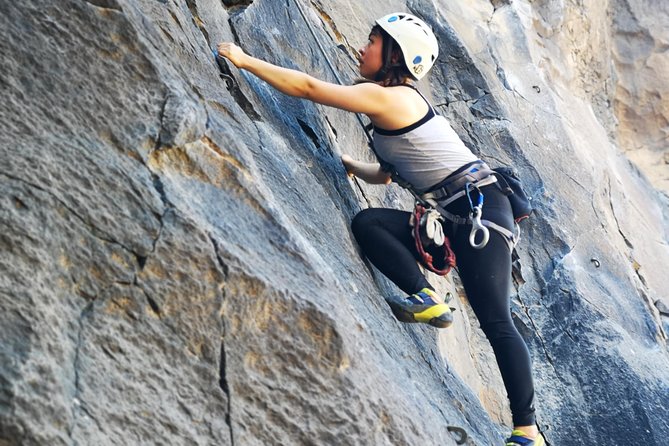
At about $156.03 per person for roughly three hours, it’s not a “cheap thrill” option. But it’s also not trying to sell you a fancy day with minimal effort. The value is built into what’s included:
- Safety gear: helmets, harness, rope, carabiners
- A guide to fit you, coach you, and run the session
- Transport (pickup and drop-off back to the meeting point)
If you tried to do something similar on your own, you’d still need gear, access to the right climbing area, and someone competent to coach and keep things safe. Even if you already climb, you’d likely pay for instruction and time. Here, you’re buying that whole package in one go.
Also, it’s booked about 16 days in advance on average. That’s a clue that the best spots and time slots tend to fill, especially since the group cap keeps the experience intimate.
So, is it worth it? If you want real climbing time, local volcanic rock, and structured safety with a calm teacher, the price feels fair.
What to bring (and what not to count on)
Bottled water isn’t included, so plan to bring your own. Since you’re walking into the ravine and then moving around on rock, you’ll be glad you have it.
Beyond that, you’ll want to show up ready for climbing movement. Wear clothing you can move in, and bring or plan on grippy footwear suited to getting traction on rock. The tour provides the safety system (helmet and harness), but your clothing and shoes affect how confidently you place your feet.
If you’re sensitive to heights or you get anxious when you’re off the ground, tell your guide early. With a small group and always-secured climbing, you’ll still be able to progress, but good communication helps you get the right route choices.
Weather, reschedules, and the one real catch
This experience requires good weather. If conditions aren’t suitable, the activity is canceled and you’ll be offered a different date or a full refund.
That matters more than it sounds. Volcanic rock and open ravines can change how safe it feels quickly with rain, wind, or other weather shifts. If you’re visiting Tenerife with only one day of flexibility, you might want to plan this activity for a slot with backup options.
The good news: the overall setup is designed for a smooth day. Confirmation is handled at booking time unless you book very close to departure, and the experience ends back where you start, so you’re not stuck coordinating complicated end-of-day plans.
Who should book this Tenerife rock climbing day
I think this is a great choice if:
- You want to try rock climbing in a real volcanic setting rather than a generic activity
- You’d benefit from coaching and a guide who gives clear, calm direction
- You like small-group tours where you actually get help
- You want a challenge that feels safe, especially with always-secured climbing
It’s also a solid option if you’ve climbed before. The route variety and local rock can teach you things you wouldn’t get on a single familiar wall.
If you’re looking for a long hiking tour with lots of downtime, this might feel a bit more intense since it’s focused on climbing. But if you want action and instruction in about three hours, it hits the sweet spot.
Should you book this rock climbing experience in Tenerife’s barranco del Rey?
Yes, I’d book it if you match the vibe: you want real climbing time, included safety gear, and a guide-run session with thoughtful route choices. The combination of small group size, always-secured climbing, and a guide known for calm instruction (including Igor) is exactly what makes this feel worth the money.
I’d hold off or build flexibility in your schedule if weather isn’t reliable for your dates. Since the activity depends on good conditions, planning it on a day with options nearby is smart.
If you’re ready to feel volcanic rock under your hands and learn how to move with confidence, this is one of the more authentic ways to experience Tenerife beyond the usual stops.
FAQ
How long is the rock climbing experience?
It lasts about 3 hours.
What’s the maximum height you’ll climb?
The rock walls you climb can be up to 20 meters.
What safety gear is included?
You’re provided with a helmet, harness, rope, and carabiners.
Is pickup and drop-off included?
Yes. The experience includes transport with pickup and drop-off at the meeting point.
Do I need good weather?
Yes. The activity requires good weather. If it’s canceled for weather reasons, you’ll be offered a different date or a full refund.
Is bottled water included?
No, bottled water is not included.
What language is the tour in?
The experience is offered in English.