REVIEW · TENERIFE
La Gomera Day Trip from Tenerife
Book on Viator →Operated by Pindoria Viajes SL · Bookable on Viator
A ferry day that feels like a shortcut off the usual Tenerife trail. This La Gomera day trip swaps rental cars for guided stops, so you can focus on La Gomera’s dramatic scenery and the island’s slower pace. I like that it’s built for convenience: hotel pickup, ferry logistics, and a guided walk once you reach San Sebastián.
Two specific parts I really enjoy are the time in Garajonay—where you can look down across the Atlantic toward Tenerife’s Mount Teide—and the guided town highlights around the Church of the Assumption and other central sights. One thing to factor in: it’s a long day with a lot of bus time, and some stops are short, so you’ll need to be okay with a packed itinerary.
In This Review
- Key Points to Know Before You Go
- How This Day Trip Avoids the Usual Tenerife Hassle
- Price and Logistics: What You’re Paying For
- From Los Cristianos to La Gomera: Ferry Crossing Time and Paperwork
- Garajonay National Park: Laurels, Views, and a 40-Minute Window
- Torre del Conde Park: A Medieval Fortified Stop in San Sebastián
- The Church of the Assumption: San Sebastián’s Most Photogenic Calm
- Roque de Agando and the Witches Legend Stop
- Lunch, Local Wine, and the Silbo Whistling Moment
- The Big Tradeoff: Coach Time and a Packed Schedule
- Guides and Drivers: What Changes From Day to Day
- Weather and Visibility: When the Views Turn Moody
- Who This Tour Fits Best
- Should You Book the La Gomera Day Trip?
- FAQ
- What time does the tour start?
- How long is the day trip?
- Is lunch included?
- Do I need a passport for the ferry?
- What languages is the tour offered in?
- Will I get picked up from my exact hotel?
- Are there admission tickets included at every stop?
- What should I bring for the day?
- Can the itinerary change?
Key Points to Know Before You Go
- No rental car needed: pickup and ferry crossing handle the hard logistics.
- Garajonay National Park stop: expect laurel-forest scenery plus possible Teide sightlines.
- San Sebastián walking tour: hits the Church of the Assumption and key historic spots, with free time afterward.
- Roque de Agando is quick: it’s a memorable natural landmark, but the stop is brief.
- Lunch includes a glass of local wine: plus a chance to experience the islands whistling language (Silbo) during the meal break.
- It can be foggy: if the weather turns, expect misty viewpoints rather than clear panoramas.
How This Day Trip Avoids the Usual Tenerife Hassle
This tour is designed for people who want to see La Gomera without the headache of ferry schedules, parking, and unfamiliar roads on a different island. From southern Tenerife, you get picked up and driven to the port area near Los Cristianos, then you sail over to La Gomera and do the sightseeing from there.
Once you arrive, the rhythm changes. You stop for scenery, then you actually walk in San Sebastián with a local guide. That mix matters. Seeing a place from a bus window is fine for quick orientation, but walking in the capital is where you understand La Gomera’s geography and culture faster. You’ll also spend enough time on the island to feel like you left Tenerife, not just did a day-long ferry loop.
The other big reason this works: you get a guided structure that keeps the day moving. Even when the island itself slows things down, the tour makes sure you hit the right spots: Garajonay first, then San Sebastián, then the emblematic natural monument stop before the return ferry.
You can also read our reviews of more tours and experiences in Tenerife
Price and Logistics: What You’re Paying For
The listed price is $126.15 per person, for roughly 10 hours 30 minutes. On paper, that might look like a lot—until you realize what’s included. You’re paying for the ferry crossing (and it’s passport-based), hotel pickup and drop-off, a local guide, and lunch with wine.
There’s a practical way to think about value here. Return ferry costs on this route can be steep on their own, so the tour becomes less expensive than you’d expect if you tried to DIY it. You also avoid a common DIY trap: spending your day transporting yourselves between scattered viewpoints and fighting with timing, especially if your ferry plans change.
One more detail that affects your day: the pickup is not from every hotel. You’ll receive a meeting point within walking distance of your accommodation, and it is not intended for rural or residential pickups. If you’re staying away from the main resort zones, double-check your confirmation email so you don’t lose time wandering to the wrong bus.
From Los Cristianos to La Gomera: Ferry Crossing Time and Paperwork
Your morning starts around 8:30 am, with pickup and transport to the port. You then travel by ferry to La Gomera, with passport or travel ID required for the crossing. Keep your passport accessible, because the guides may check it as part of the routine.
The ferry is not just a connection. It’s part of the experience: you’re switching islands early enough that La Gomera feels like the main event, and you’re not cramming sightseeing into the final hours. If you’re lucky with conditions, you may also spot marine life during the crossing, but don’t plan your day around that. Weather can always change the visibility.
Garajonay National Park: Laurels, Views, and a 40-Minute Window
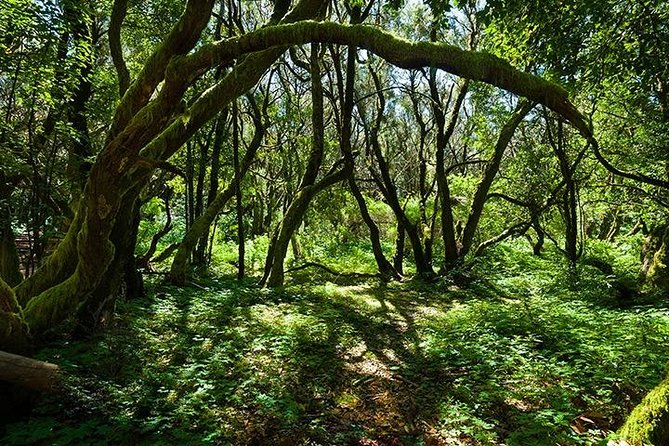
Stop one is Parque Nacional de Garajonay, with about 40 minutes total there. This is the part of the day that many people come for, because Garajonay is all about the island’s lush laurel forest feel and dramatic volcanic terrain.
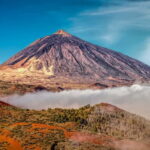
What you should expect is a mix of roadside viewpoints and short photo pauses rather than a long guided hike. The drive includes scenery stops, so you can catch looks out over the Atlantic and, on clearer moments, see Tenerife’s Mount Teide in the distance. Even when the weather is moody, that can still be atmospheric—mist can make the rock shapes and forest edges look sharper.
The main drawback: 40 minutes passes fast. If you’re the type who loves slow walking, you’ll want to manage expectations. This is more of a highlights taste than a deep trail day. Still, it’s a good trade when you’re crisscrossing an island in one go.
Practical tip: wear shoes you trust on uneven ground, and bring something warm. Even in pleasant seasons, this part of the island can feel cooler, and you’re standing outside for viewpoints.
Torre del Conde Park: A Medieval Fortified Stop in San Sebastián
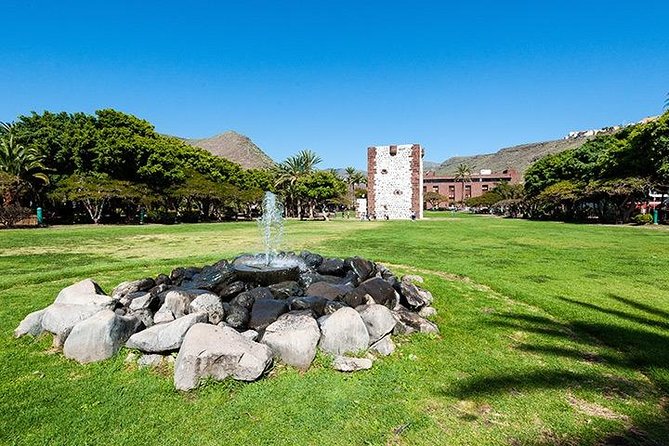
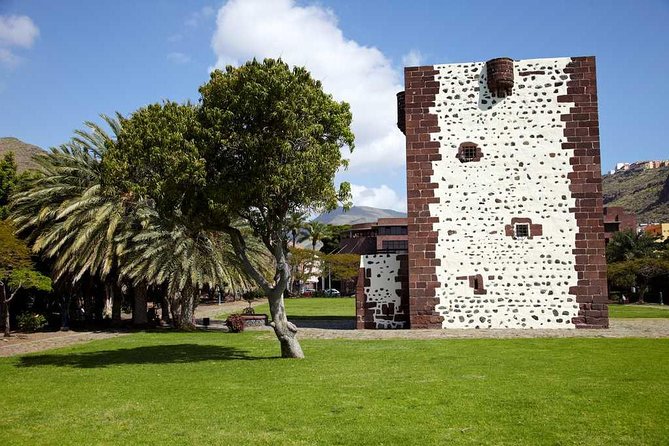
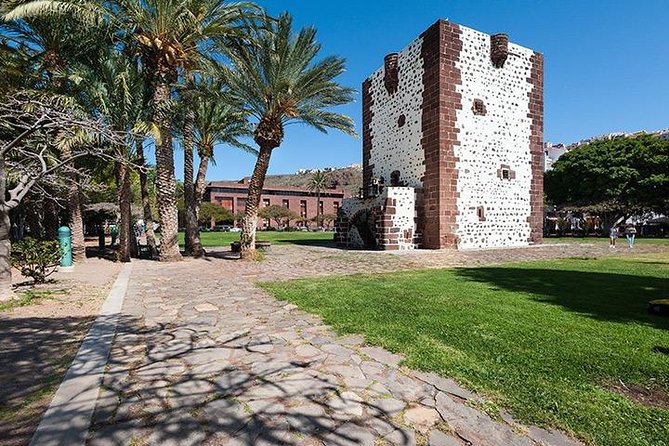
After Garajonay, you head toward San Sebastián, the capital of La Gomera. You’ll get time around Torre del Conde Park, with an admission ticket not included and only about 20 minutes for this stop.
Torre del Conde is a medieval fortification built around 1470 and used as defense for the island. You’re not going to get a long museum-style lesson here, but the payoff is the context: you’re looking at old stone that shaped how locals protected the island. It also helps you connect what you saw in Garajonay’s volcanic terrain to human history—fortified points make sense when travel between settlements is tricky.
This is also one of those stops where your “mode” matters. If your energy is high, you can take a longer stroll around the area. If not, it still works because you’ll get the basics and photo opportunities without needing to climb or trek.


The Church of the Assumption: San Sebastián’s Most Photogenic Calm
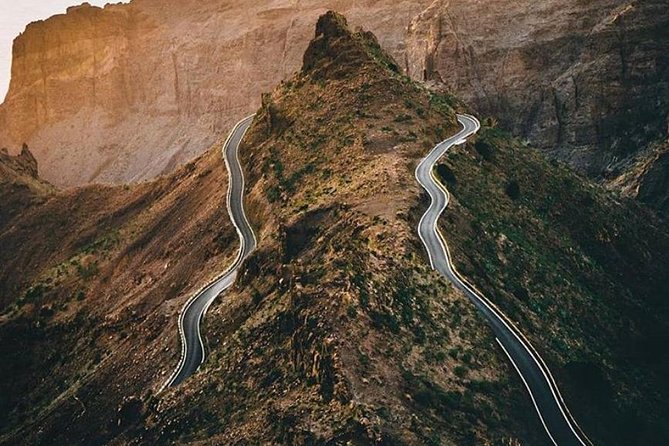
Next you’ll focus on La Iglesia de la Asunción de San Sebastián de La Gomera. This stop is free, and you’ll have about 20 minutes on the ground plus extra free time in town depending on the day’s pacing.
The Church of the Assumption is the kind of place that resets your brain after scenic driving. Instead of cliff views and forest color, you get local architecture and a slower, human scale. It’s also a useful stop if you like cultural landmarks, because you can look at details, then step back out and take in the town around it.
A second reason this stop is worth it: your guide’s walking tour often includes other central highlights as you move through the area, including points connected to Columbus House. You’re not just checking boxes. You’re getting a route through the capital that helps you understand where everything sits.
If the town free time feels short, it’s because the itinerary protects the ferry schedule. That’s normal. Still, use your free minutes like a local: pick one main street to walk, then circle back for photos near the church.
Roque de Agando and the Witches Legend Stop
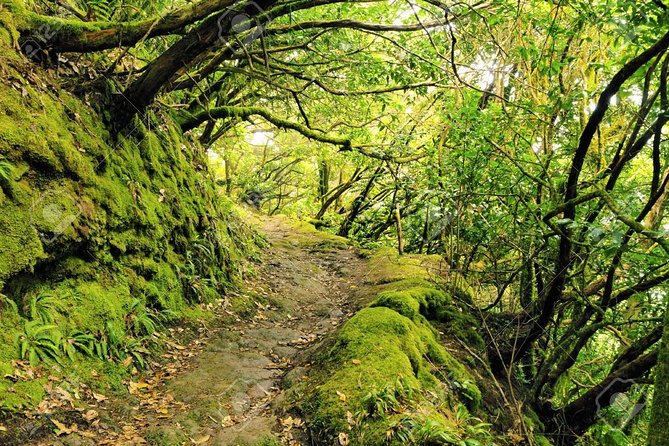
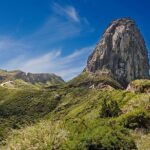
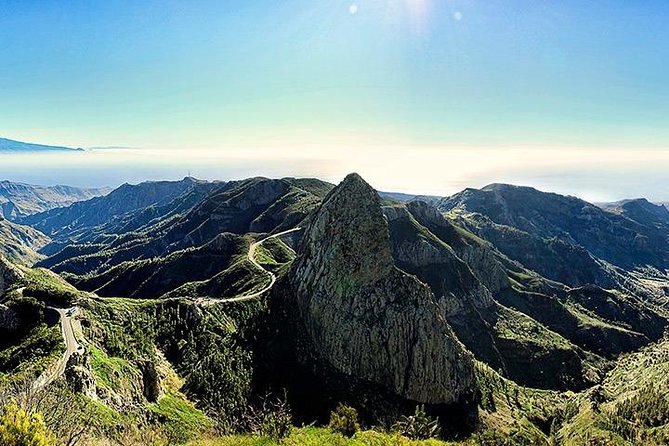
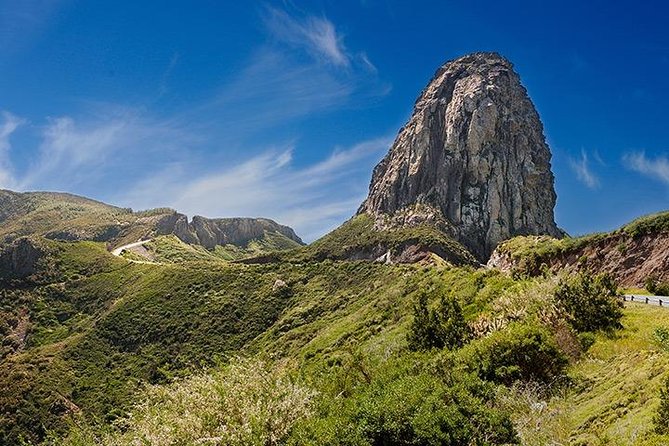
The final major sightseeing stop is Roque de Agando, with about 10 minutes allocated there and admission free. It’s considered one of La Gomera’s most emblematic natural monuments, and it’s the kind of rock formation that looks different depending on the light and haze.
There’s also a legend connected to this area: it’s described as a magical place where, in ancient times, the witches of the island met. You don’t get a movie set. You get a brief story tied to a specific spot—exactly the kind of thing that makes a day trip feel like more than geography.
Because the stop is short, your best move is to arrive ready to look, not ready to research. Take your photos quickly, watch the rock from a couple angles if possible, and then move on. If fog rolls in, the shapes can turn dramatic in a different way—less about crisp detail, more about atmosphere.
Lunch, Local Wine, and the Silbo Whistling Moment
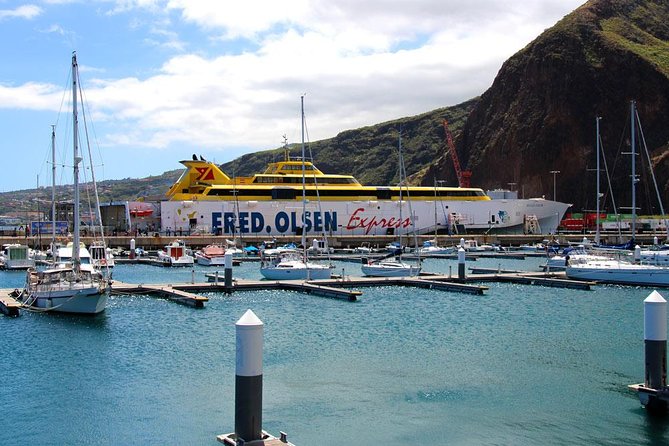
Lunch is included, along with a glass of local wine. This is also where the day becomes more than sightseeing. It’s a real break from the coach, and it’s the moment where you’ll likely hear the islands whistling language, Silbo.
That demonstration (or part of it) is often part of the restaurant experience during lunch or the meal break. It’s one of the cultural details that helps La Gomera feel distinct from Tenerife. You’ll also have time to eat something filling after a morning of ferry and viewpoints.
Balance note: lunch quality seems to be hit-or-miss depending on what you order and your personal preferences. Some people love the fish and red wine, while others found the meal less satisfying. The bread and mojo get mentioned more than once as a reliable flavor point, though.
What I’d do in your shoes: bring a small snack if you’re sensitive to long waits. The day includes coach time before and after lunch, and if lunch doesn’t land for you, a granola bar or fruit can save the mood.
The Big Tradeoff: Coach Time and a Packed Schedule
This is where the reviews split, and it’s also the part you should think about most before booking. The itinerary is built to show a lot in one day, and that means plenty of time on the bus. Even if everything runs on schedule, you’re spending a serious chunk of the day riding between points and ferry crossings.
A couple more realistic expectations:
- The town free time is helpful, but it’s limited. You may not feel like you had a long, relaxed wander.
- Some tours involve narration in multiple languages. That can be great if you speak one of them, but it can also reduce how much detail you catch if you’re listening across languages.
- Weather can affect viewpoints. If it’s misty, you might get more “rocks in the clouds” than wide panoramas.
If you travel with high energy, you’ll probably find the pace fun. If you prefer slow travel, you may wish you had an extra day on La Gomera to spread things out.
Guides and Drivers: What Changes From Day to Day
One reason this tour works well is that the guide is part storyteller, part navigator. You’ll hear island facts, geography explanations, and local cultural notes tied to each stop.
On different dates, guides have included people like Enrico, Paolo, Alex, Tony, Peter, Julien, and Rosa, with drivers such as Fernando, Gustavo, Marcus, and others mentioned for safe, confident driving. Since La Gomera roads can be twisty, your driver really matters for comfort and timing.
My practical take: if you want the full value, come ready to ask questions. A good guide will meet you halfway. And if you’re traveling with a group that wants different pacing, the guide’s ability to keep everyone on time becomes part of the experience too.
Weather and Visibility: When the Views Turn Moody
This route can be weather-sensitive, and the tour can adjust stops due to circumstances. Garajonay and the viewpoints work best when clouds clear, but even in fog, the island can still look compelling. Mist makes textures pop in a different way, and the rock formations can look more dramatic.
Still, if clear skies are your top priority, plan to be flexible. A cloudy day doesn’t ruin the tour, but it does change the “wow” factor you imagined when you saw photos.
Pack for layers: something warm for outside time, plus sunscreen and water because you’re still standing in the sun between cloud breaks.
Who This Tour Fits Best
This day trip is a strong match if you:
- Want to see La Gomera from Tenerife without renting a car
- Enjoy a guided mix of nature and town highlights
- Like cultural stops that include a practical tasting experience like lunch and the Silbo whistling moment
It may be less ideal if you:
- Hate being on a bus for long stretches
- Need lots of time at each location to wander slowly
- Have mobility concerns, since there can be short walks and the experience involves transport and restaurant steps
If you’re traveling with kids or you’re mainly interested in one big nature hike, you may feel the stops are too brief.
Should You Book the La Gomera Day Trip?
I think you should book if you want maximum island payoff with minimum logistics stress. The combination of ferry crossing, Garajonay’s laurel-forest feel, San Sebastián’s central landmarks, and a culturally meaningful lunch with Silbo makes this a solid single-day plan.
I would hesitate if you’re very sensitive to tight schedules or if you know you won’t enjoy bus time. Also, if you care most about long hikes, this isn’t built as a trail day.
A good strategy: treat it like an island sampler. You’ll come away with a clear sense of La Gomera’s geography and culture, and you’ll know whether you want to return for a slower, more hands-on visit.
FAQ
What time does the tour start?
Pickup starts for an 8:30 am departure.
How long is the day trip?
It runs about 10 hours 30 minutes (approx.).
Is lunch included?
Yes. Lunch is included, and it comes with a glass of local wine.
Do I need a passport for the ferry?
Yes. You’ll need your original passport or travel ID for the ferry crossing.
What languages is the tour offered in?
The tour is offered in English.
Will I get picked up from my exact hotel?
Pickup is not from every hotel. You’ll receive a meeting point within walking distance, sent in your confirmation email, and pickup is not provided for rural areas or residential areas.
Are there admission tickets included at every stop?
Garajonay National Park admission is free. The Church of the Assumption stop is listed as free. Torre del Conde has a short visit and admission is not included.
What should I bring for the day?
Wear walking shoes and bring warm clothes, water, and sunscreen. The tour is outdoors and involves some walking time.
Can the itinerary change?
Yes. The itinerary may alter due to certain circumstances.