REVIEW · TENERIFE
Tenerife: Surf Lesson at Playa de Las Americas
Book on GetYourGuide →Operated by Rocky Point Surf Experience · Bookable on GetYourGuide
First wave jitters, sorted fast. A Tenerife surf lesson at Playa de las Américas turns the usual chaos of trying to stand up into a guided plan, with big-sky views of the Teide volcano while you learn.
What I like most is the teaching focus: I love how the instructor keeps things simple and step-by-step, and I love that the group stays small enough for real attention. You should also know one thing up front: the session is weather dependent, so you may get fewer waves if conditions aren’t perfect.
The vibe is upbeat, and the coaching really matters on a first lesson. Instructors like Edu and Rafa come across as friendly and patient, and I like that you get both theory and hands-on time so you’re not just thrown into the water. One possible drawback to factor in is that the lesson can shift or even reschedule when the sea is behaving badly, plus the activity isn’t suitable for everyone.
If you’re not comfortable swimming, skip this. This is also not for children under 14 or pregnant women, and it’s designed for people ready for a wet, slightly awkward workout. Weather and non-swimmers are the two big limitations to keep in mind before you book.
In This Review
- Key things that make this Tenerife surf lesson worth it
- Playa de las Américas: why the setting helps beginners learn faster
- Meeting point at Local 61: get oriented before you hit the stairs
- The safety briefing: the 20 minutes that prevent a lot of bad waves
- 100 minutes of surf time: how you actually get your first standing attempt
- Softboard, wetsuit, reef boots: what’s included and why it helps you focus
- Weather, tide, and why your waves depend on the day
- English or Spanish coaching: small group attention you can feel
- Who should book this Tenerife surf lesson (and who shouldn’t)
- Price and value: is $41 a smart buy for Playa de las Américas?
- Should you book? My practical take for first-time surfers in Tenerife
- FAQ
- How long is the surf lesson in Tenerife?
- Where is the meeting point?
- What’s included in the price?
- Do I need to bring a wetsuit or board?
- What should I bring with me?
- Is this lesson for complete beginners?
- Can non-swimmers join?
- What age is the minimum?
- What languages are the instructors?
- What happens if the weather is bad?
- Are photos included?
- Is transportation included?
Key things that make this Tenerife surf lesson worth it
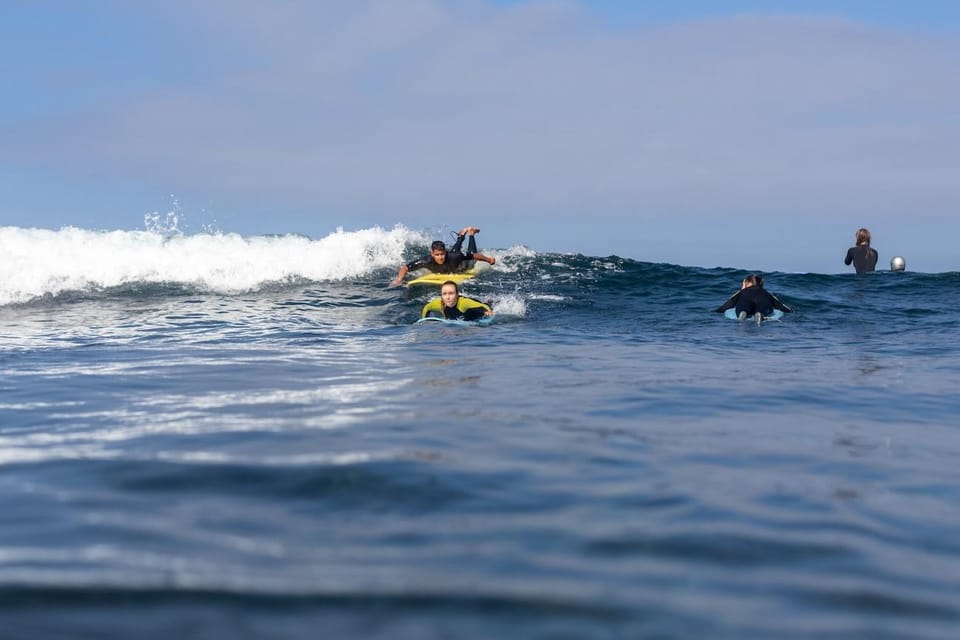
- Small groups (up to 5) so you’re not lost in the shuffle.
- First-wave coaching aimed at helping you stand up quickly.
- Gear included: softboard, wetsuit, and reef boots.
- Safety briefing first (about 20 minutes) so you know what to do before you paddle out.
- Teide views that make the whole break between sets feel like part of the holiday.
- Insurance in case of accident, which is a nice comfort layer.
Playa de las Américas: why the setting helps beginners learn faster
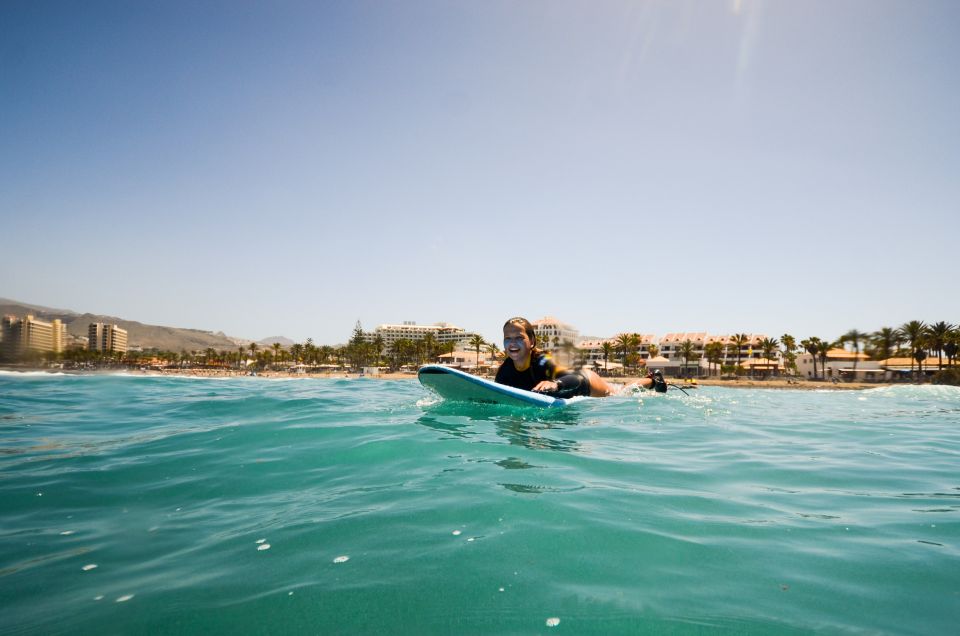
Playa de las Américas sits in Tenerife’s surf-friendly zone, and that matters more than it sounds. As a beginner, you don’t just need waves—you need waves where you can reset fast, regroup, and try again. Here, the lesson format is built around short, focused bursts in the water, which is exactly what helps your brain stop panicking and start coordinating your arms and legs.
I also like the change of pace this location gives you. When you’re between tries, you’re looking out toward one of Tenerife’s most recognizable landmarks—the Teide volcano. It makes waiting between turns feel less like downtime and more like you’re still on the adventure. Even the people who come just for a fun morning often end up paying more attention, because the view keeps you engaged.
And because this is a “learn to surf” class, the goal is realistic: catch waves, get feedback, and stand up on your first run with help. That’s very different from chasing brag-worthy photos. If you want a confident introduction to surfing without the stress of figuring everything out alone, this is the kind of place and lesson that supports that.
You can also read our reviews of more tours and experiences in Tenerife
Meeting point at Local 61: get oriented before you hit the stairs
Plan a little buffer time. The meeting spot is specific, and once you find it, things move quickly.
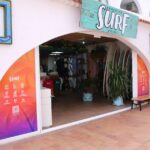
You’ll meet at Av. Rafael Puig Lluvina, 32, local 61. The practical directions are: find the big stairs next to the BBVA bank, go downstairs, walk straight, then turn right. Local 61 is at the end of the corridor.
Why this matters: surf lessons have a timing rhythm—safety briefing first, then gear checks, then into the action. If you arrive rushed, you’ll feel it. If you arrive relaxed, you’ll be ready when your instructor starts organizing the group.
Also, bring flip-flops and swimwear. That way you can handle the quick changeover without hunting for a towel or stuffing wet gear awkwardly in your bag. Small details like this make the whole experience smoother.
The safety briefing: the 20 minutes that prevent a lot of bad waves
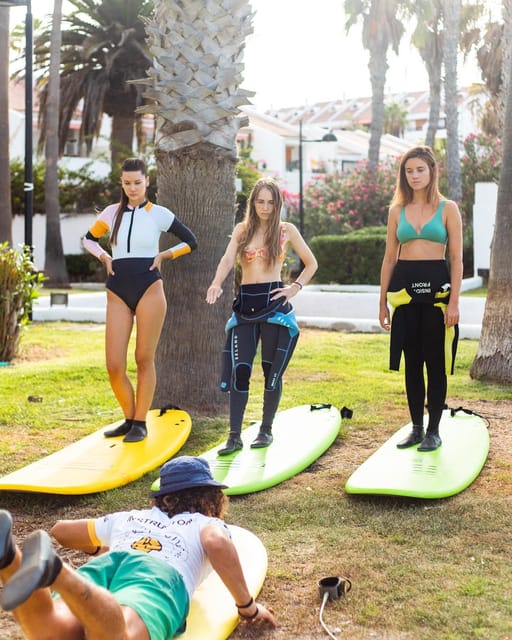
Before you go in, you’ll do a safety briefing for about 20 minutes. This is not a lecture you can safely skip. It’s the part that tells you how the instructor expects you to move, where you should focus your attention, and what you should do to stay safe around other surfers in the water.
On a first lesson, that guidance becomes a skill. You learn what it feels like when you’re about to catch a wave, when to paddle harder, and how to position yourself so you’re not just battling the board. You also get the kind of baseline rules that keep the session running smoothly for everyone, especially in a small group where the instructor can watch closely.
Even if you’re not a swimmer, the lesson sets expectations clearly. Just remember: non-swimmers aren’t suitable, so the briefing assumes you can handle time in the water. The briefing is still valuable for everyone else because it speeds up learning. You spend less time guessing and more time doing.
100 minutes of surf time: how you actually get your first standing attempt
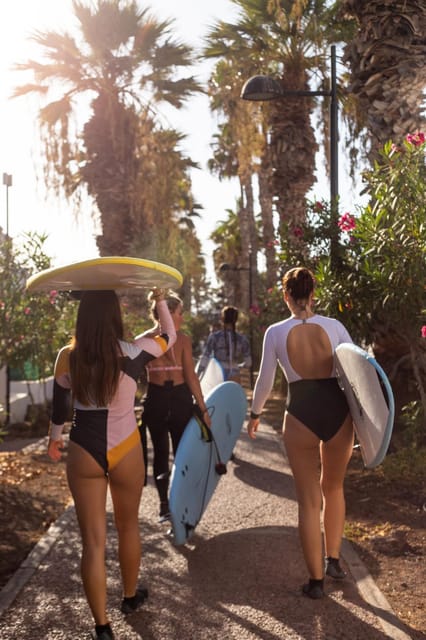
Once you’re at Playa de las Américas, the class is about 100 minutes of guided instruction. This is the heart of the day, and it’s structured for beginners.
You’re in a small group of up to 5 students, which changes everything. Instead of waiting for occasional advice, you get frequent cues. That’s where the instructor’s style matters—people in past sessions highlighted names like Edu and Rafa, and the common theme was supportive coaching with careful attention.
The lesson includes both theory and practice. In plain terms, you’ll learn the basics and then you’ll use them right away. The goal is not just to paddle around—it’s to help you stand up on a first wave. That “stand up” part is why the instruction feels different from random surf rentals where you’re basically on your own.
A good beginner tip: pay attention to the timing cues, not only the technique. Most first-timers don’t fail because they don’t understand surfing—they fail because they’re a half-beat late. When you get that corrected, suddenly the wave does what you need it to do.
And if the sea isn’t giving you many opportunities (low tide happens), the instructor still keeps things moving. You’ll repeat the process, not just hop in and hope.
Softboard, wetsuit, reef boots: what’s included and why it helps you focus
This surf lesson is priced at $41 per person, and what makes it feel fair is what’s included. You get the essentials to make learning easier, including:
- Softboard
- Wetsuit
- Reef boots
- Professional surf instructor
- Insurance in case of accident
- Theory and practice in the water
That equipment list is not random. A softboard is more forgiving for beginners, and reef boots help you feel safer on the seabed so you can focus on standing rather than worrying about every step. The wetsuit keeps the experience comfortable enough that you don’t lose your rhythm after the first few minutes.
In my view, this is where value shows up. If you had to rent everything separately—board, wetsuit, and protective footwear—your total cost would usually climb. Here, the lesson bundles what you need to participate, and that makes the day simpler and more predictable.
Photos are not included, so if you want memory keepsakes, consider planning for that separately. Transportation is also not included, so you’ll want to get yourself to the meeting point.


Weather, tide, and why your waves depend on the day
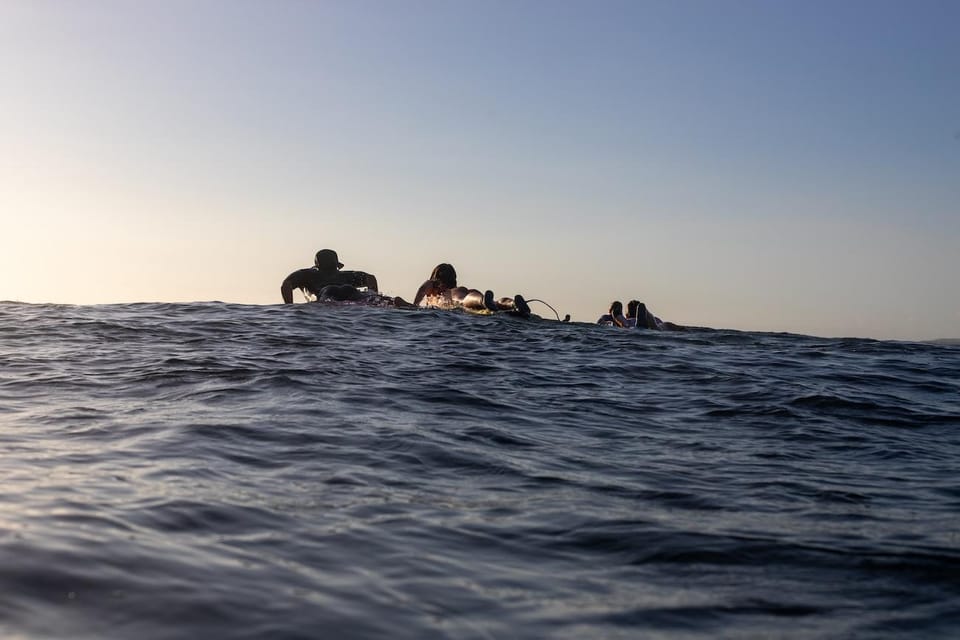
Surf is weather math. The operator states the exact start time can change based on conditions, and the lesson can be rescheduled or canceled due to bad sea conditions. You’ll be notified by email or WhatsApp if anything shifts.
That matters because Tenerife’s coast can swing from excellent to merely okay, sometimes fast. One past session note mentioned a low-tide day with fewer waves. That doesn’t mean the lesson is a bad one—it means the ocean gave less to work with that time.
Here’s how to handle it as a traveler: don’t schedule a super tight plan right next to this activity. Keep the rest of your day flexible. If the lesson adapts, you’ll feel in control instead of annoyed.
The upside is that you’re not dealing with a mystery. You’re with a surf school that adjusts to conditions. In a beginner class, that safety-and-logic approach is a win.
English or Spanish coaching: small group attention you can feel
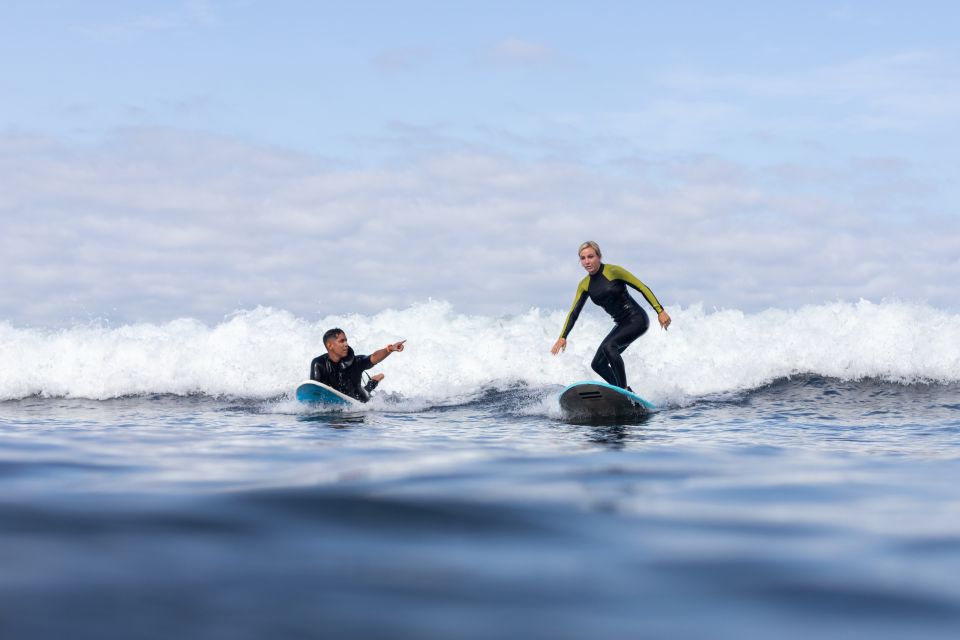
Language can make or break a first lesson. This surf school lists instructors who speak English and Spanish, so you can communicate without guessing.
Small group size also amplifies the teaching. When there are only a few students, the instructor can watch what each person is doing and correct specific issues. That’s one reason people loved their instructors—friendly, patient guidance came up again and again, and it wasn’t just polite talk. It was direct help that made the learning stick.
If you’re shy, this format tends to work better than big classes. You’ll still be among other beginners and ocean lovers, but your instructor can keep an eye on you. If you’re confident, you’ll also appreciate the feedback, because it’s easier to refine quickly when you’re not waiting your turn.
Who should book this Tenerife surf lesson (and who shouldn’t)
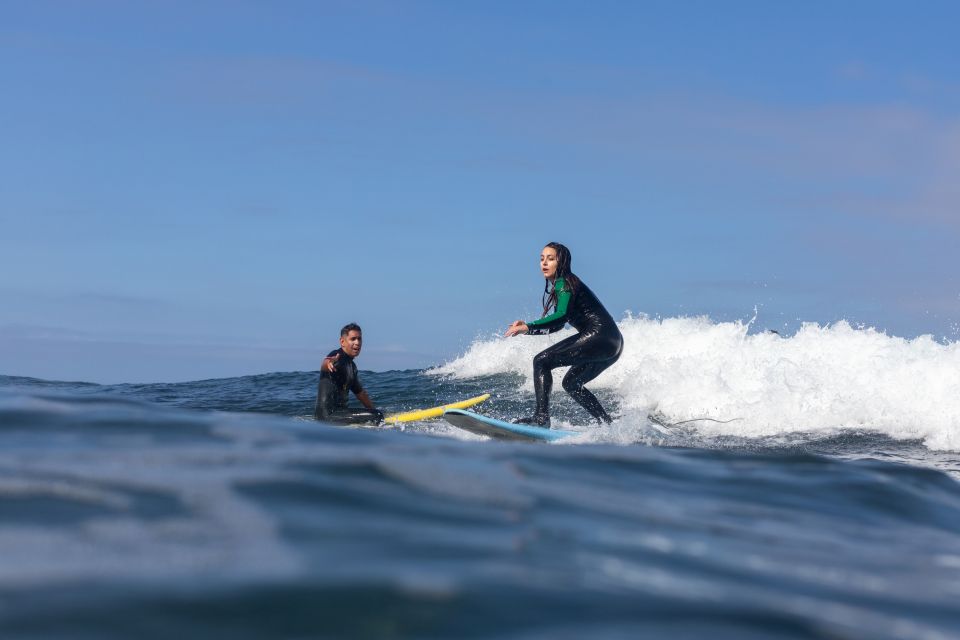
This is best for:
- First-timers who want a structured surf introduction
- People who like hands-on coaching
- Travelers who want a small-group feel with a pro instructor
- Anyone who’s excited by the idea of learning near the Teide views
It’s not suitable for:
- Children under 14
- Pregnant women
- Non-swimmers
Also, think about how you handle being cold and wet. You’ll be in a wetsuit, and that helps, but you’ll still feel the ocean environment. If you’re expecting a dry, casual walk-by activity, this won’t match.
If you want a lesson where the whole day is geared toward standing up on your first try, this one fits. If you’re looking for a long, advanced surf session, you might find it more beginner-focused than you expect.
Price and value: is $41 a smart buy for Playa de las Américas?
At $41 per person for about 2 to 3 hours, the main question is what you’re getting for the money. You’re paying for a professional instructor, safety briefing, and real practice time. You also get the key equipment: softboard, wetsuit, and reef boots.
Add in insurance in case of accident, and the price starts to feel more like a complete activity than a basic rental. The lesson structure matters too: theory plus practice, and a group capped at five students. That cap is a hidden value. More attention usually means faster progress, which is what you want in a first session.
Not included items are straightforward: photos and transportation. Photos can be a personal preference. If you care, plan ahead. If not, you can still walk away with the experience itself—and you’ll have saved time and decision-making by not coordinating rentals.
For most beginner travelers, this is good value because it reduces friction. You show up, get equipped, get coached, and you’re on waves without assembling a plan yourself.
Should you book? My practical take for first-time surfers in Tenerife
I’d book this Tenerife surf lesson if you want a beginner-friendly experience that treats safety and coaching seriously. The small group size, the step-by-step focus, and the goal of helping you stand up on your first waves are exactly what makes a first surf day worthwhile. Add in the Teide views and the included wetsuit/board/reef boots, and you get a lesson that feels like part of the island—not a complicated side quest.
Skip it if you don’t meet the basic requirements (especially swimming ability), or if you’re the kind of traveler who needs zero schedule flexibility. Weather can affect timing and wave quality, and low-tide days can mean fewer chances to ride.
If you’re ready to get wet, laugh at the awkward moments, and learn with a real instructor, this is a solid pick for Playa de las Américas.
FAQ
How long is the surf lesson in Tenerife?
The duration is listed as 2 to 3 hours.
Where is the meeting point?
Meet at Av. Rafael Puig Lluvina, 32, local 61. Directions: take the big stairs next to the BBVA bank and go downstairs, walk straight, then turn right; local 61 is at the end of the corridor.
What’s included in the price?
Included are a professional surf instructor, theory and practice in the water, a softboard, a wetsuit, reef boots, and insurance in case of accident.
Do I need to bring a wetsuit or board?
No. The softboard, wetsuit, and reef boots are included.
What should I bring with me?
Bring swimwear and flip-flops.
Is this lesson for complete beginners?
Yes. It’s designed for people who have never surfed before, with step-by-step instruction and help to stand up on a first wave.
Can non-swimmers join?
No. The activity is not suitable for non-swimmers.
What age is the minimum?
Children under 14 are not suitable.
What languages are the instructors?
The lesson is offered in English and Spanish.
What happens if the weather is bad?
The exact time can change depending on weather conditions, and the lesson can be rescheduled or canceled due to bad conditions. You’ll be notified by email or WhatsApp.
Are photos included?
No. Photos from the lesson are not included.
Is transportation included?
No. Transportation is not included.