REVIEW · TENERIFE
Tenerife: Los Arcos Canyoning Tour with Guide
Book on GetYourGuide →Operated by Outdoor activities tenerife · Bookable on GetYourGuide
Orange canyon walls are calling. This Tenerife canyoning trip sends you into Barranco Los Arcos de Chimoche with a real guide, full gear, and a series of controlled rappels through a volcanic canyon shaped by time.
I especially love how the day is structured for confidence: you get a safety briefing first, then you learn by doing as the descent starts. I also love the focus on the canyon itself, from mossy orange rock to the geology that created the route, so it feels like more than just an adrenaline hit. One drawback to plan for: the tour includes a first rappel around 22 meters, so if heights make you freeze, this is not the right activity.
In This Review
- Key things to know before you go
- Why Los Arcos canyoning feels different in Tenerife
- Meeting at Mirador de La Bermeja, then heading toward Aguamansa
- The 45-minute approach: forest track, then the canyon begins
- Safety briefing first: how Jorge builds confidence fast
- Rappelling the first 22 meters: where nerves turn into fun
- Eight rappels in an ash-and-erosion canyon
- Hidden corners, mossy walls, and the kind of views you remember
- The Chimoche track and the walk-out after your last rappel
- What you get for $82: value that’s more than the thrill
- Gear, clothing, and the shoe rules that keep you comfortable
- Who this tour suits best (and who should skip it)
- The guide matters: why Jorge’s approach comes up again and again
- Should you book Los Arcos canyoning in Tenerife?
- FAQ
- How long is the Los Arcos canyoning tour in Tenerife?
- Where do I meet the guide?
- What’s included in the price?
- Is food or drinks included?
- Do I get hotel pickup and drop-off?
- What language will the guide speak?
- How big is the group?
- What should I bring?
- Are children allowed?
- Can I cancel for a full refund?
Key things to know before you go
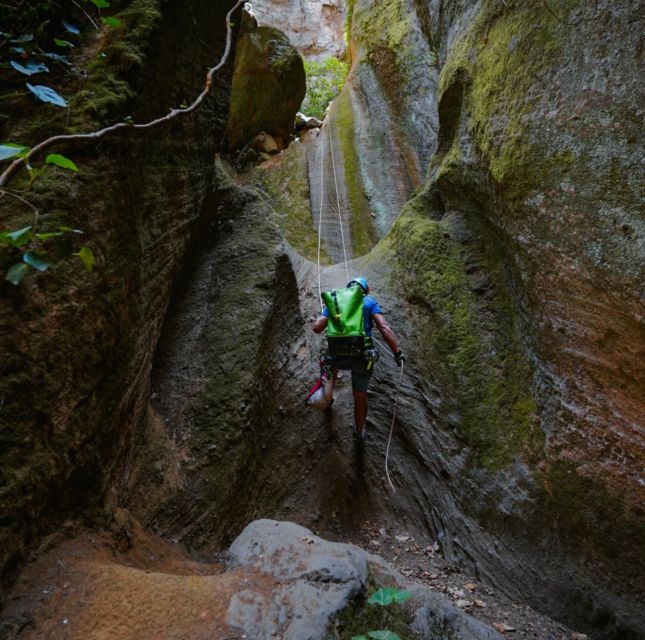
- Small group (up to 8 people): easier pacing, more attention when you’re learning the ropes.
- 8 rappels in total: you’ll get repeat chances to nail technique, not just one dramatic drop.
- Dry canyon, still bring rain gear: it’s outdoors most of the way, and weather can change quickly in Tenerife.
- Volcanic story in every wall: ash and erosion are part of what you’re seeing as you descend.
- Photos are included: you don’t have to trust your phone to survive a canyon day.
- Beginner-friendly, but not casual: you need the right shoe grip and a mindset for heights.
Why Los Arcos canyoning feels different in Tenerife
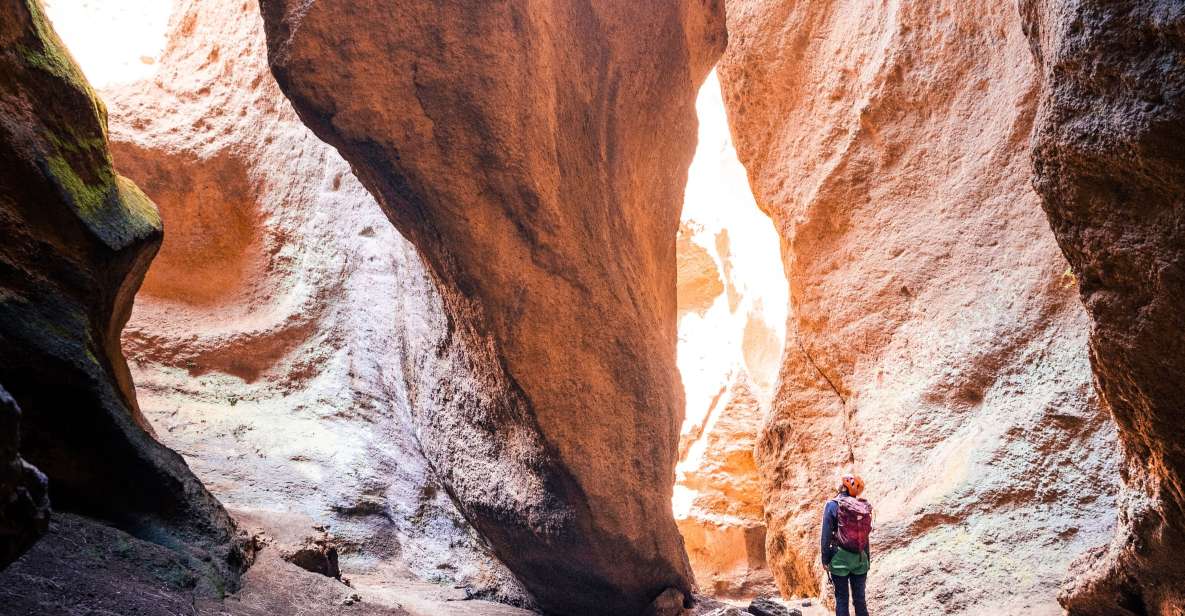
Canyoning in Tenerife has a special flavor because the rock looks like it’s from another planet. At Los Arcos, you’re not just watching water carve a route. You’re moving through a canyon shaped by volcanic ash accumulation and long-term erosion, then layered with moss on warm orange surfaces.
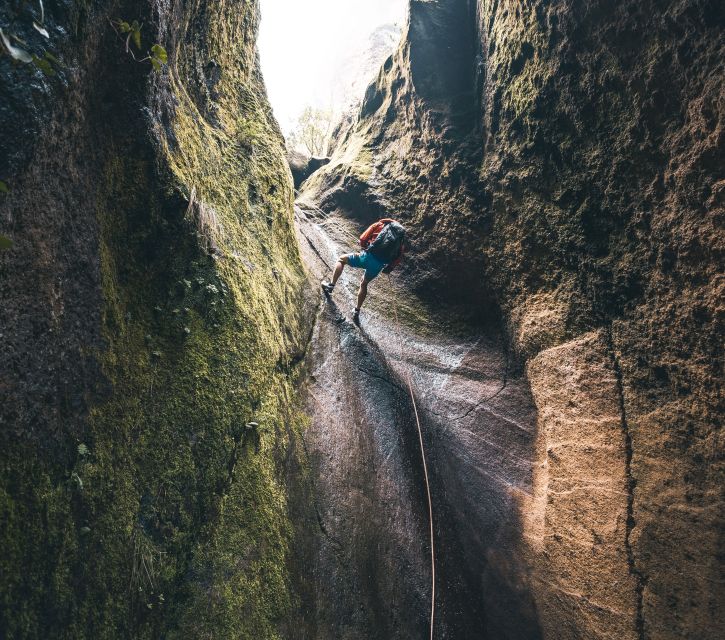
That geology matters, because it changes how the canyon “reads” while you’re rappelling. The walls can look almost sculpted, and as you go down, the light shifts across moss-covered rock. It’s the kind of scenery that makes you pay attention to where you place your body and where your rope runs, which is a good thing for safety.
And if you want the human part of the day to feel good, you’re in the right place. This tour is run in a small group, so the guide can coach you step by step. Many people are seeing their first rappel up close during this trip, and the whole vibe is practical: learn the system, do it carefully, then enjoy the views.
You can also read our reviews of more guided tours in Tenerife


Meeting at Mirador de La Bermeja, then heading toward Aguamansa
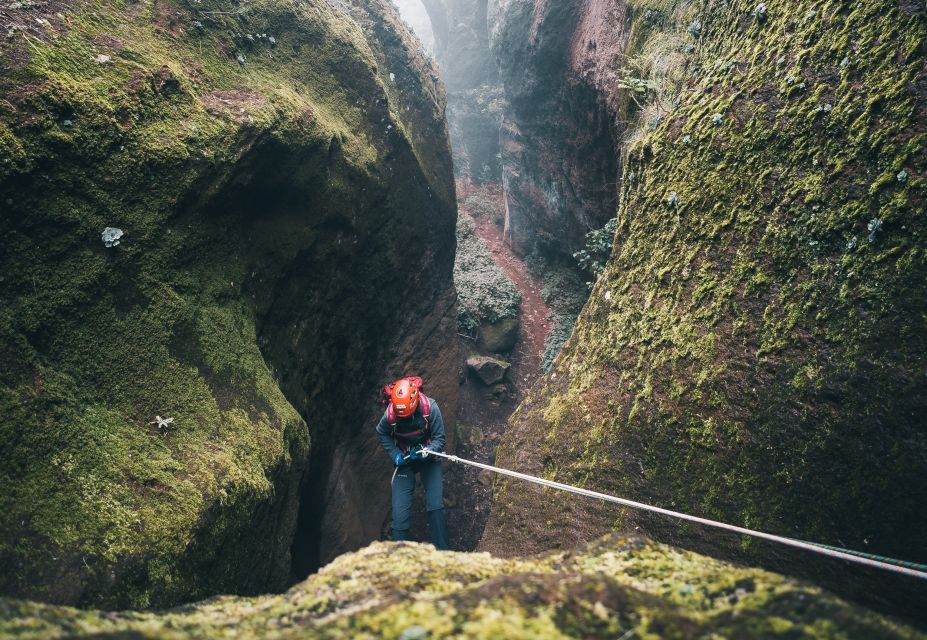
Your day starts at the Mirador de La Bermeja meeting point. If you’re driving from the north side of Tenerife (La Orotava direction), you’ll usually take the TF-21 and follow signs toward El Teide. The tip that saves stress: sometimes GPS sends you on steep, narrow shortcuts. Stick to the TF-21 route when you can, especially if you’re not used to mountain roads.
From there, you’ll be guided toward the trail area near Aguamansa, where you begin the walking approach. You’ll want to arrive on time, because once the group is assembled, the schedule moves in a smooth rhythm: check gear, settle in, then begin.
Also, plan your “settle-in” mindset. This is not a stroll where you can chat for half an hour and then start. You’ll be wearing canyoning gear, and the tour timing expects you to be ready to move.
The 45-minute approach: forest track, then the canyon begins
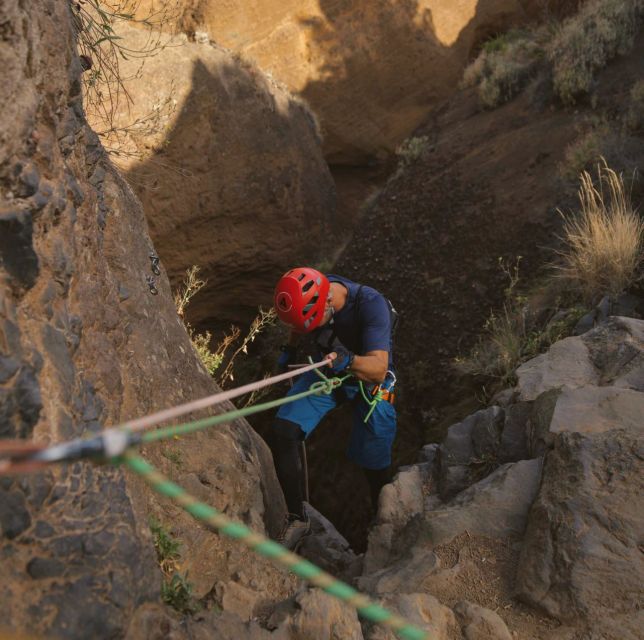
Before you ever rappel, you get a gentle-slope forest track. Expect about 45 minutes of walking. It’s not technical hiking, but it does serve a purpose: you get your legs warmed up, your gear sits correctly, and the group gets used to moving together.
This approach sets expectations for the canyon itself. Los Arcos is described as a dry canyon, but that doesn’t mean it feels sterile. Even before the rappels start, the air is cooler and the rock colors start to show through. As you get closer, you’ll begin to see the orange tones and moss where the canyon walls catch moisture.
Practical tip: wear shoes that you trust on uneven ground. You’ll be walking on rock and along tracks, and the tour specifically requires hiking shoes or trail running shoes (and nothing else). If you’re renting hiking boots, request them ahead so you don’t show up scrambling.
Safety briefing first: how Jorge builds confidence fast
The tour includes a safety briefing before you descend. In the real world, that briefing is what makes a first-time canyoning experience feel manageable instead of scary.
Jorge’s coaching style is practical. He’s focused on the steps you need to repeat: how to move with your harness, how to manage your rope system, and what to do before you commit to a descent. You’ll also learn how to position yourself so the rope and your body work together, not against you.
Small group size matters here. With up to 8 participants, the guide can check how you’re doing and adjust cues quickly. Many first-time canyoning days go wrong when the learning curve is rushed. Here, the tour format gives you time to understand what’s happening before you’re hanging over an orange wall.
Rappelling the first 22 meters: where nerves turn into fun
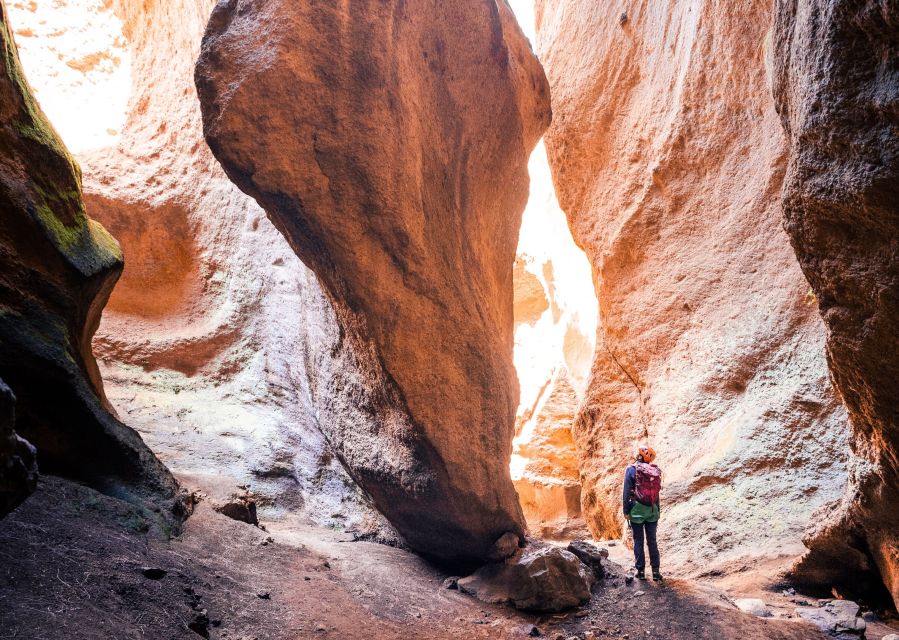
The first descent starts with a rappel around 22 meters. That first drop is the part most people remember later. It’s high enough to feel real, but it’s also early enough in the day that you’re still building momentum.
What you’ll likely feel: nerves, then focus. The goal isn’t to be fearless. The goal is to be methodical. You follow the guide’s cues, you check your setup, and you control your movement down the rope.
This is also where you’ll learn that canyoning isn’t only about the drop. It’s about control—how you pace your body, how you keep your focus, and how you look at the next handhold or landing zone.
If you’re the type who panics when you can’t see the full plan, don’t worry. The guide’s whole job is to make the sequence predictable. You’re not just left to figure it out mid-air.





Eight rappels in an ash-and-erosion canyon
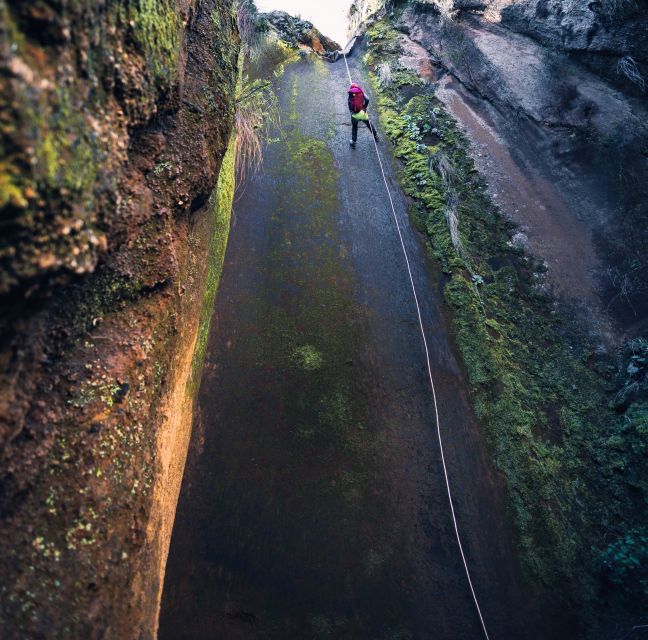
After the first rappel, the day becomes a sequence of descents. The route is built around 8 rappels, and the canyoning passages use single-rope technique. In plain terms: you learn a repeatable method, then apply it again and again until your body starts to trust the process.
Between rappels, you’ll move on foot through sections of the canyon approach path, then reset for the next descent. Those walk segments are not filler. They’re the pauses that let you breathe, grab a quick drink, and notice details you’d miss if you were only chasing the thrill.
This is where Los Arcos turns into a photo-worthy geology lesson. The canyon formed through volcanic ash and erosion, and the walls carry that story visually. You’ll see warm orange rock with moss in places, and you’ll notice how light changes the color as you go lower.
A useful mindset: treat the canyon as a series of small missions. Each rappel is a task. Each reset is a chance to steady your breathing. That’s how the day stays fun instead of overwhelming.
Hidden corners, mossy walls, and the kind of views you remember
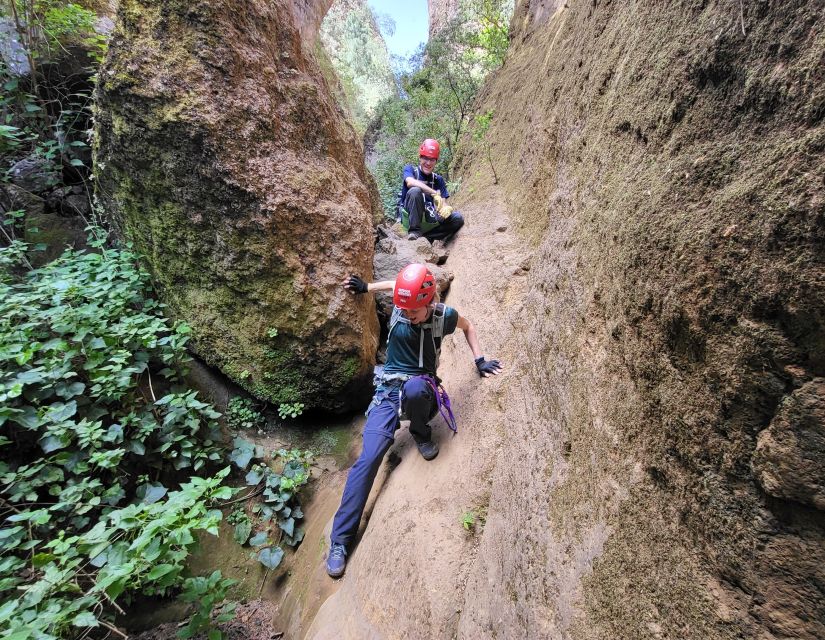
The canyon doesn’t just give you one dramatic view. It gives you changing angles. Sometimes you’re looking up at the wall you just left. Sometimes you’re seeing the next drop cut through orange rock. And occasionally, you get wider panoramas when the route opens.
Even the “in-between” moments matter. You’ll pass areas where the rock looks smoother or rougher, where moss thickens in damp sections, and where the canyon feels narrower. Those little variations are why a guided route is worth it. A good guide notices what you might miss if you were solo.
Jorge also adds local context during the day, including pointers about the flora and fauna you might spot along the trail. In Tenerife, that kind of attention makes the trip feel grounded in place, not just like an activity happening near a viewpoint.
The Chimoche track and the walk-out after your last rappel
Once you finish the sequence of rappels, you’ll arrive at the Chimoche track to conclude the descent. After that, you’ll start your walk back to the starting area. Expect about 30 to 35 minutes on foot, depending on pace and how the group moves together.
This walk-out matters because your brain changes modes. You’ve been hanging, focusing, controlling. Now you’re walking again, and you’ll want to keep your balance. Wear shoes with grip you trust.
Also, canyon days are when tiny hazards matter. A note that came up from past participants: there can be stinging nettle in the area, so watch where your legs swing and where you step, especially in scrubby edges near the route.
What you get for $82: value that’s more than the thrill
At $82 per person for about 6 hours, the price can look straightforward, but the value comes from what’s included.
You get:
- a canyoning guide
- all canyoning equipment
- photos of your experience
- accident insurance
What you don’t get:
- food and drinks
- hotel pickup and drop-off
Here’s how that plays out in your budget. You’re paying for the gear and professional instruction, not just “rope time.” Equipment and safety management are expensive in real life, and the tour’s photos mean you don’t have to worry about your camera taking a swim.
The trade-off is simple: bring your own energy and don’t assume transportation is handled. Pack snacks or a meal for breaks, and carry water. The day’s outdoors, and you’ll work up heat even if you feel cool in the shade.
Gear, clothing, and the shoe rules that keep you comfortable
Bring:
- warm clothing (temperatures and wind can shift)
- water
- food
- rain gear
- a daypack
- long pants if you have them (long trousers are described as optional, but long pants are smart for comfort)
There’s also a clear footwear rule: you’re limited to hiking shoes or trail running shoes, and you should follow that. If you show up in the wrong shoes, the tour expectations won’t match what you’re wearing.
The guide can provide hiking boots for rent if you request them. Do it early so you can pick something that fits your feet well before the approach walk.
One last clothing detail: you’ll be moving with ropes and gear. Loose items that flap or catch are annoying at best and unsafe at worst. Keep it practical.
And for peace of mind, note the rules: no smoking and no vaping during the activity.
Who this tour suits best (and who should skip it)
This canyoning tour is designed for people who want a guided outdoor adventure with controlled adrenaline. It’s also not for every body type or comfort level.
It’s not suitable for:
- children under 13
- pregnant women
- people with back problems
- people with mobility impairments
- people with heart problems
- people afraid of heights
- people with epilepsy
- people over 65
- people over 243 lbs (110 kg)
So who does fit? If you’re reasonably healthy, you can handle a half-day outdoors, and you’re willing to practice rappel technique carefully, you’ll likely love it. Many first-timers find the learning curve manageable because the guide teaches what to do before you’re committed to a descent.
If you have any medical concern listed above, take that seriously. Rope activities are not the time to test boundaries.
The guide matters: why Jorge’s approach comes up again and again
In real canyoning, the guide is the difference between a scary day and a confidence-building one. Jorge is repeatedly praised for being:
- calm and patient with beginners
- focused on making you feel safe
- good at answering questions about equipment and nature
- attentive to the group during the route
That last part is key. Safety isn’t only about having gear. It’s about watching foot placement on the approach, checking readiness before a rappel, and keeping the group moving at a pace that lets people stay focused.
Jorge also shares local tips, including ideas for Tenerife food and drinks during downtime. One mention that stuck: barraquito, which is a Tenerife coffee-based drink worth trying if you’re looking for something local after the canyon.
Should you book Los Arcos canyoning in Tenerife?
Book it if you want a guided Tenerife adventure that mixes real rappelling with geology and views. The small group size, the gear and insurance included, plus the included photos make it feel like a complete package rather than a “show up and hope” activity.
Skip it if heights make you panic, or if any of the listed medical and mobility restrictions apply to you. Also be honest about your footwear. If you don’t want to invest in the right shoes and clothing, you’ll likely spend the day thinking more about comfort than the canyon.
If you’re on the fence, ask yourself two questions: can I handle a first rappel around 22 meters with instruction? And will I bring water and rain protection so I’m comfortable enough to enjoy the mossy orange walls? If the answer is yes, Los Arcos is a terrific way to spend your time in Tenerife.
FAQ
How long is the Los Arcos canyoning tour in Tenerife?
The tour lasts 6 hours.
Where do I meet the guide?
You meet your guide at the Mirador de La Bermeja.
What’s included in the price?
The price includes a canyoning guide, all canyoning equipment, photos of your experience, and accident insurance.
Is food or drinks included?
No. Food and drinks are not included.
Do I get hotel pickup and drop-off?
Hotel pickup and drop-off are not included.
What language will the guide speak?
The live tour guide is available in English and Spanish.
How big is the group?
It’s a small group limited to 8 participants.
What should I bring?
Bring warm clothing, hiking shoes, water, food, rain gear, long pants (long trousers are described as optional), and a daypack.
Are children allowed?
This activity is not suitable for children under 13.
Can I cancel for a full refund?
You can cancel up to 24 hours in advance for a full refund.