REVIEW · TENERIFE
Sunset & Stargazing Experience from Teide
Book on Viator →Operated by Tenerife Stars · Bookable on Viator
Teide sunsets have a way of making time feel short. This tour strings together a 3-course dinner, a high viewpoint, and telescope stargazing near Teide into one smooth evening plan.
I especially like the dinner stop at Guía de Isora—you get local wine plus soft drinks, and there are vegetarian or vegan options. I also like that you’re not just standing around looking up; the night includes powerful telescopes and help spotting targets in the sky.
One thing to consider: the experience can run with a lot of people (up to 55), so telescope time can feel limited during busy nights. If you’re hoping for lots of hands-on time at each scope, you’ll want to manage expectations.
In This Review
- Key highlights before you go
- A 6-hour sunset and Teide stargazing combo from the south
- Guía de Isora dinner: local wine with a relaxed start
- Mirador de los Poleos: a sunset viewpoint that reaches across the islands
- Queen’s Shoe at Teide: stargazing from about 2000 meters
- Staring time is only as good as the crowd level
- Telescopes, star-hunting, and what you can realistically expect
- Cameras, the shared photos, and how to prepare your phone
- Group size, timing, and why crowds affect telescope time
- Price and value: what $78 buys you in practice
- What to bring: warm layers, good shoes, and a plan for the dark
- Who should book this sunset and stargazing experience?
- Should you book Tenerife Stars for sunset and stargazing?
- FAQ
- FAQ
- What’s the start time for this tour?
- How long does the experience last?
- How much does the tour cost?
- Does the tour include dinner?
- Are vegetarian or vegan meals available?
- Is pickup included, and where does it work?
- What happens during the sunset portion?
- What’s the stargazing location and altitude?
- Do you get telescopes during the stargazing?
- Are photos included?
- What if the weather is bad?
Key highlights before you go
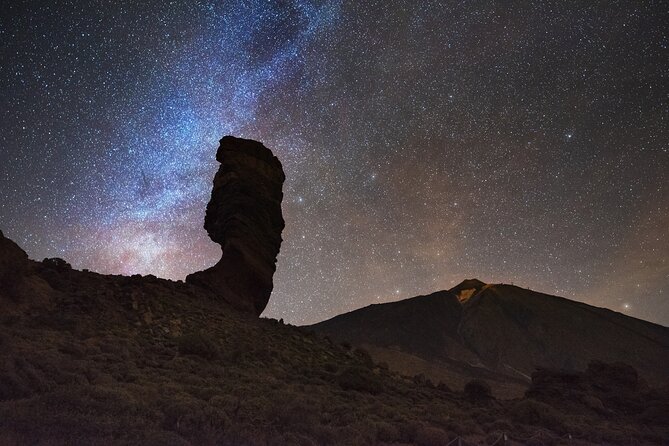
- Teide-area stargazing at about 2000 meters with dark-sky conditions
- 3-course dinner with local organic wine (plus water and soft drinks)
- Sunset views from Mirador de los Poleos, with western islands in sight
- Telescope time for planets and brighter deep-sky targets, plus guidance under the stars
- Shared photos from different moments during the evening
- Small logistics built around South Tenerife pickup and a later afternoon start
A 6-hour sunset and Teide stargazing combo from the south
This is a late-afternoon to early-night outing built around two big hits: sunset first, then the dark sky at the Teide National Park area. The start time is 3:30 pm, and the whole experience runs about 6 hours.
The day is paced like this: you drive up to a dinner/view stop, move to a formal sunset viewpoint for photos and horizon views, then head for stargazing near the Teide area around 2000 meters. That order matters. Sunset gives you a warm-up before the cold, dark, starry part of the evening.
For getting there, the pickup is free from South Tenerife only, using meeting points close to your place of stay. If you’re not in that area, you’ll need to arrange a meeting point with Tenerife Stars. In the morning of the tour, you get WhatsApp messages with the exact pickup time. It’s simple, but it’s also the kind of thing you should watch closely, because arriving late can throw off the start of the whole group.
One more practical detail: it’s offered in English, uses a mobile ticket, and the tour caps at 55 people—large enough that you’ll feel group energy, small enough that it still feels like one event rather than a city tour.
You can also read our reviews of more evening experiences in Tenerife
Guía de Isora dinner: local wine with a relaxed start
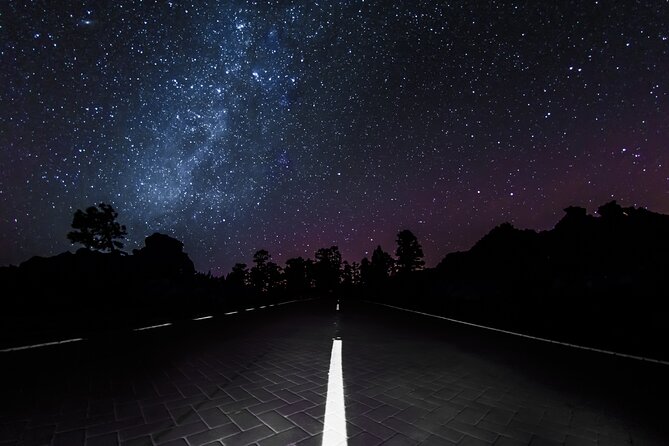
The first stop is Guía de Isora, where the evening begins with a 3-course meal. You’re not just eating for fuel—you’re eating with a nice setup and time to breathe for a moment, including a chance for a short walk with fantastic views.
What I like here is the meal structure. You get local wine, water, and soft drinks included, and the tour notes you can choose a vegetarian or vegan option. It’s a real help on a night focused on the outdoors—food keeps you comfortable during the drive and the longer waiting that comes with stargazing.
That said, this is also where crowding can show up. One guest described the restaurant as very busy, though they were accommodated to an outside area. Translation for you: expect a lively meal service, and if you’re the type who likes quiet, arrive with a chill mindset—or ask politely if outdoor seating is possible once you’re there.
If you’re sensitive to meal timing, keep in mind you’ll likely be eating before sunset and then moving again by vehicle. So if you know you get motion sickness, plan accordingly.
Mirador de los Poleos: a sunset viewpoint that reaches across the islands
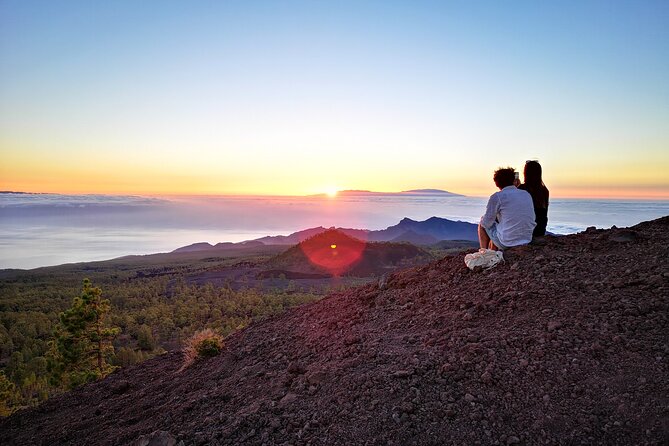
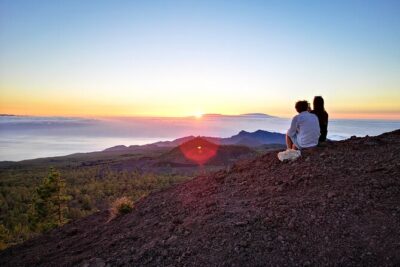
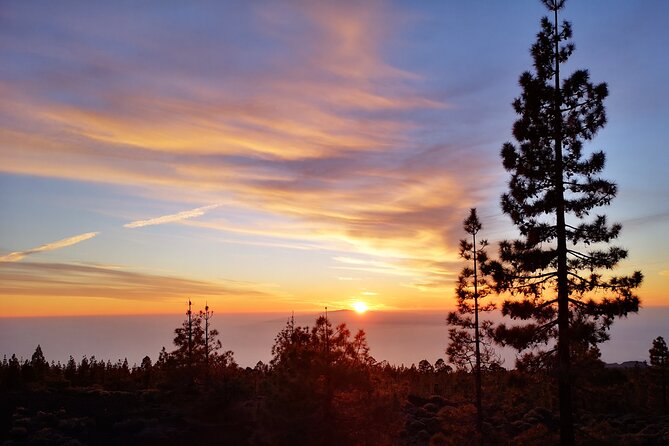
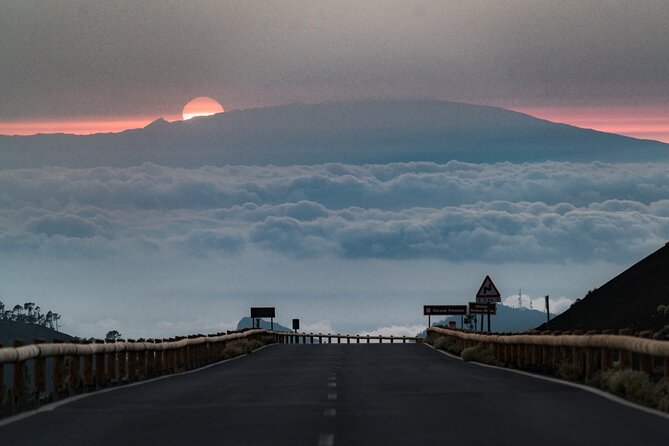
Next is Mirador de los Poleos, and this is the classic photo moment: a breathtaking sunset view where you can see islands off to the west—La Gomera, La Palma, and El Hierro.
The timing here is about 30 minutes. That’s not a lot, so I’d treat it like a mini-photo sprint:
- Find a spot that gives you an unobstructed view of the horizon.
- Take your sunset shots early, then spend the rest watching the light change.
- If you want videos, start filming before the sun dips all the way—light fades fast at these angles.
The other bonus of this stop is that it gives you context. When you later look up at Teide’s dark sky, you’ll remember where you were and what the horizon looked like. It’s part of what makes the night feel like more than just “tour bus + telescope.”
One watch-out: this viewpoint can be busy with other buses. So keep your expectations realistic about space and flow. You’ll still get the main event—sunset from a serious vantage point.
Queen’s Shoe at Teide: stargazing from about 2000 meters
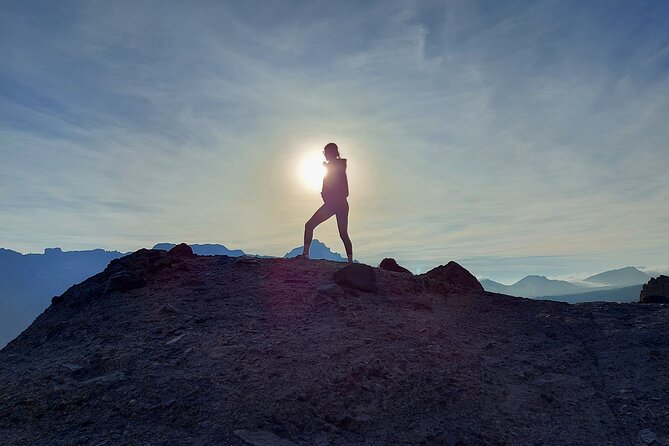
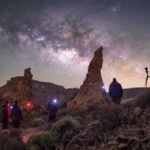
The heart of the experience is the stargazing stop at Queen’s Shoe in the Teide National Park area, around 2000 meters. This is described as one of the world’s best places for stargazing—because you get low light contamination and strong night visibility.
Here you get about 2 hours under the sky. That’s long enough to see different targets as your eyes adjust, especially with guidance. The tour also emphasizes that the national park Teide area is ideal for stargazing at altitude—so the experience isn’t just “dark sky,” it’s dark sky with clear air and a strong viewing setup.
I’d also plan for cold. Even if the Tenerife sunset is mild, altitude can bite. One guest specifically noted it was below 10°C and recommended warm clothes and good shoes. You don’t need to overpack—just bring real layers.
Staring time is only as good as the crowd level
A couple reviews hinted at the same issue: if the group is large, telescope time per person can feel short, and people can cluster. That doesn’t ruin the night, but it does affect how hands-on it feels. If you want more time at each scope, you’ll need patience.

Telescopes, star-hunting, and what you can realistically expect
This is not the kind of stargazing where you just stand and guess constellations. You get powerful telescopes for stargazing and a setup that focuses on planets and galaxies. Telescopes matter because they pull details out of objects you can barely detect with the naked eye.
From the experience descriptions, the guide role is important: in the night, you’re helped to spot targets and understand what you’re seeing. One of the most praised guides here is Ozzi (also written Ozzy), mentioned as funny, passionate, and eager to answer questions. That kind of host energy turns “I see a star” into “I know what that star is.”
Now, here’s the expectation-setting that’s worth saying out loud: this is not a long-exposure astrophotography workshop. One guest warned not to expect slow-exposure, super-detailed galaxy shots with just naked-eye viewing.
So what should you expect instead?
- You’ll see far more stars than you can from a city.
- You’ll get telescope views that make planets and brighter deep-sky objects more satisfying.
- You’ll learn a few sky facts that make the sky feel less random.
The laser-pointer style guidance shows up in the reviews too, where the guide points out objects so you’re not stuck guessing. If you’re the type who wants to understand the sky while you look, you’ll likely love this part.
Cameras, the shared photos, and how to prepare your phone
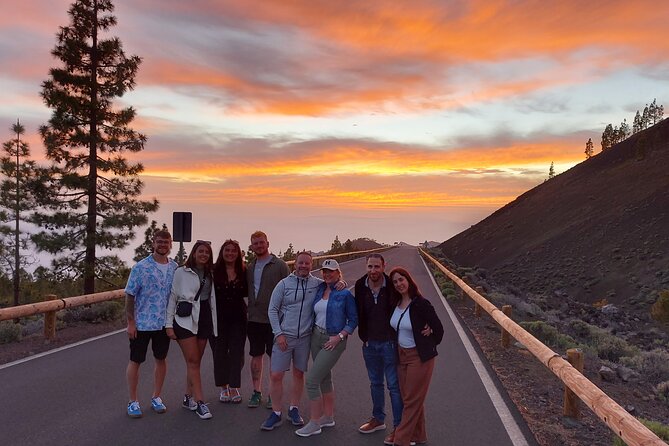
The tour includes photos sharing: pictures will be shared with guests from different moments during the experience. That’s a nice safety net if you don’t want to fuss with settings while you’re also trying to enjoy the night.
But you should still bring your own plan for photos:
- Charge your phone fully before the tour.
- Keep a small power bank if you have one.
- If your goal is phone night shots, you’ll benefit from the guide’s tips during the experience (reviews mention learning how to capture stars with a mobile phone).
Another reality check: phone cameras vary. Some phones handle night shots better than others. Still, you’ll likely leave with at least a few usable images—especially from sunset and from the brightest telescope views.
If you’re hoping for “social media perfect,” keep your expectations flexible. The night is cold, the crowd moves, and the sky changes minute by minute.
Group size, timing, and why crowds affect telescope time
With a max of 55 people, you’re in a group environment. That’s part of the fun—people talking about what they see, excitement sharing the dark—but it can also create bottlenecks.
Here’s what matters:
- At sunset viewpoints, space is tight and lines form.
- At telescopes, you’ll likely take turns.
- If the tour is heavily booked, time at each telescope can shrink.
One review called out overbooking as the main gripe: lots of people moving in pitch-black conditions to reach telescopes, with limited time per guest. That’s not a guarantee that every night is chaotic, but it’s a good reason to come prepared: wear shoes with grip, keep your phone flashlight ready, and stay aware of your surroundings.
Also, one review noted the tour was going back to find people due to incorrect pickup times, which delayed the start. That’s why the WhatsApp message in the morning is your friend. Check it early and confirm your timing once you meet up.
Price and value: what $78 buys you in practice
At $78.19 per person, you’re paying for three things bundled together:
- A round-trip experience format with air-conditioned transport
- A full 3-course dinner with local wine, water, and soft drinks
- Telescope access and guiding for the night sky
That combo is the value angle. Stargazing tours can be expensive when you pay separately for transport, meals, and equipment. Here, most of the core costs are folded into one price.
Is it worth it? For the right traveler, yes—especially if you want a guided stargazing night without the hassle of planning transport to dark-sky areas and figuring out telescope logistics yourself.
If you’re traveling as a “solo mission” photographer who wants lots of personal telescope time and quiet pacing, you might feel short-changed if crowds limit access.
But if you’re excited about the overall arc—dinner, sunset, and a night sky that feels dramatic—this price tends to make sense.
What to bring: warm layers, good shoes, and a plan for the dark
This tour is outdoors-heavy in the evening. So bring the basics that actually matter.
Pack:
- Warm layers (the altitude can feel colder than you expect)
- Good shoes with grip for uneven ground
- A light layer for wind at higher points
- Charged phone and a power bank if you have one
Prepare mentally:
- Expect some waiting and moving in darkness during the stargazing portion.
- Plan for limited bathroom options during the mountain portion. One guest described no coach toilet and said people had to use natural options near the stargazing area, with no clear way to wash hands afterward. The tour info doesn’t spell out bathroom facilities, so I strongly suggest you treat this as an outdoor evening with limited amenities and go prepared.
If you’re going with kids, this becomes extra important. The dark, the crowds, and the cold can test patience. Still, families also had great experiences when the guide handled questions and helped people find what to look at.
Who should book this sunset and stargazing experience?
This is a good fit if you want:
- A guided Teide-area night without driving yourself
- Telescope views and help identifying what you’re seeing
- A full evening plan starting at 3:30 pm, not just a short sunset stop
It’s also a solid pick for couples and small groups who want a shared “wow” moment: sunset first, then a star field that feels like it belongs in a science documentary.
It may be less ideal if:
- You hate crowds and lines
- You’re extremely sensitive to time limits at telescopes
- You need lots of guaranteed, close-by restroom facilities during the mountain portion
If you’re okay with group turn-taking and you dress for the cold, it’s a fun way to experience Tenerife beyond the beach.
Should you book Tenerife Stars for sunset and stargazing?
I’d book it if your priority is a complete evening: dinner + a real sunset viewpoint + telescope-assisted stargazing near Teide. The combination is the selling point, and the guides (especially Ozzi/Ozzy, who gets repeated praise) seem to make the sky part feel human, not mechanical.
Don’t book if your top priority is quiet, slow, hands-on telescope time with plenty of personal space. With up to 55 people, the experience can get busy, especially around the scopes.
My practical advice: if you go, check your WhatsApp pickup message carefully, wear warm layers and grippy shoes, and go in expecting a guided sky adventure—not a private observatory night.
FAQ
FAQ
What’s the start time for this tour?
The tour starts at 3:30 pm.
How long does the experience last?
It runs for about 6 hours.
How much does the tour cost?
The price is $78.19 per person.
Does the tour include dinner?
Yes. You’ll have a 3-course dinner with organic local wine, water, and soft drinks.
Are vegetarian or vegan meals available?
Yes, the tour notes you can choose a vegetarian or vegan option.
Is pickup included, and where does it work?
Free pickup and return are included from South Tenerife only at meeting points near your accommodation. Pickup from north of Tenerife is not included.
What happens during the sunset portion?
You’ll stop at Mirador de los Poleos for about 30 minutes to watch the sunset and take photos, with views toward islands to the west.
What’s the stargazing location and altitude?
Stargazing takes place at Queen’s Shoe in the Teide National Park area, around 2000 meters.
Do you get telescopes during the stargazing?
Yes. The tour includes powerful telescopes for stargazing, including planets and galaxies.
Are photos included?
Yes. Pictures will be shared with guests from different moments during the experience.
What if the weather is bad?
This experience requires good weather. If it’s canceled due to poor weather, you’ll be offered a different date or a full refund.