REVIEW · TENERIFE
2 hours Semi-private surfing lesson in Playa de Las Americas
Book on Viator →Operated by Tenerife Surf Point · Bookable on Viator
First surf lessons are best with backup. This semi-private session in Playa de la Américas keeps things small, capped at four people, so you get real attention instead of getting lost in a crowd. You’ll mix quick theory, hands-on time in the sea, and then get feedback later using surf photos.
Two things I like a lot: the equipment rental is included, so you can travel light, and the structure blends coaching on land with actual waves in the water. One thing to keep in mind is that you’ll need moderate physical fitness and the lesson depends on good weather, since surfing isn’t something they force in bad conditions.
If you care about learning fast, the photo-based follow-up is a smart touch. Coaches such as Georgios (and others at Tenerife Surf Point) focus on friendly, supportive teaching, and the after-lesson analysis helps you understand what to adjust next time. The main consideration is simple: if the day’s conditions are tougher, you’ll still be coached, but you should be prepared to work a bit.
In This Review
- Key things to know before you go
- Playa de la Américas: a sensible place to learn fast
- Meeting Tenerife Surf Point and getting set up
- What actually happens during the 2-hour lesson
- In the water: how semi-private teaching keeps you moving
- Photo analysis: the quiet reason you improve
- Languages and instructors: learn in the way you think
- Price and value: what $132.75 buys you for 2 hours
- Who should book this lesson, and who might skip it
- Should you book Tenerife Surf Point’s semi-private lesson?
- FAQ
- How long is the semi-private surfing lesson?
- How many people are in the semi-private group?
- What’s included with the lesson?
- What languages are offered?
- Where do I meet for the lesson?
- Does the lesson run in any weather?
- What is the cancellation policy?
Key things to know before you go
- Four-person maximum: semi-private means more coach attention for every paddle and pop-up
- Equipment rental included: you don’t have to pack a full surf setup
- Theory + practical time: you learn on land, then apply it right away in the sea
- Photo analysis after surfing: pictures from your session are used for feedback and technique
- Coaching in multiple languages: English, Spanish, Russian, and Latvian are offered
- Your group only: it’s run as a private tour for your party, not mixed with strangers
Playa de la Américas: a sensible place to learn fast
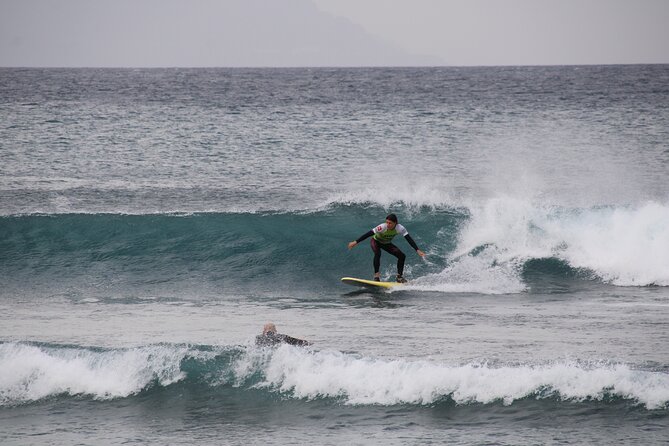
Playa de la Américas is built for visitors, which matters when you’re doing a sport lesson. You’re not trekking across town with a bag of boards. You’re meeting at a proper surf-school spot near public transportation, then getting pulled into a learning flow that lasts about two hours.
What makes the location work for beginners is the practical rhythm: short classroom-type guidance, then straight to the water. In a small four-person cap, you’re more likely to get the kind of quick corrections that help your balance and timing. That’s the difference between a fun session and a session that actually teaches you something you can use immediately.
The other big factor is weather. The lesson requires good conditions, and if it’s canceled due to poor weather, you’ll be offered a different date or a full refund. So if your schedule is tight, this is still doable, just know the ocean controls the calendar.
You can also read our reviews of more private tours in Tenerife

Meeting Tenerife Surf Point and getting set up
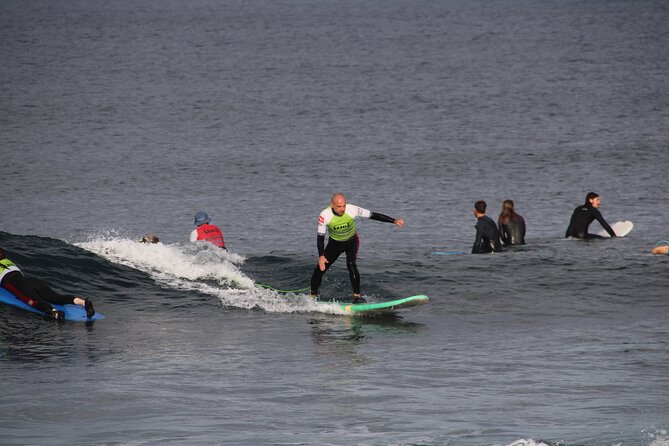
Your meeting point is Tenerife Surf Point at Av. Rafael Puig Lluvina, 32, 38650 Playa de la Américas, Santa Cruz de Tenerife, Spain. The good part here is simple: you start and end back at the same place, so you’re not guessing where to meet after the lesson.
You’ll also get what you need to surf without turning it into a gear scavenger hunt. Equipment rental is included, which is a real value in a place like Tenerife where you might be traveling with other plans. It also means the coaching team can align your setup with how they’re teaching that day.
Check-in runs via the mobile experience linked to your booking, and you’ll receive confirmation at the time of booking. That’s handy if you’re switching between apps and tickets while you’re in vacation mode.
One more practical point: the activity lists moderate physical fitness as the expectation. That doesn’t mean you need to be an athlete, but you should feel comfortable with paddling, balancing, and getting in and out of the water.
What actually happens during the 2-hour lesson
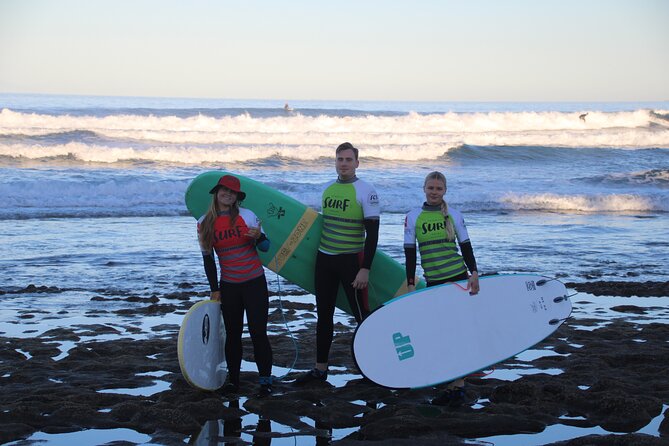
This lesson isn’t just “go have fun.” It’s paced for learning, with a mix of land-based instruction, time in the sea, and after-session feedback. The total time is about 2 hours, which is a sweet spot for first-timers and for people who want results without losing their whole day.
Here’s the flow you should expect:
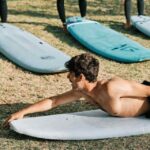
1) Theory and coaching on land
You start with an explanation of what you’re doing, how to position yourself, and how to approach your first attempts. This isn’t a long lecture. It’s the kind of instruction that gives you a mental checklist so you can actually listen in the water.
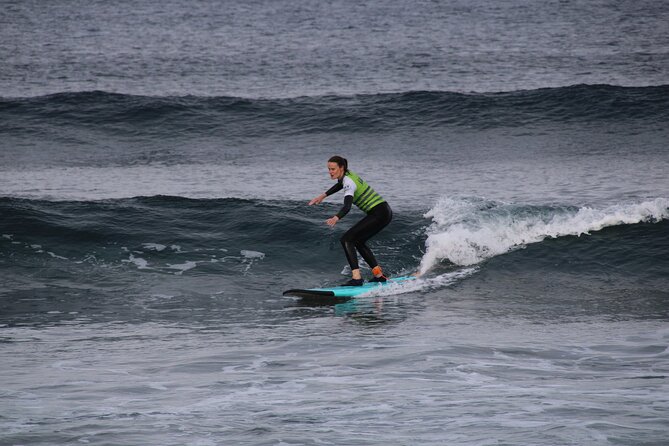
2) Practical surf time in the sea
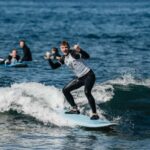
Then you go hands-on. Because the group is kept very small, the coach can watch what your body is doing and correct you on the spot. For first-timers and teens alike, this is where the lesson becomes memorable rather than intimidating.
3) Photo analysis after surfing
After the surf session, photos are shown as part of technique feedback and analysis. This is one of the most valuable parts, because it turns your memory into something you can improve. When the instructor can point to what happened in a specific moment, you’re not guessing later.
The after-lesson photo review is also where coaching style really matters. At Tenerife Surf Point, the staff comes across as friendly and supportive, and that tone helps you stay calm enough to learn under real conditions.
In the water: how semi-private teaching keeps you moving
The headline here is the four-person cap. In a bigger class, one coach has to split attention. In a four-person group, your coach can spot issues faster, adjust for your pace, and keep the lesson from turning into a series of waiting turns.
I like that semi-private format for two reasons:
1) Short feedback loops. You try something, then you get corrected quickly enough that it changes your next attempt.
2) Less chaos in your learning curve. New surfers often need a few tries before they even feel stable. A smaller group reduces the number of moving parts.
You’ll also see why this format works for different ages. The experience is described as fun and structured for first-timers, and it also seems to click for teens who want hands-on coaching rather than just watching.
One more real-world note: surf conditions can vary. There’s at least one account of waves being pretty big, yet the group still managed to surf with instructions and coaching. So if you’re worried you’ll be “too new” for the ocean, focus on this: the teaching is designed to help you handle what’s happening that day, not just an ideal wave scenario.
Photo analysis: the quiet reason you improve
A lot of surf schools teach you while you’re paddling. Fewer also help you understand what to change once you’re back on shore. Here, you get photo analysis after the lesson, and that makes a difference.
In practical terms, this is what photo feedback tends to solve:
- You stop relying on vague memory like I think I did it right.
- The coach can point out body position and timing more clearly than verbal cues alone.
- You can leave with a plan for what to try next time, rather than just a grin and a sunburn.
It’s also a morale booster. Seeing your own progress on camera helps a lot, especially if you’re the type who learns best when you can review what happened.
I’ll also mention the staff style: instructors like Georgios come through as supportive, and that matters when someone is learning in public and trying not to freeze up. When your coach keeps it constructive, you’re more likely to take corrections instead of shutting down.
You can also read our reviews of more tours and experiences in Tenerife

Languages and instructors: learn in the way you think
This lesson offers instruction in multiple languages, including English and Spanish, plus Russian and Latvian. That’s a real value if you’re traveling with a group where not everyone speaks the same language, or if you want to understand surf terms without translating in your head.
If you’ve had trouble in the past with sports lessons where the coach only speaks one language, this multi-language setup is worth noting. Clear communication can speed up your learning by cutting out misunderstandings during the theory part and during corrections in the sea.
The experience also includes instructors who are described by name in accounts, such as Georgios and Francesco. While you shouldn’t expect a specific instructor every time, it does signal that the team is active and that coaching personalities are part of the experience.
Price and value: what $132.75 buys you for 2 hours
At $132.75 per person for about two hours, the price can feel like a chunk of vacation money. The value gets clearer when you look at what’s included and how the lesson is designed.
You’re paying for:
- A semi-private setup with a small group cap (more attention per person)
- Equipment rental included (so you don’t add separate costs or packing stress)
- Theory plus practical coaching in the sea (not just one or the other)
- Photo-based feedback after the lesson (a learning tool many basic lessons skip)
- The ability to choose among languages like English and Spanish (reduces friction)
There’s also mention of group discounts, which can improve value if you’re traveling as a family or with friends and can keep the group size within the semi-private structure.
Bottom line: this pricing makes sense when you want coaching that’s structured and personal, not a generic group event. If you’re the kind of learner who benefits from correction and wants to leave with a clearer next-step, the included photo analysis alone can tip the math in your favor.
Who should book this lesson, and who might skip it
This is a great fit if:
- You’re surfing for the first time and want guidance that stays practical
- You want a small group so you aren’t waiting around for the coach
- You care about feedback after the session, not just during it
- You’re comfortable with the moderate physical demands of paddling and balancing
- You want the lesson in English, Spanish, Russian, or Latvian
It may be less ideal if:
- You need a fully private setup. The experience is semi-private and notes that you should select a private lesson option if you want it to be just you.
- Your schedule is very weather-sensitive. Good conditions are required, and surfing can get rescheduled if the day isn’t right.
- You’re expecting a long day trip. This is a focused two-hour lesson, then you’re done.
If you’re traveling with family, it also sounds like the small group format helps keep everyone in the same experience. That can matter if you’re coordinating kids, teens, and adults who all want to learn without splitting into totally different plans.
Should you book Tenerife Surf Point’s semi-private lesson?
I’d book this if you want a first surf session that feels organized, coached, and built for learning. The small four-person cap, the included gear, and the after-session photo analysis are the core reasons. If you pick one surf lesson in Tenerife, this is the kind that gives you a clearer sense of what worked and what to try next time.
Skip or consider a different option if you need absolute control and zero shared group time, or if you’re not comfortable with moderate physical activity. Also, plan around weather, because the ocean calls the shots here.
If your goal is simple: learn the basics, get corrected, and leave with tangible feedback you can use later, this lesson is a strong bet in Playa de la Américas.
FAQ
How long is the semi-private surfing lesson?
The lesson is approximately 2 hours.
How many people are in the semi-private group?
The lesson is capped at four people, and it’s for 2 or more people.
What’s included with the lesson?
The experience includes theory, a practical part in the sea, and photo analysis after the lesson. Equipment rental is included.
What languages are offered?
Lessons are available in English, Spanish, Russian, and Latvian.
Where do I meet for the lesson?
You meet at Tenerife Surf Point, Av. Rafael Puig Lluvina, 32, 38650 Playa de la Américas, Santa Cruz de Tenerife, Spain, and the activity ends back at the meeting point.
Does the lesson run in any weather?
It requires good weather. If it’s canceled due to poor weather, you’ll be offered a different date or a full refund.
What is the cancellation policy?
You can cancel for a full refund up to 24 hours in advance of the experience’s start time. Canceling less than 24 hours before the start time does not get refunded.