REVIEW · TENERIFE
Tenerife: Guided Canyoning Experience
Book on GetYourGuide →Operated by Outdoor activities tenerife · Bookable on GetYourGuide
Canyoning makes Tenerife feel wild. This guided day in one of the island’s best canyons combines rappelling, slides, and jump opportunities in a narrow, cliff-hugging setting that feels far from everyday travel. I especially like that the tour builds toward the main moments with hands-on instruction, then lets you earn your adrenaline with real vertical action.
Two things I really like: you get full technical gear (wetsuit, helmet, harness) and a small group capped at 5, and you’re not just watching the canyon—you’re actively moving through it with a guide who keeps things safe and clear. The main drawback is also the big one: this is technical and physically tough, with jumps up to 8 meters and a very demanding hike back in hot, dry conditions.
In This Review
- Key Points to Know Before You Go
- A Tenerife Canyoning Day: What It Feels Like From Start to Finish
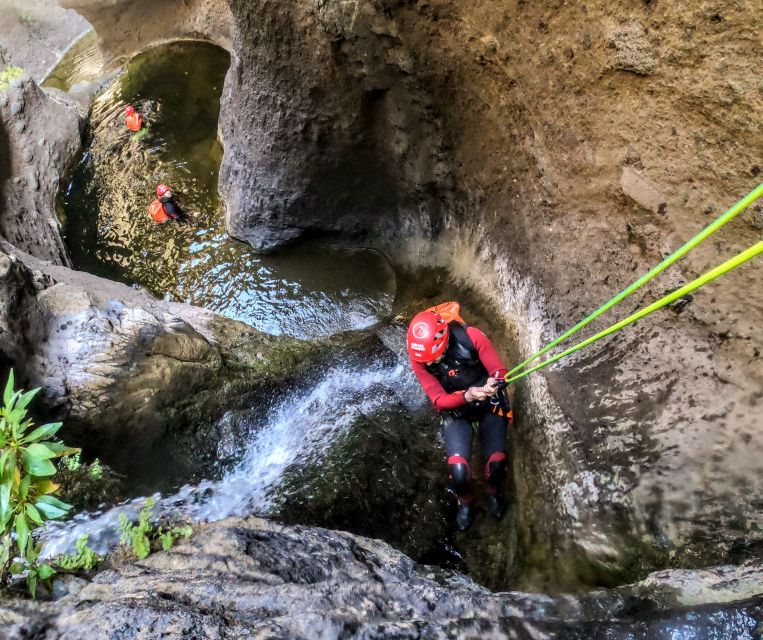
- The Big Moments: 8m Jumps, 17m Rappels, and a 15m Slide
- Gear and Safety: What’s Included and Why It Matters
- The Approach, the Cliffs, and the Views You Earn
- The Hike Back: When the Fun Gets Physical
- Who This Tenerife Canyoning Tour Fits Best
- Price and Value: Is $135 Worth It?
- Practical Stuff: What to Bring and How to Prepare
- The Provider and the Guide Style: What Makes It Work
- Should You Book This Tenerife Canyoning Experience?
- FAQ
- How long is the guided canyoning experience?
- How much does it cost?
- What’s the meeting point?
- What’s included in the tour price?
- What languages are the guides?
- How big is the group?
- What should I bring?
- Who should not join this canyoning tour?
Key Points to Know Before You Go
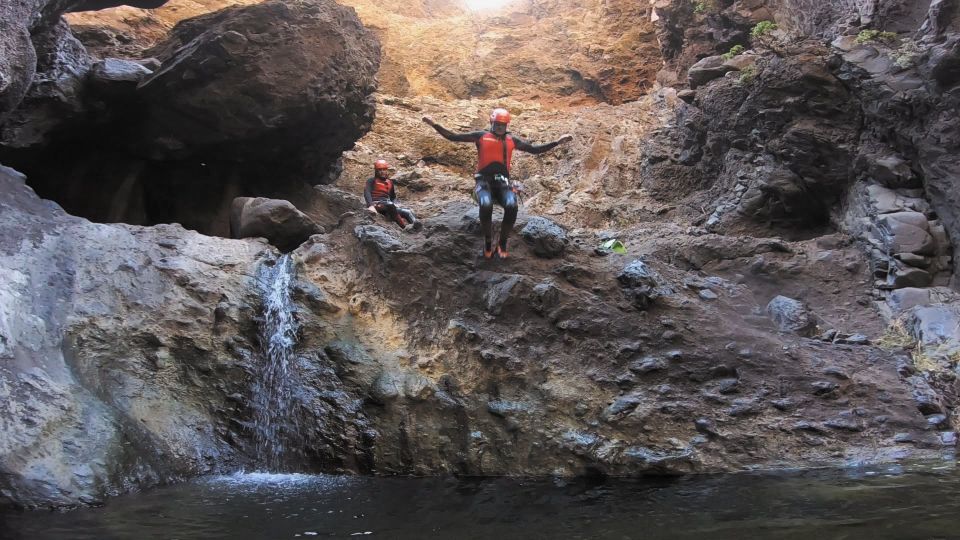
- Big-wall moments: jumps up to 8 meters, rappelling up to 17 meters, plus a 15-meter slide into the canyon
- Small group energy: limited to 5 participants, which usually means more time with your guide
- Safety gear included: wetsuit, harness, helmet, plus insurance and a guide who handles technique
- Real hike involved: approach and return include climbing effort, including sections that get you down on all fours
- Not for the faint of heights: it requires confidence with jumping and exposure to tall drops
A Tenerife Canyoning Day: What It Feels Like From Start to Finish
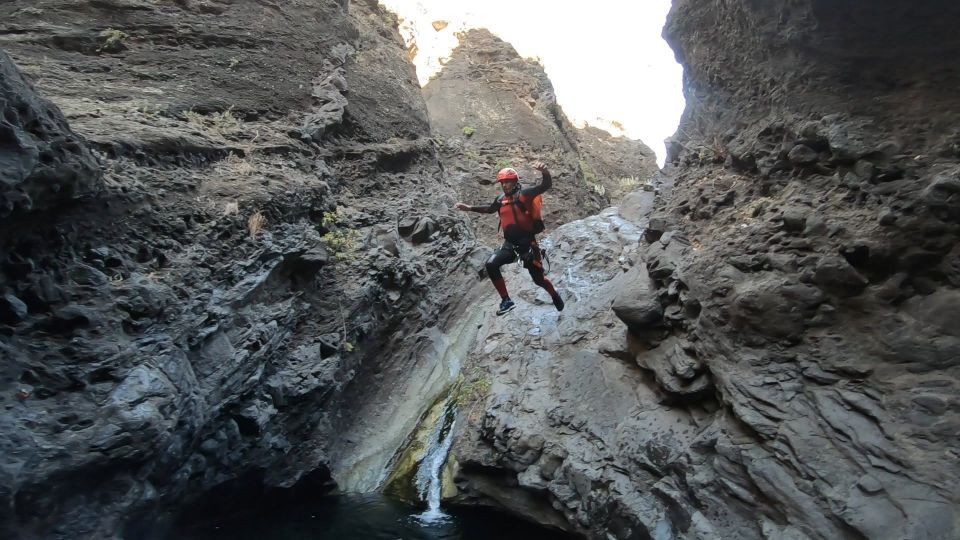
If you’re craving an outdoor day that’s more physical than sightseeing, canyoning in Tenerife is a strong answer. You’ll spend the day moving through a narrow ravine system, using a mix of walking, climbing, rappelling, sliding, and jumping. The canyon itself is the star: steep sides, tight passages, and constant changes in footing keep your attention on the ground in front of you and the water/line ahead.
The tour starts with meeting your guide at a small spot on the left side of the road. From there, you’ll get geared up quickly. Expect time to get your helmet and harness fitted and to learn how rappelling works before you’re committed to the first descent. This matters because the day’s most exciting sections rely on basic technique. If your body understands what to do, you can spend your energy on the fun instead of panic.
You should plan on a day that alternates between short bursts of adrenaline and longer stretches where you catch your breath, snack, and regroup. One of the nice touches is a break after you finish the main descent, where you can eat and recharge before you handle the return hike. That’s not just comfortable—it helps you stay focused when you’re tired and the hike gets physical.
You can also read our reviews of more guided tours in Tenerife
The Big Moments: 8m Jumps, 17m Rappels, and a 15m Slide
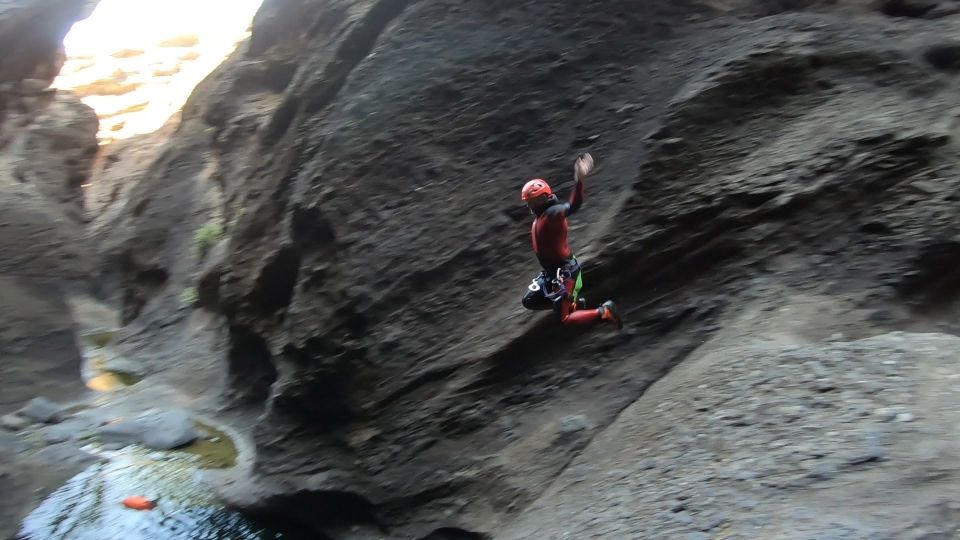
This experience is built around standout vertical features, and they’re not small-town stunts.
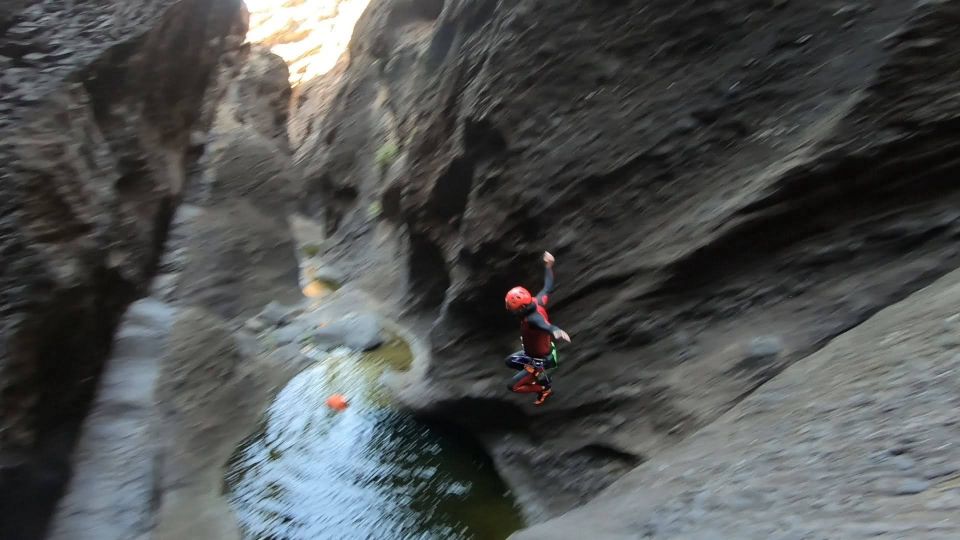
You’ll tackle jumps up to 8 meters. Some are more “confidence builder,” while others can feel technically challenging. The operator’s own guidance is clear: the activity requires you to be fearless about jumping and to be injury-free, because you’re expected to commit with good form, not hesitate mid-step.
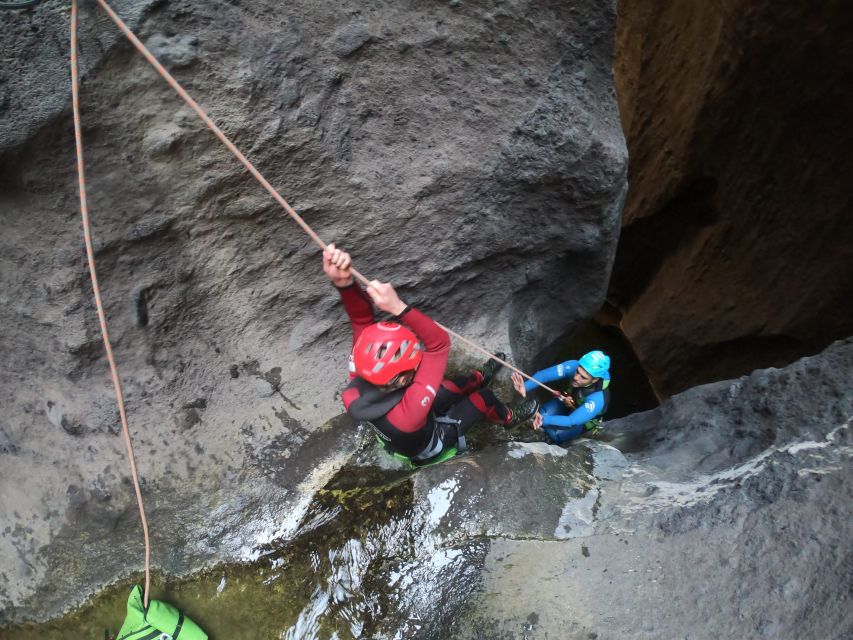
Then comes the technical part: rappelling up to 17 meters. Rappelling is where a good guide earns their pay. You learn how to manage your descent, how to position your body, and how to trust the system. If you’re afraid of heights or you get vertigo, this is exactly the kind of environment that will amplify that fear. So if you’re even on the edge about exposure, take the restrictions seriously.
The headline moment is the 15-meter slide into the canyon. Slides like this are thrilling because they mix speed with the feeling of being guided by your route. Even if you’re not a “jump person,” this is often the section that makes canyoning feel like a playground for the water and rock.
What ties all three of these together is pacing. You don’t just go from zero to chaos. You get technique and safety coaching first, then the canyon gives you increasing intensity.
Gear and Safety: What’s Included and Why It Matters
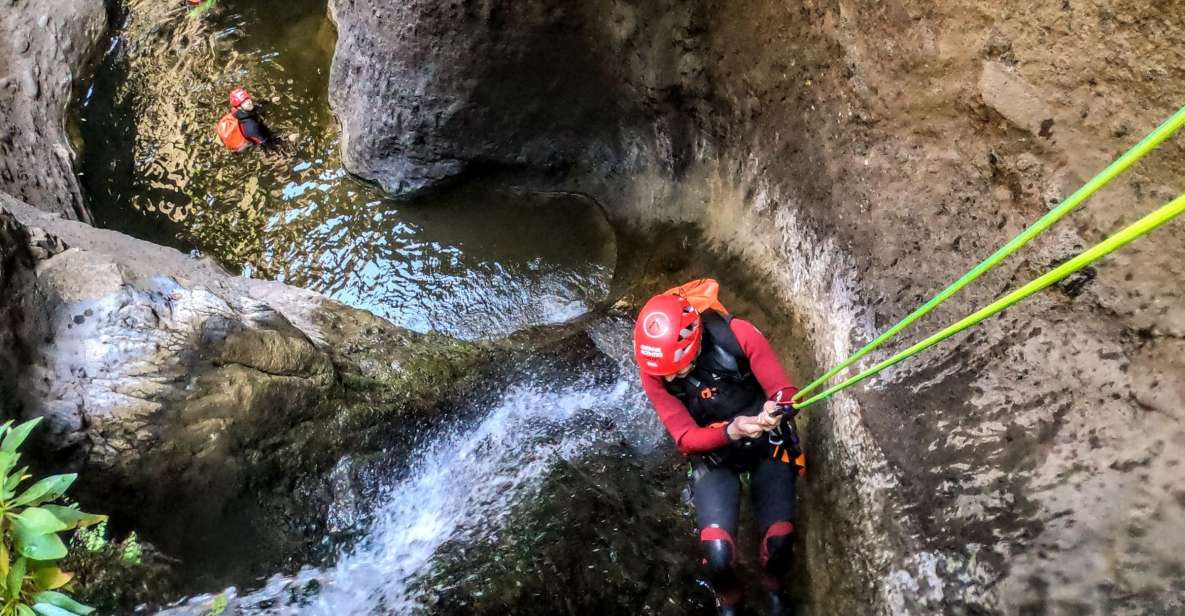
Good canyoning gear isn’t just comfort—it’s confidence. This tour includes the essentials you’d otherwise have to buy or guess about: a wetsuit, helmet, harness, and hiking boots, plus a backpack and insurance.
Here’s why that package matters:
- The wetsuit helps you stay comfortable and protected when you’re dealing with cold water and repeated contact with wet rock.
- The helmet is critical in a canyon where you’re moving through tight spaces and down steep lines.
- The harness and setup make rappelling possible and controlled; without it, the day would be a very different sport.
Your guide also handles the practical side: they’ll introduce the equipment and teach the required techniques before the descent. From the experience details, the guides are described as friendly, funny, and clearly experienced with the area. Names come up in confirmations and feedback, including Jorge, who appears repeatedly as a guide people trust for both safety and fun.
Also, the tour is set up as small group activity (up to 5 people). That’s not just a crowd-control perk. In canyoning, fewer people often means more attention on fit and technique, and less waiting around when you’re harnessed and ready.
The Approach, the Cliffs, and the Views You Earn
The canyon is narrow, so you don’t just enjoy views from a lookout. You’re in the setting. The walls feel close. You’ll feel the surrounding cliffs as part of the experience, not as scenery behind you. That’s one of the reasons canyoning hits so hard for people who like mountains and canyons.
Before you start the main descent, there’s a short walk to the ravine. This first segment is your warm-up in real conditions: you’re moving on outdoor terrain and you’re getting familiar with the rhythm of the day. Once you’re at the start, you’ll prep, then begin the descent through the sequence of rappels, slides, and jump points.
Along the way, you’ll also get moments where you can look up or out through breaks in the canyon. The tour includes a snack break where you can sit, eat, and take in the wider view of the cliff environment. If you’re the kind of person who likes taking photos, you’ll probably find it easier to capture dramatic shots because you’re moving through a vertical corridor—not a flat trail where the background never changes.
The Hike Back: When the Fun Gets Physical
The adrenaline sections are only half the day. The other half is what happens after you finish the descent.
You’ll return via a hike that’s described as very physical on a hot and dry environment. Even if you love the water and the cliffs, this is the part that can catch you off guard. One important detail: the return path includes a slope where you may need to get down and climb on all fours at times. That’s not optional gear—it’s how the terrain works.
So the fitness requirement isn’t just about stamina. It’s about scrambling ability, balance, and staying steady when you’re tired. The operator also flags that some jumps can be technically challenging and that the whole activity expects people to be in top physical shape.
If you’re unsure, the safest move is to listen to the restriction that says to refrain if you don’t feel fearless about jumping, you have injury risk, or your fitness level isn’t ready. Canyoning isn’t the sport to “tough it out.” It’s the sport to be ready for.


Who This Tenerife Canyoning Tour Fits Best
This is one of those activities where the right match makes it amazing, and the wrong match makes it stressful.
You’ll likely love this tour if you:
- Want hands-on adventure (not just a walk with a few photo stops)
- Feel comfortable with heights and committing to jumps
- Are in good shape for walking, climbing, and a demanding return hike
- Prefer small-group guiding with direct instruction and technique help
You should skip it if you fit any of the listed constraints. The tour isn’t suitable for children under 16, pregnant women, people with back problems, mobility impairments, heart problems, or pre-existing medical conditions. It also explicitly warns against going if you’re afraid of heights, have vertigo, aren’t a strong swimmer, or aren’t confident with jumping. Weight limits are included too (over 243 lbs / 110 kg).
Age is another filter: it’s not for people over 60, at least based on the activity’s physical/technical demands. And honestly, that makes sense—between the jumps, rappels, and the tough hike back, you don’t want to be bargaining with your body halfway through.
Price and Value: Is $135 Worth It?
At $135 per person for a full day, the cost can look steep if you’re comparing it to normal tours. But canyoning is not a sightseeing add-on. You’re paying for protected gear, technical guidance, insurance, and the ability to access canyon terrain that most people would never safely navigate alone.
This tour includes a lot that would cost extra elsewhere:
- Guide support throughout the technical sections
- Rappel and canyon safety gear (helmet, harness)
- Wetsuit and boots
- Insurance
- A structured day that stacks multiple major features (rappelling, slide, jumps)
What’s not included is also worth noting: food and drinks are on you. The good news is the tour does include a snack break during the day, but you still need to pack your own water and extra supplies.
So value comes down to fit. If you’re physically ready and excited by vertical water adventure, this is the kind of day that can become a trip highlight because you leave with more than photos—you leave with a story and a skill set (even if it’s just learning technique and using it once, safely, with a guide).
Practical Stuff: What to Bring and How to Prepare
The essentials you should pack are spelled out clearly, and you should follow them.
Bring:
- Food and drinks
- Water
- Beachwear
- Outdoor clothing and sportswear
- Personal medication if needed
Then think about shoes and layering. Hiking boots are included, but you still control what you wear underneath and how you handle dry/wet changes. Since you’re in a warm, hot, dry environment at times, you want clothes that won’t be a problem if you get splashed and if you need to move quickly on the hike back.
One more practical note: this tour is available in English and Spanish, and the group is small. That helps you ask questions before the technical sections and feel more comfortable when instructions come fast.
If you’re booking for a specific day, it’s a 1-day experience with starting times based on availability. That usually matters because you’ll want enough time in your Tenerife schedule to handle the full day of movement, then change out of wet gear afterward.
The Provider and the Guide Style: What Makes It Work
Adventure tours rise or fall on the guide, and the feedback tied to this experience points to a guide style that’s both professional and relaxed. Jorge shows up repeatedly in confirmations, and people describe him as friendly and humorous, while also knowing what he’s doing and answering questions with care.
That combination matters in canyoning because your day depends on two things happening at the same time:
1) You trust the technical process (rappels, safety, equipment)
2) You stay mentally comfortable enough to do the jump/slide sections when it’s time
A small group helps here too. You’re not lost in the shuffle. You get attention, technique reminders, and reassurance when you need it.
Should You Book This Tenerife Canyoning Experience?
Book it if you’re ready for a real canyon adventure with real vertical moves: jumps up to 8 meters, rappelling up to 17 meters, and a 15-meter slide. If you’re comfortable with heights, physically capable for the hike and climb back, and excited by tight canyon scenery, this is the kind of day that can flip your Tenerife trip from scenic to unforgettable.
Skip it if you have any doubts about jumping, heights, vertigo, swimming, or physical limits. This is technical and physically demanding, and safety is treated as the priority. If you’re on the fence, listen to the restrictions and choose a different Tenerife activity that matches your comfort level.
If you want adrenaline with guidance, gear, and a small-group focus, this canyoning day is a strong value—and a memorable way to experience Tenerife beyond the usual routes.
FAQ
How long is the guided canyoning experience?
It lasts 1 day.
How much does it cost?
The price is $135 per person.
What’s the meeting point?
Look for a small place on the left side of the road where you can wait for your guide.
What’s included in the tour price?
A guide, hiking boots, a backpack, helmet, harness, wetsuit, and insurance are included.
What languages are the guides?
The live tour guide provides English and Spanish.
How big is the group?
It’s a small group limited to 5 participants.
What should I bring?
Bring food and drinks, water, beachwear, outdoor clothing, sportswear, and any personal medication.
Who should not join this canyoning tour?
It’s not suitable for children under 16, pregnant women, people with back problems, mobility impairments, heart problems, or pre-existing medical conditions, and it’s also not suitable for people afraid of heights, with vertigo, non-swimmers, people over 60, or people over 243 lbs (110 kg).