REVIEW · TENERIFE
Teide road bike climb from PdC
Book on Viator →Operated by Ride Base · Bookable on Viator
The climb to Teide is pure willpower. You get a guided road ride that follows one of Europe’s longest consecutive climb routes, with small-group energy and no map work on your part. I especially like the way the route shifts from real forests and village roads into that stark Teide National Park feel.
Two things I like a lot: first, the steady build-up of views over Puerto de la Cruz, the bay, and the Atlantic as you climb. Second, the guidance and pacing help you stay safe and keep the effort under control on a long day. One drawback to weigh up first: the bike isn’t included, and the ride is truly hard, so you’ll want to choose a bike (and gearing) that fits your legs.
In This Review
- Key points before you book
- Why the Teide climb feels special (not just hard)
- The route reality: 94 km, 2,400 m, and that long steady grind
- Stop at Teide National Park: the view shift you’ll remember
- Bike and comfort: renting the right setup is part of the win
- The guide role: pacing, safety, and motivation when it hurts
- Timing, pacing, and what to bring for a 5–6 hour push
- Price and value: what you’re paying for (and what you’re not)
- Where you start in Puerto de la Cruz
- Who this ride suits best
- Should you book the Teide road bike climb from Puerto de la Cruz?
- FAQ
- How much does the Teide road bike climb cost?
- How long is the ride?
- Is the bike included in the price?
- Is a helmet included?
- How many people are in the group?
- Where is the meeting point?
- What if the weather is bad or I need to cancel?
Key points before you book
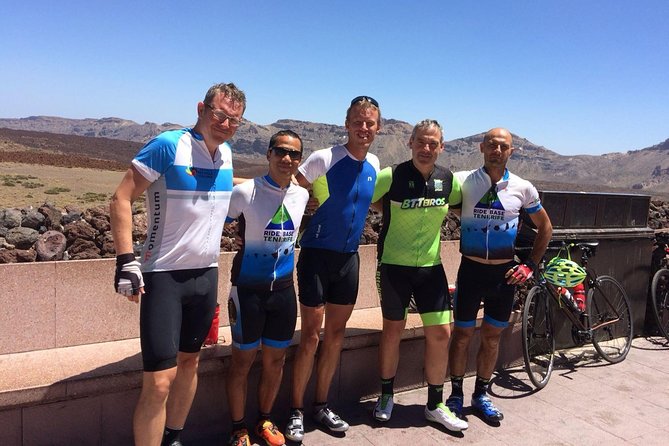
- 94 km and about 2,400 m of climbing means you’re signing up for a full-on endurance day, not a casual spin
- About 44 km at ~5% average puts the grind in your legs early, then ramps up toward the park
- Teide National Park’s last 11 km turns into raw, lunar-looking terrain that feels wildly different
- Max 5 riders keeps it intimate and easier to get coaching when things get tough
- Bike rental is set up for you: the shop contacts you about sizes, pedals, and options before the ride
Why the Teide climb feels special (not just hard)
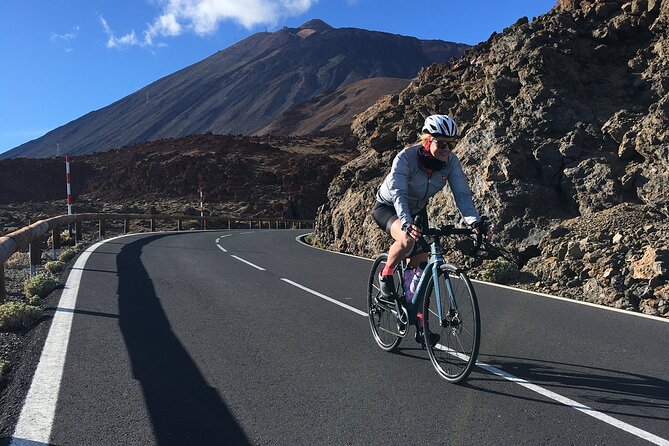
On Tenerife, Teide has a reputation for making cyclists focus. This ride earns that reputation because it’s not a short steep spike. It’s a long, consecutive climb. Your effort starts as a rhythm problem—how do you keep spinning when your lungs start arguing?—and ends as a view-and-reward problem, with that unforgettable park scenery after the hard work.
I like that the experience is built around access and timing, not just suffering. The route runs through small villages, forest areas, and viewpoints where you can stop and look out over Puerto de la Cruz and the ocean. Then, as you approach the national park, the terrain changes so much it feels like you rode into another world.
The other big plus is the human part. You ride with a guide who leads the way, so you don’t spend your mental energy hunting turns. That matters on a long climb where you need the brain free for pacing.
You can also read our reviews of more cycling tours in Tenerife
The route reality: 94 km, 2,400 m, and that long steady grind
Here’s what you’re actually getting: a 94 km ride with around 2,400 m of altitude gain, plus a hard climb toward Teide. The route description calls out a long push to Teide of about 44 km at roughly 5% average. That’s the kind of grade that doesn’t let you rest, even when it feels manageable at first.
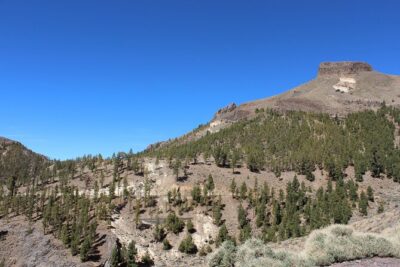
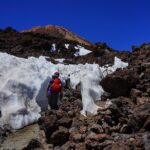
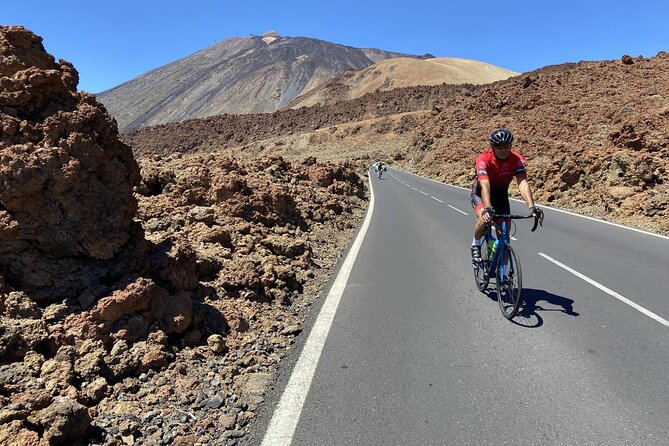
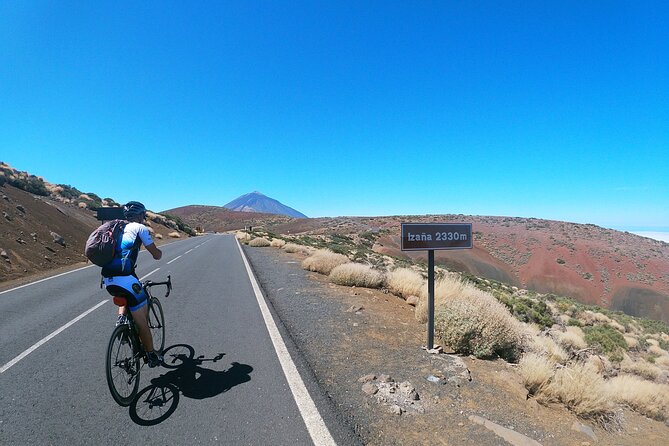
Then comes the part that tends to sort out experienced riders from everyone else: the last 11 km through Teide National Park. The surroundings get more raw and exposed as you enter the park zone. Instead of the green you see lower down, the ground and shapes look more like the surface of the Moon or Mars.
The day has a built-in arc:
- Climb with frequent chances to look around and take photos during the village/forest stretch
- Push through the park’s raw section
- Take a break after the long climb
- Enjoy the long descent back toward Puerto de la Cruz
One practical note: road conditions can change. In at least one case, the rider reported having to take a longer route due to road closures on the mountain, and the guide coached them through it. That’s a good sign for you: the guide doesn’t panic. They adapt and keep the ride safe.
Stop at Teide National Park: the view shift you’ll remember
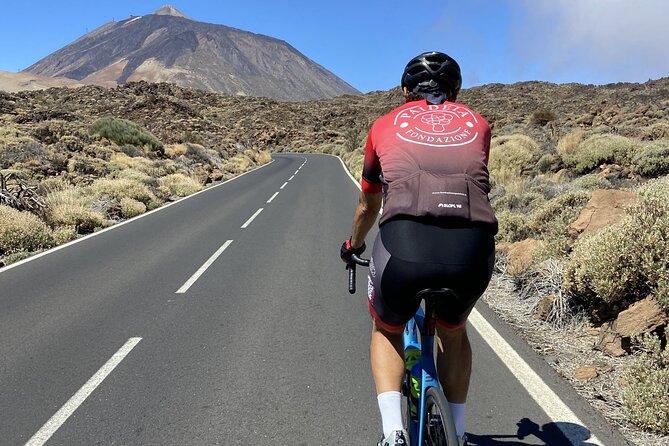
The stop at Teide National Park is the heart of the ride. The description is clear: before reaching the cable car area, you pass through villages, forest zones, and scenic viewpoints. Those earlier stops matter because they break up the monotony of climbing. Even if you don’t stop often, it helps knowing there’s a “reward checkpoint” ahead.
As you move into the park, the terrain switches. The scenery goes from Earth-like to something stark. Think raw volcanic feel, fewer trees, and a much drier, more exposed world. That’s where the photos usually happen, because it doesn’t look like Tenerife in the way you might expect before you see it.
After the climb and a well-deserved break, you start the descent. This is where road cyclists start smiling again. The ride gives you a proper payoff: a long downhill return to Puerto de la Cruz after you’ve done the hard work getting up.
Bike and comfort: renting the right setup is part of the win
Bike rental is a big deal here because the price you pay for the experience doesn’t include a bicycle. The operator explicitly says your guide will contact you to discuss bike options, pedals, and sizes. That one detail can make or break how enjoyable the climb feels.
If you’re choosing among their rental options, the prices listed are:
- Aluminium: €26
- Carbon: €32
- Carbon with disc brakes: €36
And then you’ll factor in that you should confirm what you’ll ride before you show up so you’re not improvising on a steep day.
Helmet: not included in the price. I’d treat that as non-negotiable. If you don’t own one already, plan to rent or bring your own so you can ride without last-minute stress.
One more comfort point: the shop can swap around parts like your saddle. In one account, the rider said they brought their own saddle and the crew was happy to swap it in. That’s huge on a 5–6 hour day. Small fit issues feel amplified when you’re doing sustained climbing.
If you’re considering an electric bike, there are hints that options may include e-bikes. One rider specifically described choosing an e-bike to handle “serious climbs” while still riding with others at different skill levels. If you want the experience without turning it into a suffering contest, ask the shop what assist options they can provide.
The guide role: pacing, safety, and motivation when it hurts
This tour is structured so you don’t manage everything alone. The guide leads the route, and the group stays small. That combination helps most on the hardest stretches, when pacing turns into decision-making.
In the write-ups, guide names like Jesper, Alberto, Rob, and Jasper show up. Different people, same theme: they coach your effort, watch for safety, and adjust breaks. One rider highlighted that their guide adapted breaks and found a rhythm that worked for the group. Another described encouragement plus extra info about the forests and vegetation on the mountain.
That matters because Teide isn’t just a physical challenge. It’s also a visual and environmental shift. A guide can point out what you’re seeing as the terrain changes, so the day feels like more than a workout.
And yes, the motivation piece shows up too. Several accounts mention encouragement and coaching language like pushing through tough moments. On a ride this long, that kind of mental support is often what keeps you from overcooking the early climb.

Timing, pacing, and what to bring for a 5–6 hour push
The ride runs about 5 to 6 hours. For a climb day, that time isn’t just “time on the bike.” It includes stops for photos, viewpoints, and the break after the long ascent. If you’re aiming to feel fresh for the descent, pacing matters early.
Here’s what I recommend based on how this ride is set up:
- Bring energy food. The ride is long and there’s no lunch included.
- Bring snacks and water strategy. Bottled water is included, but you may still want extra, especially if you tend to get hungry climbing.
- Have a plan for your break needs. The guide will manage pacing and breaks, but you’re the one who knows what your body needs.
Don’t count on buying lunch from scratch at exactly the right time. The tour specifically lists lunch as not included. That means you should treat this as a “ride-first” day and prep accordingly.
Also, don’t underestimate weather. The experience notes it requires good weather. If the mountain is socked in or conditions are unsafe, you’ll need flexibility.
Price and value: what you’re paying for (and what you’re not)
The tour price is $82.90 per person. On its face, that might look like it’s only for guiding. But the value comes from what’s wrapped in that cost:
- A guide (so you’re not figuring out pacing and route alone)
- Bottled water
- The GST listed
- And the experience shows an admission ticket free element tied to the experience
What you should mentally separate out:
- Bike rental costs extra
- Helmet is not included
- Lunch is not included
So the real cost for many people becomes: the base tour price plus a bike rental option. The good part is that the bike rental is set up for you by the shop with help on sizing and setup. That reduces risk. You’re less likely to end up on the wrong frame size or with bad gearing for your legs.
In terms of value, the strongest argument for this ride is the combination of small group size and a guided structure for one of the hardest, most scenic climb days on the island. If you’re confident, you could ride it on your own. If you want to ride it well and avoid getting lost or mismanaging the day, the guide is the difference.
Where you start in Puerto de la Cruz
You meet at Ride Base Tenerife in Puerto de la Cruz:
Calle Avenida Francisco Afonso Carillo, Edificio Playa Bahia II, C. Manuel Yanes Barreto, 38400 Puerto de la Cruz, Santa Cruz de Tenerife, Spain.
It’s also described as near public transportation, which helps if you’re not bringing a car. The activity ends back at the meeting point, so you don’t need a complicated end-of-ride plan.
The ride is built as a loop back to where you start: climb out, enjoy Teide National Park, then descend toward Puerto de la Cruz.
Who this ride suits best
This isn’t for the “I want a nice cruise” crowd. The info says you should have strong physical fitness. With 94 km and about 2,400 m climbing, you need endurance. If you handle long climbs already, you’ll get a big payoff from the viewpoint and park terrain changes.
It can work for a range of cyclists, especially if the shop can provide an e-bike option. The small group structure and guide pacing mean the ride can be managed for different levels, as long as everyone stays realistic about effort.
If you hate long descents or don’t feel confident on fast roads, you might still enjoy the climb portion. But plan your confidence honestly. This is a full day on real road cycling routes.
Should you book the Teide road bike climb from Puerto de la Cruz?
Book it if you want a guided, small-group climb that turns into something bigger than a workout—forests early on, big ocean views from higher viewpoints, and then that stark Teide National Park terrain for the payoff. I also think it’s a smart choice if you don’t want to manage route decisions and pacing alone on a day this long.
Skip it (or switch approach) if you’re not ready for a hard endurance ride or you don’t want to handle the bike and helmet logistics. Since the bicycle is not included, make sure you’re comfortable renting and getting the fit right.
If you’re the type who likes to plan, train, and then earn your views, this is one of Tenerife’s most satisfying road cycling days.
FAQ
How much does the Teide road bike climb cost?
The price is $82.90 per person.
How long is the ride?
It’s listed as about 5 to 6 hours.
Is the bike included in the price?
No. The bike is not included. The guide contacts you with options for bike type, pedals, and sizing, and you pay the shop rental separately.
Is a helmet included?
No. The helmet is not included in the price.
How many people are in the group?
The tour has a maximum of 5 travelers.
Where is the meeting point?
You meet at Ride Base Tenerife, Calle Avenida Francisco Afonso Carillo, Edificio Playa Bahia II, C. Manuel Yanes Barreto, 38400 Puerto de la Cruz, Santa Cruz de Tenerife, Spain.
What if the weather is bad or I need to cancel?
The experience requires good weather, and if it’s canceled due to poor weather you’ll be offered a different date or a full refund. You can cancel for a full refund up to 24 hours in advance of the experience start time.