REVIEW · TENERIFE
Hiking Summit of Teide by night for a sunrise and a Shadow
Book on GetYourGuide →Operated by 10X. TENerife eXperience. · Bookable on GetYourGuide
A midnight hike to Spain’s highest peak. The goal is simple and wild: climb Teide in the dark, then watch sunrise and the planet’s most dramatic volcano shadow stretch toward the Atlantic. Add Milky Way views overhead and you get a night that feels more like astronomy class than a stroll.
I really like two things here. First, the timing is the whole show, lining you up so you reach the summit right for dawn, not an hour late or stuck waiting. Second, the small group keeps the pace manageable and the support personal, with guides like Elena (and sometimes Patrick) known for staying on top of safety and energy.
One thing to think about: this is a real high-mountain effort. At 3718m, it can be cold and windy, and the climb is not suitable for anyone with heart problems, high blood pressure, recent surgeries, or low fitness, plus it’s not for kids under 15.
In This Review
- Key points before you chase Teide’s sunrise and Shadow
- Why this Teide at night hike feels like a different planet
- The climb plan: pacing yourself on a 3718m grind
- Getting picked up in Tenerife’s south (and why it matters at 12:00am-ish)
- What happens on the mountain, stop by stop
- Stop 1: Set off with your group from the south
- Stop 2: Guided ascent (about 4 hours)
- Stop 3: Break time with tea and picnic (about 30 minutes)
- Stop 4: Another guided push (about 1.5 hours)
- Stop 5: Photo stop, sightseeing, and sunrise window (about 30 minutes)
- Stop 6: Post-sunrise hiking and views (about 30 minutes)
- Stop 7: Cable car descent (about 20 minutes)
- Stop 8: Return drop-offs
- Gear and clothing: what’s included and what you still must bring
- How hard is it, really: who this suits and who should not go
- The sunrise and Teide’s Shadow: how to actually enjoy the moment
- Price and value: is $203 a good deal here?
- Should you book this Teide night hike?
- FAQ
- What time does the hike start?
- How long is the full experience?
- How far and how much climbing is involved?
- Is this a small group tour?
- What languages are offered by the guide?
- What gear is included?
- What should I bring with me?
- Are transfers included?
- Is the cable car included in the price?
- Who is this tour not suitable for?
Key points before you chase Teide’s sunrise and Shadow
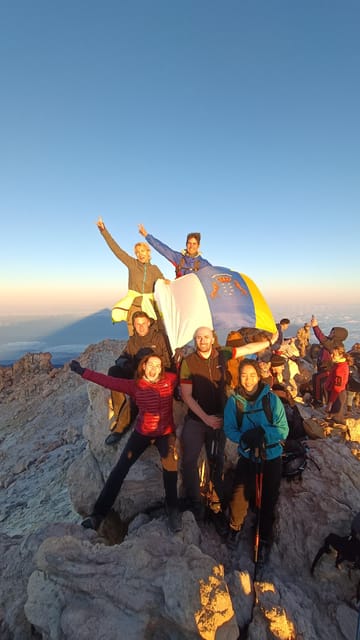
- Sunrise from 3718m: you earn the view after a long, dark ascent.
- Teide’s Shadow toward the ocean: the “biggest Shadow of Volcano in the world” is the signature moment.
- Small-group pace (max 8): easier for the guide to manage your breathing, footing, and stops.
- Real night hiking gear included: headlamps, poles, thermal blankets, hot tea, and permits.
- Timed for dawn: the plan is built around reaching the summit when the light hits.
- Cable car descent (extra): built-in option after sunrise, though conditions can change the plan.
Why this Teide at night hike feels like a different planet
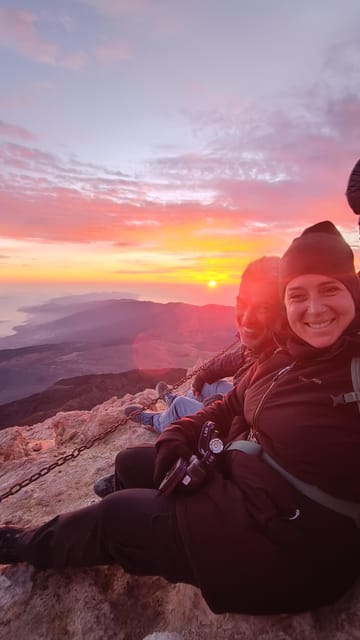
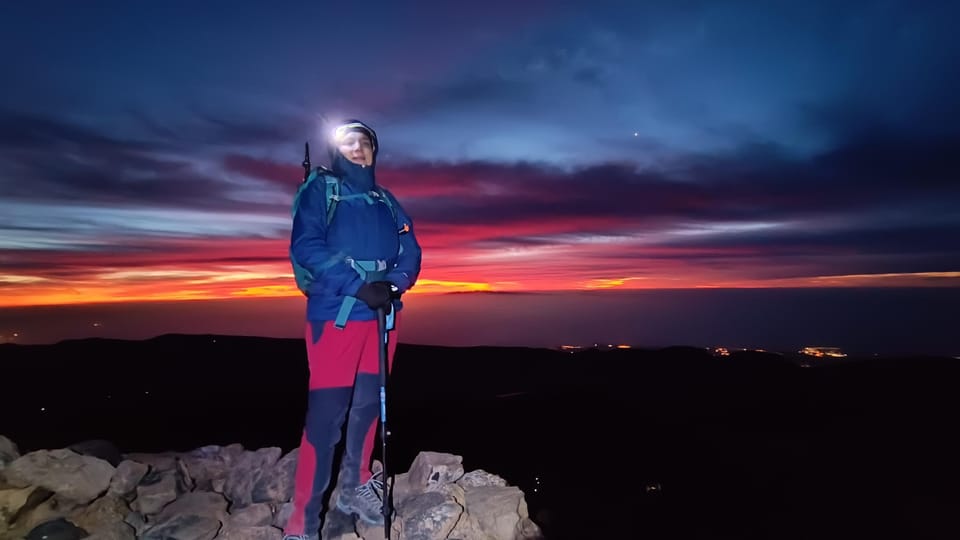
Teide is Spain’s highest point, and doing it by night changes your whole relationship with the mountain. In the dark, you’re not distracted by scenery. You’re focused on steps, breath, and the glow of your headlamp cutting through volcanic gravel.
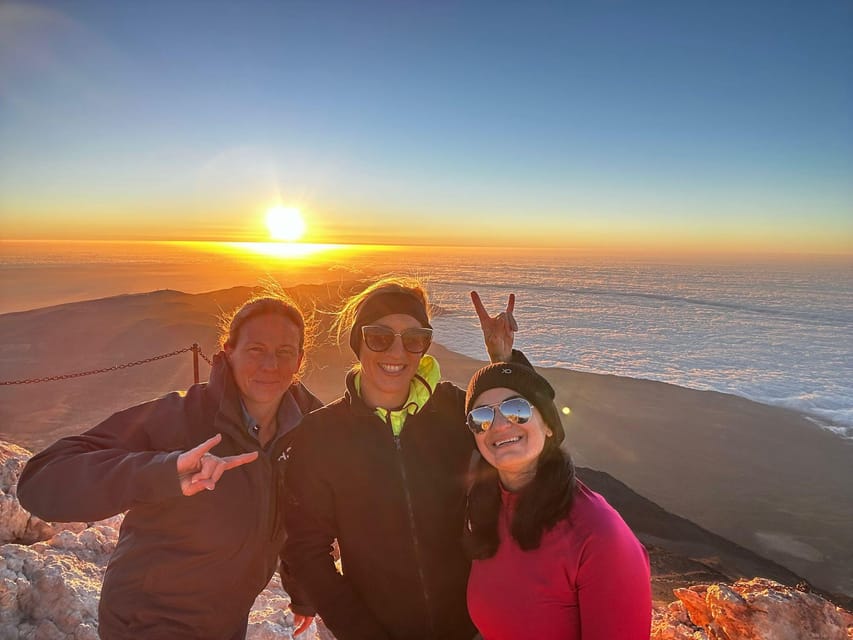
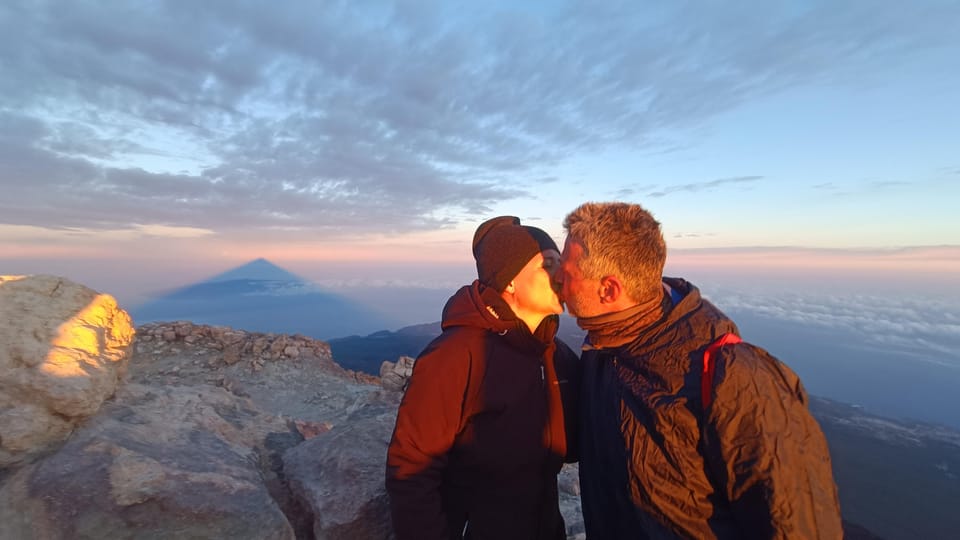
Then dawn comes fast. The first light doesn’t just brighten the horizon. It turns the entire cone and surrounding volcanic terrain into a giant stage, and the sun’s angle throws the famous Teide Shadow across the landscape and out toward the endless Atlantic. It’s the kind of sight that makes you stop talking and just watch.
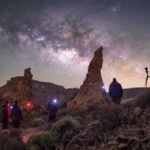
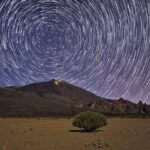
And if the sky is clear, the payoff gets even better. You’re climbing under a Milky Way sky, so the night part isn’t a waiting room. It’s part of the show, with silence amplifying every crunch under your boots.
You can also read our reviews of more evening experiences in Tenerife
The climb plan: pacing yourself on a 3718m grind
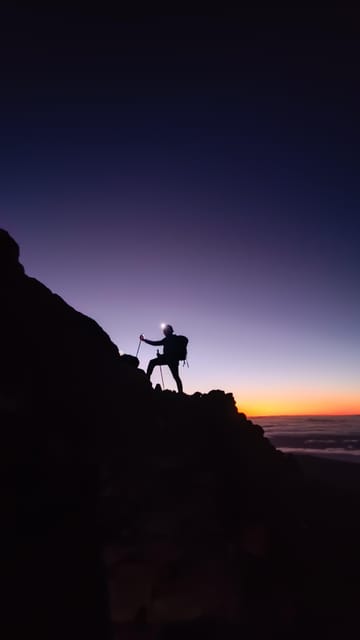
This is a long, serious hike. Expect about a 10-hour total day, with the main summit push starting around 1am (the exact timing depends on sunrise that morning). The summit hike itself is about 6 to 6.5 hours, covering roughly 10km with an elevation gain around 1380m.
What helps most is not speed. It’s pacing. The guide’s job is to keep you moving consistently without cooking your energy before dawn. That matters because you’re going higher than your body is used to, and the air gets thin even if you feel “fit.”
Your headlamp is more than a convenience. Night footing on volcanic rock takes focus. Your poles (included) make a real difference on uneven sections, and the tour includes a rhythm of guided hiking and short breaks so you don’t get stuck fading alone.
The small-group limit (max 8 participants) also helps your brain. You can move with your group instead of trying to keep up with strangers who hike different styles.
Getting picked up in Tenerife’s south (and why it matters at 12:00am-ish)
Because you start in the night, the logistics matter. You’ll have five pickup options:
- Los Cristianos
- Costa Adeje
- Acantilados de Los Gigantes
- Callao Salvaje
- Playa San Juan
You’ll receive the exact pickup time from the operator, but the tour guidance suggests you’ll meet around 12pm by night (so you’re still up and moving before midnight). Plan to wait outside your hotel or apartment.
Drop-offs are also multiple options on return:
- Callao Salvaje
- Playa San Juan
- Acantilados de Los Gigantes
- Costa Adeje
- Los Cristianos
One extra note for value: transfers are not included. A transfer is available for 50€ total from one pickup location (covering the coastal area from Los Cristianos to Los Gigantes). If you’re staying close to one of those pickup towns, you may be able to avoid the added cost by using the standard pickup.
What happens on the mountain, stop by stop
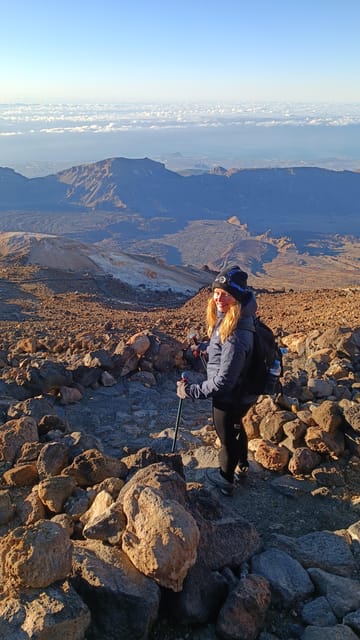
Think of the itinerary as a sequence of momentum shifts: hike, fuel, hike, photo window, then descent.
Stop 1: Set off with your group from the south
Your first job is simple: get to the pickup point early enough to avoid last-minute stress. Since you’re meeting in the dark, being late can throw off the whole timing that’s designed to reach the summit at the right moment.
You can also read our reviews of more hiking tours in Tenerife
Stop 2: Guided ascent (about 4 hours)
This first hiking block is about settling into the night pace. You’re walking with a guide, using headlamps and hiking poles you’ll have ready from the start. The volcanic terrain can feel weird underfoot, so you want the group to stay together and keep footsteps controlled rather than rushing.
Stop 3: Break time with tea and picnic (about 30 minutes)
You’ll get a planned break with hot tea and a picnic snack period. This matters more than it sounds. After hours of cold air, a warm drink helps your body regulate, and food keeps your energy from dipping right when you still have more hiking ahead.
Stop 4: Another guided push (about 1.5 hours)
This section is where good pacing really pays off. You’re still climbing, but the goal is moving closer. The guide’s role here is to keep you steady and keep the group from getting strung out too far.
Stop 5: Photo stop, sightseeing, and sunrise window (about 30 minutes)
This is the moment the night earns. You’ll have a sunrise period plus a photo stop and time for scenic viewing on the way. Wear sunglasses and have your eyes ready for bright light after hours of darkness.
If you want great photos, this is when you’ll want to be present rather than checking your phone constantly. The light changes quickly at dawn, and the best results usually come from stepping into position and letting the guide handle timing.
Stop 6: Post-sunrise hiking and views (about 30 minutes)
Even after the sunrise, the mountain doesn’t let you go right away. This short guided stretch is your chance to take in the wider view and the famous shadow effect from different angles, without turning it into a chaos of people moving in every direction.
Stop 7: Cable car descent (about 20 minutes)
After sunrise, you’ll take the cable car down. The descent is a separate cost: 23€ per person, and the tickets are purchased after reaching the summit.
Stop 8: Return drop-offs
Then you’re back to the pickup towns. Your body will feel it by this point, so the return timing is a relief.
One more practical detail: conditions can change comfort on descent. In at least one case, if winds were too intense, the group chose hiking down rather than using the cable car. Your guide will make the safest call based on that night’s weather.
Gear and clothing: what’s included and what you still must bring
At 3718m, you’re dealing with cold, wind, and darkness. The operator provides a helpful bundle, but you still need to show up properly dressed.
Included gear and support:
- Headlamps
- Hiking poles
- Crampons from November to April
- Thermo blankets
- Hot tea
- Some snacks
- Some wind jackets and warm clothes if you need them (by request)
What you should bring (don’t skip these):
- Warm clothing, plus a windbreaker
- Sunglasses and a sun hat
- Snacks and water
- Hiking shoes
- Gloves
- Sunscreen
- Charged smartphone
- Hiking pants
- ID card (a copy is accepted)
If you’re the type who gets cold easily, treat this as a multi-layer mission, not a single jacket situation. Also remember the sun can be bright even when the air feels icy, so sunglasses and sunscreen aren’t optional if you want to enjoy the sunrise window.
How hard is it, really: who this suits and who should not go
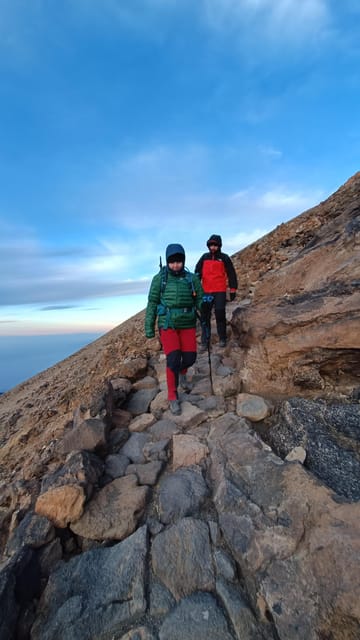
This is not a gentle “walk to a viewpoint.” It’s a high-mountain challenge on a 6 to 6.5 hour summit hike portion.
You should consider this tour if:
- You’re reasonably fit and comfortable with a steep, long hike
- You can keep a steady pace in the dark
- You can handle cold wind and high altitude conditions
You should skip it if you’re in any of these categories:
- Children under 15
- Pregnant women
- People with heart problems or high blood pressure
- People with pre-existing medical conditions
- People with recent surgeries
- People with low fitness
- People who were diving up to 24 hours prior
I also suggest you be honest about altitude. Even fit people can find the last stretch harder when the air thins. This is exactly why a guide matters. Elena and other guides on this kind of route are known for checking how you feel and adjusting pace so you don’t blow up early.
The sunrise and Teide’s Shadow: how to actually enjoy the moment
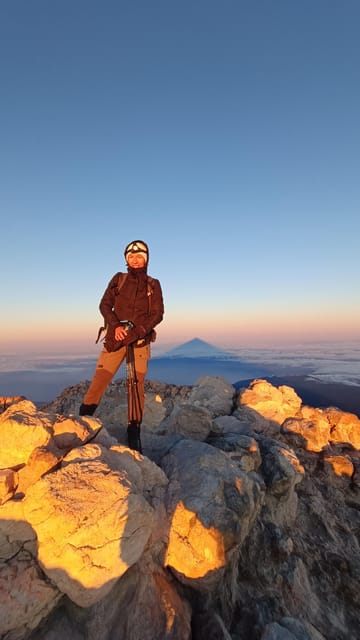
The sunrise at Teide is emotional because it’s earned. You’ve climbed for hours through dark silence, then suddenly the horizon lights up and the whole volcano looks like it was built for this exact moment.
Then comes the Shadow. The tour describes Teide’s Shadow as the biggest volcano shadow in the world, and you’ll see it stretch across the volcanic terrain and out toward the ocean. What makes it special is the scale. Your brain can’t easily measure it, so you just react. People tend to get quiet. That’s normal.
To enjoy it without stress:
- Get your timing right early by following the guide’s plan.
- Keep your hands warm so you can use your phone or camera without fumbling.
- Don’t underestimate the temperature change from dark to dawn. Cold morning air can feel sharper once the sun hits and you’re moving less.
Price and value: is $203 a good deal here?
At $203 per person, this isn’t a budget excursion. But it also isn’t just someone walking you around a viewpoint.
Here’s what your money covers:
- Guided service through the night and sunrise timing
- Permits (2 permits for each person), which are a big deal at Teide
- Headlamps, hiking poles, thermal blankets
- Hot tea and snacks
- Crampons during November to April
- Limited group size (max 8), which keeps costs up but improves the experience
What costs extra:
- Transfers (optional): 50€ total from one pickup location in the coastal area range
- Cable car descent: 23€ per person
So the value question comes down to this: if you want the sunrise and the correct timing and the permit/gear support, you’re not just paying for transportation. You’re paying for the whole system that makes a safe summit window possible.
If you already know Teide well and you’re a very confident high-altitude hiker with your own gear and permits, you might DIY. But for most people, paying for the organized night timing is what turns “sounds cool” into “I’ll remember this forever.”
Should you book this Teide night hike?
Book it if you want a serious but rewarding mountain challenge with a clear payoff: sunrise from the summit plus the iconic Teide Shadow, under a Milky Way sky. The guides seem to be a real strength here, with Elena praised for care, safety, and getting people to the peak at the right moment.
Skip it if you want an easy morning. This is a long night climb with cold, wind, altitude, and strict suitability rules. If you don’t meet the fitness or health requirements, there’s no shame in choosing a lower-elevation experience that still lets you enjoy Teide in daylight.
If you’re on the fence, your best move is simple: be honest about your ability to hike 6–6.5 hours in the cold and dark. If you can handle that, you’ll likely find this one of the most memorable experiences in Tenerife.
FAQ
What time does the hike start?
The summit climb starts at about 1am by night, but the exact timing depends on the sunrise time. Availability will show the starting times for your date.
How long is the full experience?
Plan for about 10 hours total.
How far and how much climbing is involved?
The summit hike portion is about 10km long with around 1380m elevation gain.
Is this a small group tour?
Yes. The group is limited to 8 participants.
What languages are offered by the guide?
The live guide is available in English, Spanish, Ukrainian, and Russian.
What gear is included?
Included items include headlamps, hiking poles, thermal blankets, hot tea, and some snacks. Crampons are provided from November to April. Wind jackets and warm clothes may be provided by request.
What should I bring with me?
Bring warm clothing, a windbreaker, sunglasses, sun hat, snacks, water, hiking shoes, gloves, sunscreen, a charged smartphone, hiking pants, and your ID (a copy is accepted).
Are transfers included?
No. Transfers are available for 50€ total from one pickup location within the coastal area between Los Cristianos and Los Gigantes. Otherwise, pickup at the listed towns is included.
Is the cable car included in the price?
Cable car descent is not included. It costs 23€ per person, and you buy tickets after reaching the summit.
Who is this tour not suitable for?
It is not suitable for children under 15, pregnant women, people with heart problems, people with high blood pressure, people with pre-existing medical conditions, people with recent surgeries, and people with low fitness. It also isn’t suitable if you dived up to 24 hours prior.