REVIEW · TENERIFE
Santa Cruz de Tenerife Palmetum Entry Ticket
Book on GetYourGuide →Operated by PARQUE MARITIMO SANTA CRUZ S.A. · Bookable on GetYourGuide
Palm trees where you expect rubbish. The Santa Cruz de Tenerife Palmetum turns a landfill into a living botanical garden, and it’s surprisingly fun to wander. I love the sheer palm-tree scale here, and the benches with ocean-and-city viewpoints make the whole walk feel like a mini escape.
For me, the biggest possible drawback is expectations. Don’t plan on a full café experience, and some water features may not look picture-perfect up close.
In This Review
- Key things to know before you go
- Why a former landfill became Tenerife’s palm park
- Price and time: how to plan your 1-day entry
- Arriving at the entrance and getting oriented
- Lakes, stream, waterfalls, and volcanic rocks you’ll actually notice
- The palm collection: Arecaceae star power across 12 hectares
- Island-territory sections: how the layout makes the world feel smaller
- Views over the Atlantic and the city below
- Pacing, crowds, and the smart way to tour it
- Snacks, coffee, and what to bring for a comfortable visit
- The practical rules that shape your visit
- Accessibility: wheelchair access and realistic expectations
- Who this Palmetum visit suits best
- Should you book entry to the Palmetum of Santa Cruz de Tenerife?
- FAQ
- How long is the Palmetum visit valid?
- Where do I go to enter the Palmetum?
- What’s included with the ticket?
- Are food and drinks included?
- Is the Palmetum wheelchair accessible?
- Can I bring a pet?
- Are drones allowed in the park?
- Is smoking allowed?
- Are bikes or scooters allowed?
- Is there free cancellation?
Key things to know before you go
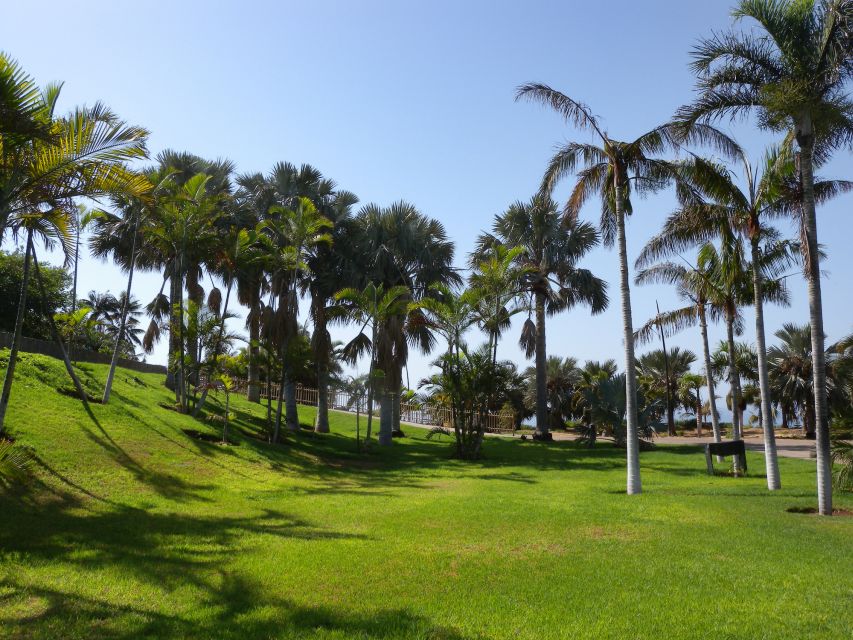
- 12 hectares of palm-focused garden means you’ll want real walking shoes, not flip-flops.
- 3,000 plant species (with 600+ palm species) gives you variety even if you think you only came for palms.
- Expect lakes, a stream, and 3 waterfalls built into the park’s routes and viewpoints.
- There’s a strong theme of island territories (Madagascar, the Caribbean, Polynesia), so you’ll see plants tied to real places.
- Bring your camera for the mountain-to-sea city views from higher points and seating areas.
- If you’re sensitive to water-smell or low-maintenance-looking ponds, go in with flexible expectations.
Why a former landfill became Tenerife’s palm park
The Palmetum doesn’t feel like a manicured show garden. It feels like a project with a mission—taking a municipal rubbish dump and reshaping it into a reconstituted botanical garden. That transformation matters, because you’re not just paying for scenery. You’re walking through proof that a damaged site can become a public green space.
The park is built around a single theme: palms. Technically, the plant family is Arecaceae (also called Palmae), and the collection is one of the best-known in Europe. You’ll notice the way the gardens organize plants by geographic origin, so it doesn’t feel random. It feels like the park is trying to tell you where palms grow and how different they can be—even when they all thrive in the Canaries’ climate.
You can also read our reviews of more tours and experiences in Tenerife



Price and time: how to plan your 1-day entry

You’re buying an entry ticket for a visit that lasts 1 day. At around $7 per person, it’s a low-cost way to spend a chunk of your day outdoors without committing to a full-day tour.
So how long should you budget? If you’re the kind of traveler who likes to stop and look (which I assume you are), plan for roughly 3 to 4 hours. You can go faster if you treat it like a highlight reel, but the best moments are the ones where you pause: at the water features, at the benches, and when a new palm section comes into view.
If you’re arriving by cruise, you can walk from the port area. One visitor clocked it at about 30 minutes on a pleasant pathway, which is useful if you like to avoid taxis and want fresh air right away.
Arriving at the entrance and getting oriented
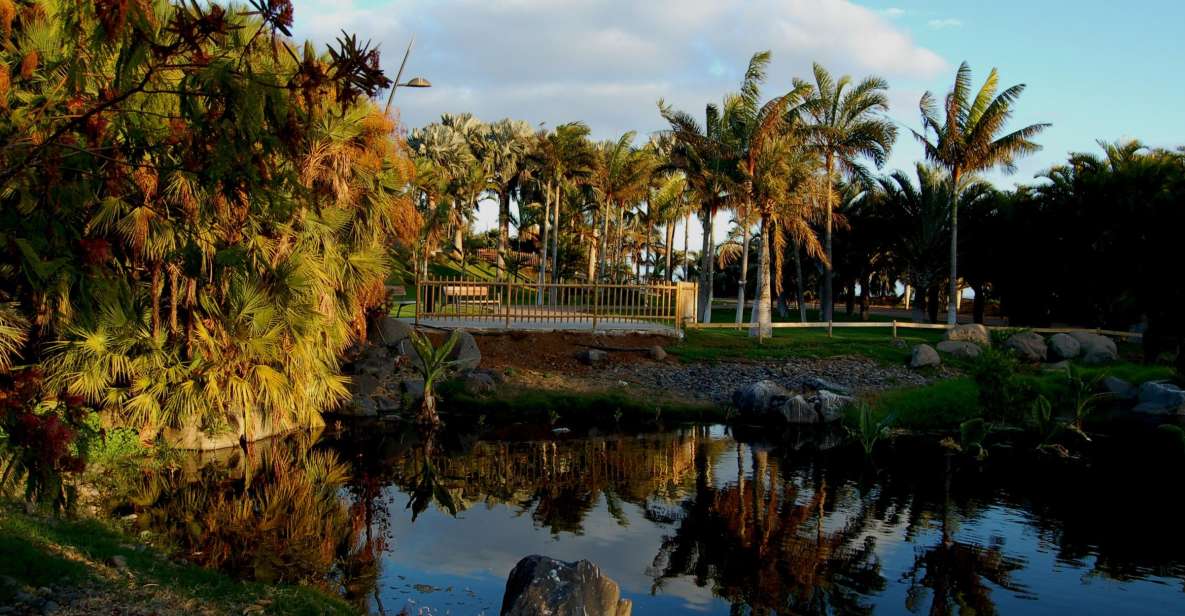
Meet at the entrance of the Palmetum. From there, it’s self-paced. There’s a Spanish/English host/greeter, which is handy if you want quick help figuring out where to start.
The park is laid out so you can create your own loop. Start by checking the general layout, then decide how you want to spend your energy:
- Do you want palms first and viewpoints later?
- Or do you want to climb straight to the higher lookouts to reward yourself early?
I like doing the viewpoints sooner. It sets the tone, and then the rest of the walk feels like a slow, pleasant walk through plant zones.
Lakes, stream, waterfalls, and volcanic rocks you’ll actually notice
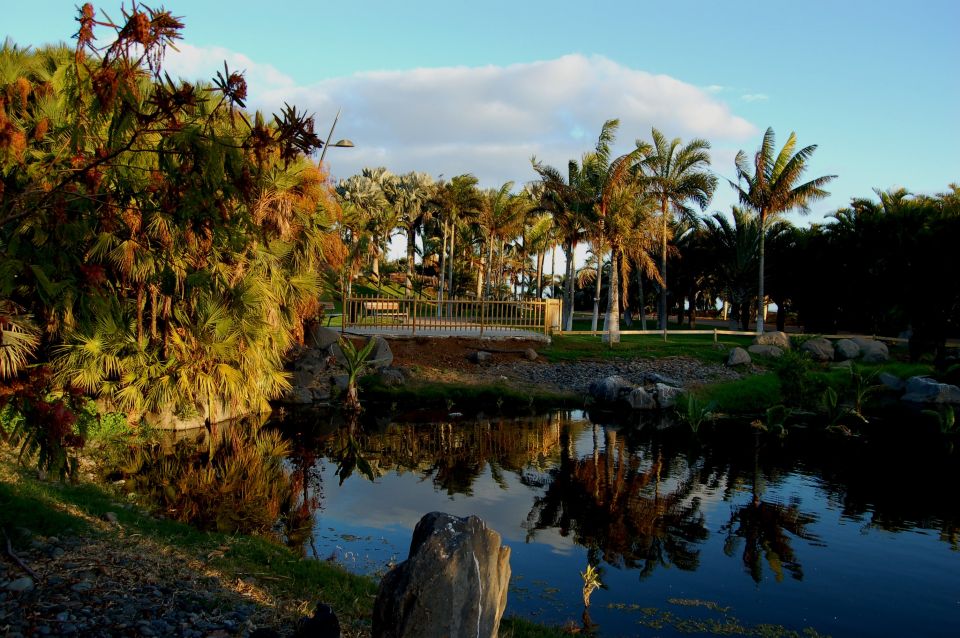
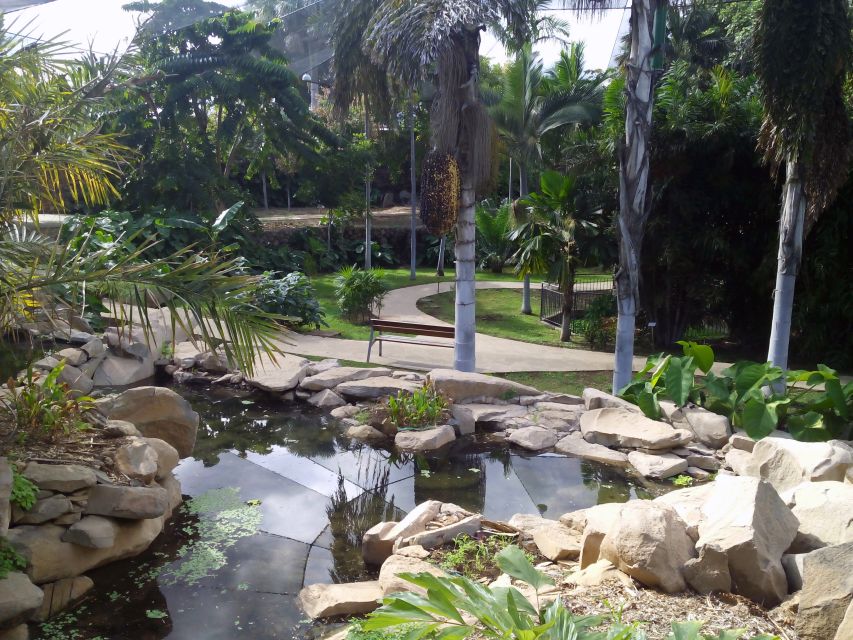
The Palmetum isn’t just a “walk and look at plants” deal. It has water and dramatic-looking rockwork, including 2 lakes, a stream, and 3 waterfalls. When you hit these sections, the sound changes and your pace naturally slows.
The park also includes immense volcanic rocks used as part of the landscaping. Even if you’re not a geology person, you’ll feel how the rocks frame the garden paths and viewpoints. It breaks up the space so the park doesn’t feel flat or repetitive.
One practical note: not every pond will look like it was styled for a brochure. Some visitors have flagged that certain water areas can look a bit dirty. If you’re picky about that, focus on the overall route design and use the viewpoints and benches as your reset spots.
The palm collection: Arecaceae star power across 12 hectares
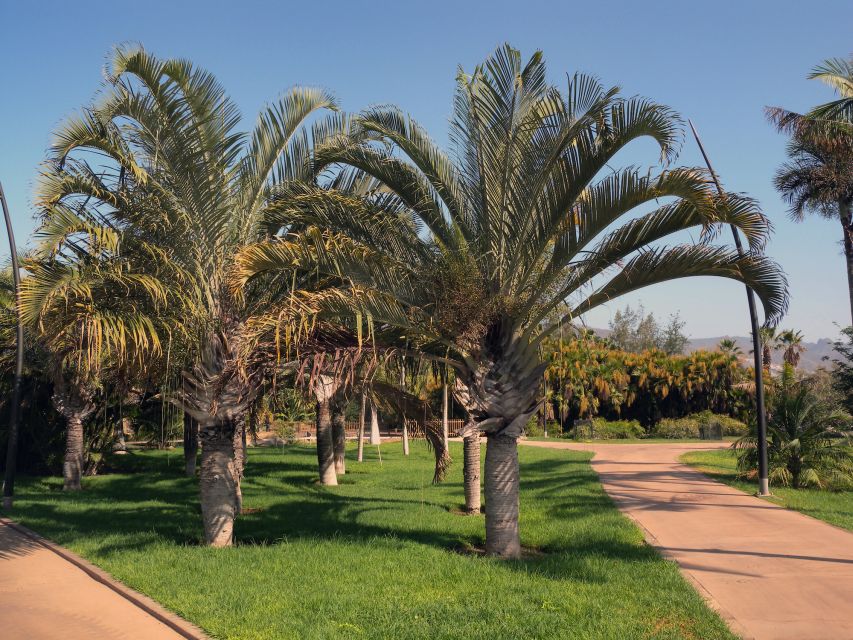
Here’s the reason to come: the palm collection. The park covers 12 hectares, and it’s designed so palms are the main character in almost every direction.
You’ll see more than 600 palm species, organized by geographic origin. That means you’re not just looking at tall trees. You’re seeing different palm styles, growth habits, and the idea of how palms evolved to fit different island climates.
A big highlight is the representation of island territories, with plants from places like Madagascar, the Caribbean, and Polynesia. This is one of the ways the Palmetum feels more educational than a typical botanical walk. You can follow the theme from zone to zone and start noticing how the collection is meant to map the world of island palms—without you needing a lecture.
If you’re a casual plant admirer, the signs and plant labels do a lot of the work. If you’re a plant nerd, you’ll probably want extra time just to compare shapes and leaf structures. Either way, you’ll come away with the feeling that you saw more than the usual handful of common palms.



Island-territory sections: how the layout makes the world feel smaller
The garden’s layout doesn’t just group plants randomly. A lot of the area is dedicated to island territories, which is a smart design choice. It turns a walk into a kind of self-guided geography lesson.
For you, that means:
- You get variety without needing to travel elsewhere.
- You can track themes as you move, instead of feeling like you’re wandering without a plan.
- You’ll probably spot more interesting palms because you’re looking at them through an origin-based lens.
This is also where the park’s scale starts to make sense. In a small garden, a themed section is a nice bonus. Here, it’s the core approach, so the idea holds up from start to finish.
Views over the Atlantic and the city below
One of the most praised parts of the visit is the viewpoint experience. The park includes an area with seating where you get breathtaking sea views, and you can see how the coastline and water change as the sea moves from shallow to deeper areas.
The views aren’t just a quick photo stop. You’ll find benches and places to sit, which makes it easier to slow down. This matters because the Palmetum is a walk—if you treat it like a race, you miss the payoff.
If you’re traveling with someone who doesn’t care about plant ID, the views are your common ground. Everyone can enjoy the same moment: palms in the foreground, ocean and city in the distance.
Pacing, crowds, and the smart way to tour it
The park can be quiet at times, especially early. One visitor noted it wasn’t busy in the morning, but it felt noticeably busier later, after about four hours. So if you want more space around the viewpoints and calmer walking, aim for an earlier start.
Because it’s self-guided, your pacing is your biggest variable. I suggest you build your day around stops rather than time. Pick a few goals:
- the water features
- one or two of the higher outlooks
- and a seating break where you can enjoy the view without rushing
If you’re using walking sticks, plan carefully. The park is accessible in general terms (wheelchair accessible), but gardens are still gardens—paths can be uneven, slopes happen, and you’ll want a comfortable pace.
Snacks, coffee, and what to bring for a comfortable visit
Food and drinks are not included with the entry ticket. Some people find a small snack setup inside the park near a pond. Others have said they expected a cafe and didn’t find one they were looking for, so I treat this as limited on purpose rather than a guarantee of a full menu.
What I recommend you bring:
- water (especially if you’re visiting midday)
- sunscreen and a hat
- a light layer if the breeze is cool at viewpoints
- a phone or camera charger if you plan to shoot a lot of palm detail
Comfort matters here because 12 hectares is real walking. Wear shoes with grip. The park is a botanical setting, not an airport hallway.
The practical rules that shape your visit
The park has clear rules, and it’s worth knowing them before you show up. Smoking is not allowed, and drones are not allowed. Pets aren’t allowed, though assistance dogs are permitted.
Also expect restrictions on moving around the park:
- No bikes
- No skateboards, scooters, or skates
- No alcohol and drugs
- No littering, feeding animals, or making fire
- Certain party types are not allowed
These rules are mostly about safety and keeping the garden clean and calm. They also mean the park tends to feel respectful and quiet compared to more chaotic tourist spots.
Accessibility: wheelchair access and realistic expectations
The ticket notes the park is wheelchair accessible. That’s a meaningful plus for mobility planning.
At the same time, your experience will depend on the specific path conditions and your comfort with garden terrain. Some visitors with walking sticks found the experience quite difficult. If mobility is a concern, your best move is to pace gently, take breaks at benches, and plan extra time so you don’t feel rushed.
Who this Palmetum visit suits best
This is ideal if you want:
- a low-cost nature stop in Santa Cruz de Tenerife
- a palm-focused botanical garden with a strong theme
- great views without needing a strict guided itinerary
- a self-paced walk where you can pause and enjoy the scenery
It’s especially good for families and mixed groups because you can share the same experience in two different ways: plant watching for the curious, sea views for everyone else.
If you’re coming only for high-energy attractions or nightlife, this will feel slow. This is a garden day.
Should you book entry to the Palmetum of Santa Cruz de Tenerife?
Yes, I’d book it if you like outdoors, gardens, or you want a meaningful stop that doesn’t cost much. For the price, you’re getting a large palm collection, water features, and viewpoints that make the walk worth it.
Skip the ticket if you:
- expect a full café experience with lots of food options
- need perfectly styled, spotless pond visuals
- dislike walking over garden terrain at your own pace
If you want a practical Tenerife day that feels authentic and connected to the island’s landscapes, the Palmetum delivers. It turns a damaged site into something lovely, and you can feel the effort in every direction you walk.
FAQ
How long is the Palmetum visit valid?
Your ticket is valid for 1 day. You can check availability to see starting times.
Where do I go to enter the Palmetum?
The meeting point is the entrance of the Palmetum park.
What’s included with the ticket?
The ticket includes entry to the Palmetum.
Are food and drinks included?
No. Food and drinks are not included.
Is the Palmetum wheelchair accessible?
Yes. The activity lists wheelchair accessibility.
Can I bring a pet?
Pets are not allowed. Assistance dogs are allowed.
Are drones allowed in the park?
No. Drones are not allowed.
Is smoking allowed?
No. Smoking is not allowed.
Are bikes or scooters allowed?
No. Bikes and also scooters/skateboards/skates are not allowed.
Is there free cancellation?
Yes. You can cancel up to 24 hours in advance for a full refund.