REVIEW · TENERIFE
Double Tuk Tuk Tour in Costa Adeje
Book on Viator →Operated by Tuk Tuk Tenerife · Bookable on Viator
Costa Adeje by tuk tuk cuts the guesswork fast. In two hours, you cover the main districts, then learn what you’re seeing as you go. I especially love the small-group feel and the slow, photo-friendly pace. One drawback to plan for: the tuk tuk seating is compact, with a bench height and limited leg room.
What makes this tour work is that it’s not just a drive-by. You get short guided walks at each stop, plus the kind of history and local context that turns hotel sprawl into something you can actually place on a mental map. My advice: if you’re larger-bodied or have mobility limits, book the private option for more comfort.
In This Review
- Key highlights that make this tour worth it
- Why a tuk tuk loop is the smartest way to get oriented
- Meeting point at Hotel Best Jacaranda and how timing feels
- Group size vs private: comfort is the real decision here
- Stop by stop: Costa Adeje highlights without getting lost
- La Caldera del Rey: bananas, volcanoes, and Guanches
- Duke area luxury, malls, and how it got that way
- Over Aqualand and the viewpoint you might miss on your own
- The black-sand beach stop: quiet, volcanic, and religious stories
- La Caleta fisher village and natural swimming pools
- Guides matter: when Marcos, Nando, Benjamin, and Tony do it well
- Price and value: what $45.97 buys you in real time
- Who should book this and who should skip it
- Quick practical tips before you go
- Should you book this Double Tuk Tuk Tour in Costa Adeje?
- FAQ
- How long is the Double Tuk Tuk Tour in Costa Adeje?
- Where is the meeting point?
- Do I get hotel pickup and drop-off?
- What languages are available?
- Is it a private tour?
- What admissions are included?
- Is this tour suitable for people with mobility issues?
- What about children or babies?
- Is the tour dependent on weather?
Key highlights that make this tour worth it
- Small group up to four people for more attention from the guide
- Two-hour overview route that links Costa Adeje, Puerto Colón, Las Américas, and beyond
- La Caldera del Rey included with an admission ticket and a volcanic-geology story
- Black-sand coastline stop with volcanic stones and religious history
- La Caleta fisher village and its natural swimming pools
- Multiple departure times so you can fit it around beach time
Why a tuk tuk loop is the smartest way to get oriented
If it’s your first time in Costa Adeje, you need two things: speed and context. This tour gives you both. You start in Costa Adeje and travel between the key south-of-Tenerife areas without the stress of traffic, parking, or accidentally spending half your vacation in a wrong turn.
The format matters. You’re not stuck on one long road segment. Instead, the guide breaks the journey with regular viewpoints, quick walks, and short stops where you can look around and take pictures without feeling rushed. It’s the kind of tour that helps you come back later and say, I know exactly where that is.
Also, the route is built for variety. You’ll see the tourist strips, marinas, nightlife areas, and quieter natural spots all within the same overall loop—so you leave with a sense of the whole coastline rather than just one resort bubble.
You can also read our reviews of more tours and experiences in Tenerife.

Meeting point at Hotel Best Jacaranda and how timing feels
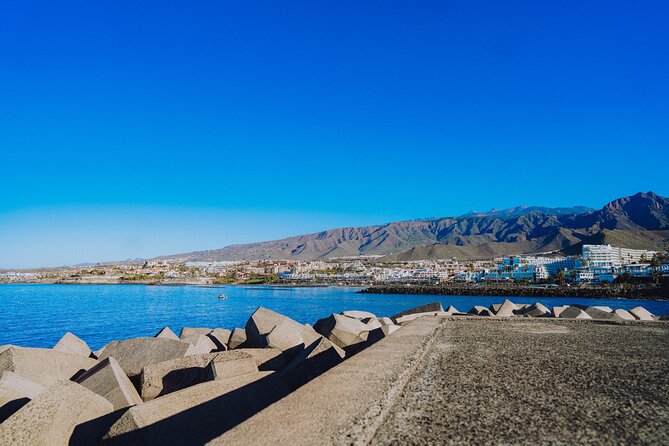
This is a round-trip tour that starts and ends at Hotel Best Jacaranda, Av. de Bruselas, 6, 38670 Costa Adeje. There’s no hotel pickup or drop-off, so you’ll want to plan to arrive a little early and stay flexible if you’re coming from somewhere else in town.
The duration is about 2 hours, with the tour moving at a safe, unhurried pace. The stops include short walk segments, so it’s not a sit-and-stare experience the whole time. In practice, that pacing is a big part of why people rate it so highly: you get movement, photos, and explanations, without feeling like you’re being whisked through.
One more practical point: the tour offers multiple departure times throughout the day. That’s useful in Tenerife because the south can shift from calm to crowded pretty quickly. If you can, pick a slot that lines up with good visibility and comfortable temperatures.
Group size vs private: comfort is the real decision here
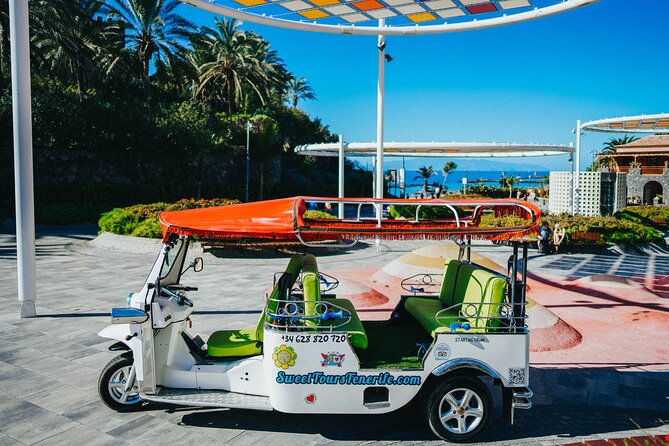
The tour runs with a small-group option limited to four people, and there’s also a private option. Either way, you’ll be in a tuk tuk-style vehicle with six seats arranged facing and next to each other, so the layout is tight.
I think this is the part you should treat seriously, not casually. Several comments point out that seats are compact and access can take a bit of coordination—especially if you have short legs, sore knees, or any difficulty stepping up and ducking under roof bars. Even without mobility issues, two people can end up watching the clock if the vehicle fills up.
The provider’s own guidance is clear: the private option is always recommended for reduced mobility and larger proportions so you can sit more comfortably. That doesn’t mean everyone with mobility needs will have a problem, but it does mean private is the safer bet if comfort matters to you.
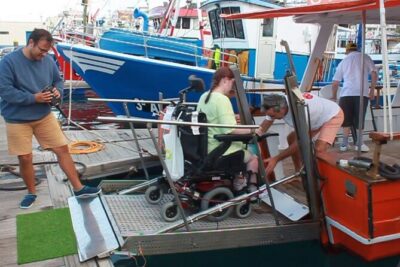
One positive note from the experience data: there’s at least one example of a wheelchair user being accommodated with dignity and support. Still, because the vehicle design can be a challenge for boarding and leg room, I’d treat private as the best way to reduce stress.
Stop by stop: Costa Adeje highlights without getting lost
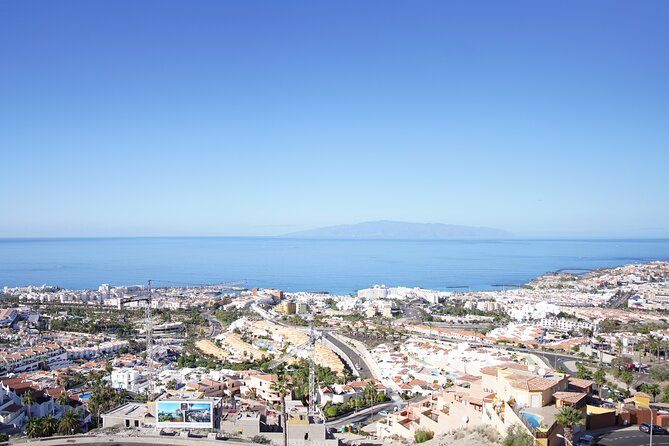
The route starts with an orientation through the most touristic parts of Costa Adeje—areas packed with bars and restaurants. This opening segment is useful even if you’ve already walked around a bit. You quickly learn where the main streets and resort clusters sit relative to each other, so later you don’t feel like you’re wandering blind.
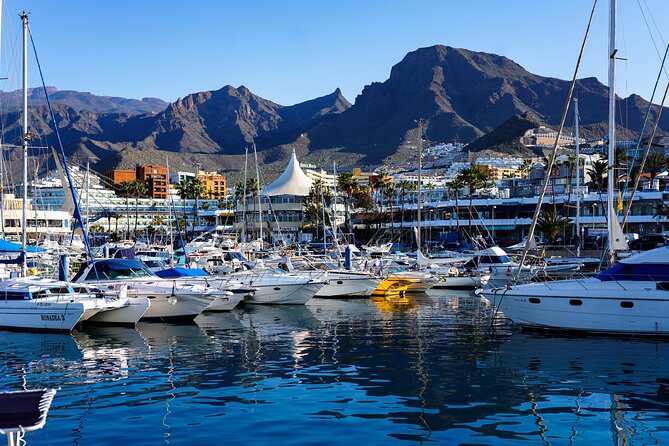
Then the tour heads to Puerto Colón Marina, which is one of the south’s activity hubs. Expect water sports and jet skis in the area. Your guide also shares a story linking the discovery of South America in 1492 by Columbus to how Europeans were thinking about the Atlantic world around that era. Even if you’re not a history person, it’s the kind of framing that makes the marina feel less random and more connected to bigger patterns.
Next is Las Américas, a popular zone for surfers, with plenty of beach clubs and nightlife energy. This stop gives you a sense of the south’s personality—less about quiet scenery, more about how people actually live and play there. It’s also helpful for planning your evening later because you’ll see the general flow of where the action clusters.
After that, the tour turns toward the more specific “Tenerife you might not find on your own” stops.
La Caldera del Rey: bananas, volcanoes, and Guanches
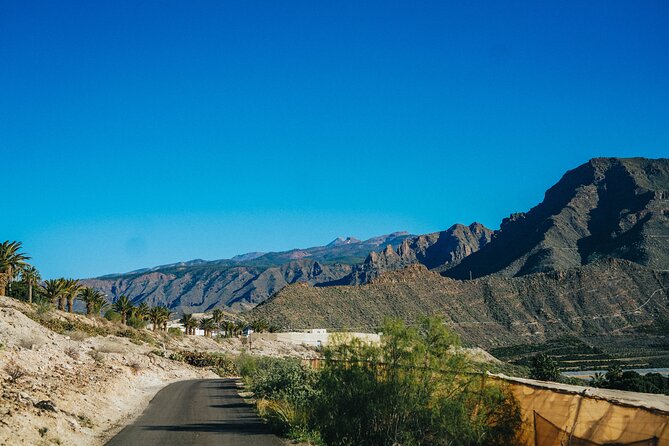
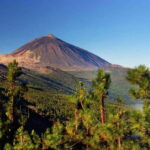
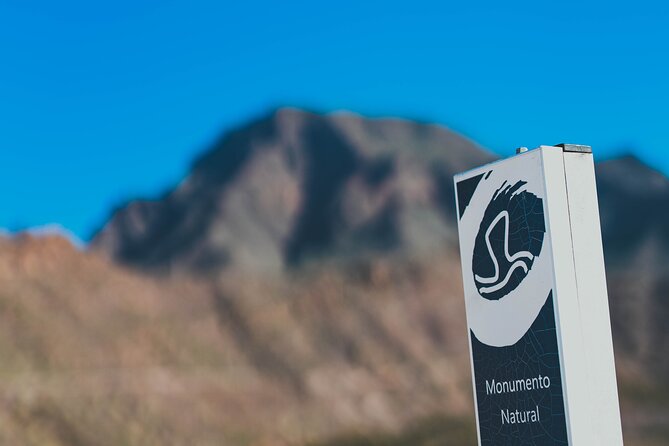
The biggest nature stop on the route is La Caldera, at the Caldera del Rey volcanic natural monument. You get about 10 minutes, and admission is included.
This is where the tour shifts from resort zones into something more elemental. The guide explains the geologic origin of the formations, then connects it to what you see around you—especially the banana plantations spread out below and around the viewpoints.
You’ll also get a cultural thread. The tour ties the area to the history of the Guanches, Tenerife’s native people. That combination—volcano science, agriculture, and local origins—works well because it links Tenerife’s landscape to everyday life, not just dramatic scenery.
The view is often the selling point here. Even if you’re only there briefly, you can understand why people come to Tenerife: it’s a volcanic island with human farming carved into it.
Practical note: the stop is short, so if you want extra time for photos, arrive already with your camera settings ready. The guide will keep the pace, and there’s no long wandering break.
Duke area luxury, malls, and how it got that way
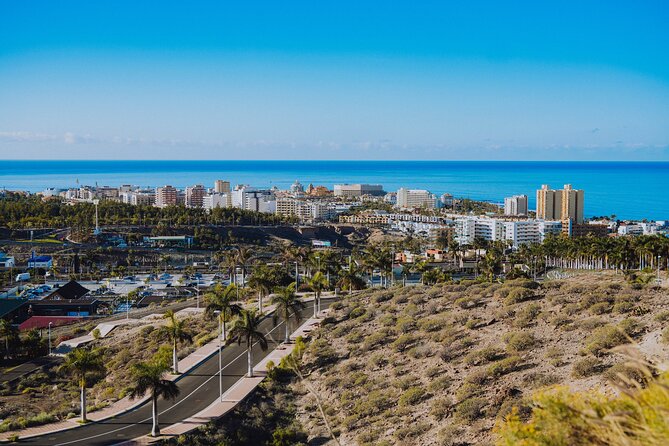
After the natural stop, you’ll travel through what’s called the Duke area—the more upscale zone with fancy hotels and malls. The guide uses this as a time-travel moment, explaining why this part of Tenerife became the luxury heart of the south.
Why this stop matters for you: it helps you read the area. When you see a concentration of high-end development, you’re really looking at decades of planning, investment, and the kind of tourist Tenerife attracted. Even a quick explanation makes the streets feel less generic when you’re walking later.
This is also one of the smoother sections for “just sit and listen.” You can relax in the vehicle while the guide does the heavy lifting of putting context behind what you’re driving past.
Over Aqualand and the viewpoint you might miss on your own
Between the big landmarks, the route includes a quick “secret spot” moment over Aqualand. This isn’t framed as a long hike or a hidden trail—more like a viewpoint stop that gives you a better angle on Costa Adeje and the wider islands.
In practice, I like stops like this because they feel efficient. You’re not adding effort, but you are upgrading the quality of your photos and your understanding of how the coastline sits.
If you’re the type who doesn’t love walking much (but still wants variety), these quick viewpoint segments are a strong match.
The black-sand beach stop: quiet, volcanic, and religious stories
One of the most memorable segments is the visit to one of Tenerife’s last natural and virgin beaches, with black sand and volcanic stones. The guide shares what adds to its mystique, including religious history connected to the spot.
This stop works because it’s a contrast. You’ve been in marinas, resorts, and hotel zones, and then—quietly—you’re looking at something raw and volcanic. Even though the tour time is short, the emotional contrast tends to stick with people. It also gives you that rare feeling of seeing the island rather than just the resort.
What to expect: volcanic beaches can feel cooler and windier than the main palm-lined strips. If you tend to get chilly easily, plan for layers.
La Caleta fisher village and natural swimming pools
The tour’s final stretch includes La Caleta, a traditional fisher village. You get about 10 minutes, and the stop is described as admission free.
Here, the guide focuses on local lifestyle rather than tourist marketing. You’ll see the natural swimming pools and learn how the area works as a living place for fishing and community life.
You’ll also hear about best restaurants of the island, which is useful in real terms. After a tour like this, I find it easier to choose where to eat because you’ve seen what kind of neighborhood you’re stepping into.
This final stop often lands well because it’s calmer than the nightlife-focused zones earlier in the route. It’s a good way to end with a sense of place, not just another view.
Guides matter: when Marcos, Nando, Benjamin, and Tony do it well
A tuk tuk tour lives or dies on the guide. In the experience details you’ve been given here, there’s a clear pattern of guides like Marcos, Nando, Benjamin, and Tony being praised for making the loop informative and fun without feeling like a lecture.
The most common winning ingredients:
- Clear storytelling that links what you see to Tenerife’s culture and history
- A considerate driving pace that feels safe
- Willingness to answer questions during the ride
- Extra touches when needed, like blankets if it gets cooler at higher points
Names that also appear in the experience record include Adam, Eli, Hugo, Jaimie, and Joanna. I’d treat that as a hint: the operator seems to staff guides who can make a short 2-hour route feel substantial.
If you care about learning, go with a departure time when you’re alert. Two hours goes fast, and the best guides make every minute count.
Price and value: what $45.97 buys you in real time
At $45.97 per person, this tour is priced for people who want an efficient introduction without renting a car. In just about 2 hours, you get:
- Tuk tuk transportation to and from the sights
- Walking tours at each sight (short, but guided)
- English and Spanish guiding options
- Small group structure (limited to four people) or private option
- Admission ticket included at La Caldera
- Admission free at La Caleta
That admission detail is meaningful because it’s one less thing you have to think about on the day. You also don’t have the cost and hassle of a taxi loop between scattered areas.
The biggest “value debate” isn’t the price. It’s the match between your expectations and the vehicle design. If you hate tight seating, you might not feel like the tour is worth it, no matter how good the guide is. If you’re okay with compact transport and you want an overview, the value tends to feel fair quickly.
Who should book this and who should skip it
This tour is a strong fit if:
- You’re in Costa Adeje for a short stay and want an overview
- You don’t want to drive or deal with navigation
- You enjoy history and local context mixed into sightseeing
- You want a break from long walks while still seeing multiple districts
It’s less ideal if:
- You need lots of leg room or struggle with stairs/steps and ducking under roof bars
- You get uncomfortable easily when riding in a compact vehicle for the full 2 hours
- Your priority is a deep, slow nature day rather than an orientation loop
If you’re traveling as a couple or family and you care about comfort, consider the private option. It’s the simplest way to avoid the tight-layout tradeoff.
Quick practical tips before you go
- Wear shoes you can walk a bit in, since each stop includes a short walk.
- Bring a light layer for cooler moments, especially near viewpoints.
- If you’re choosing between departure times, pick the one that best matches good weather since the tour runs on good-weather conditions.
- If you need a specific language beyond English or Spanish, allow time for a request at least 24 hours before.
Should you book this Double Tuk Tuk Tour in Costa Adeje?
I think you should book it if you want a fast, guided “get your bearings” experience that connects the south’s resort areas to the island’s geology, agriculture, and local identity. The included Caldera admission and the black-sand + La Caleta ending give you variety without adding a full day of logistics.
I’d skip or upgrade to private if comfort is a major concern for you. The tuk tuk layout can be tight, and the tour lasts long enough for seating discomfort to become a real factor.
Bottom line: if you can handle compact transport, this is one of the easier ways to understand Costa Adeje in a hurry and leave with stops you’ll recognize later when you wander on your own.
FAQ
How long is the Double Tuk Tuk Tour in Costa Adeje?
It’s about 2 hours (approx.).
Where is the meeting point?
It starts at Hotel Best Jacaranda, Av. de Bruselas, 6, 38670 Costa Adeje, Santa Cruz de Tenerife, Spain, and ends back at the same meeting point.
Do I get hotel pickup and drop-off?
No. Hotel pickup and drop-off are not included.
What languages are available?
The guide offers English and Spanish. Other languages are available upon request if you contact the provider at least 24 hours before the tour.
Is it a private tour?
You can choose. The experience is offered as either a small group limited to four people or a private option where only your group participates.
What admissions are included?
Admission is included for La Caldera (Caldera del Rey). La Caleta is listed as admission free.
Is this tour suitable for people with mobility issues?
The seats are facing and next to each other, and the company recommends the private option for reduced mobility and larger proportions. This can be helpful for comfort.
What about children or babies?
For safety, babies from 0–2 years old must sit on the adult’s lap with the seat belt on.
Is the tour dependent on weather?
Yes. The experience requires good weather, and if it’s canceled due to poor weather you’ll be offered a different date or a full refund.