REVIEW · TENERIFE
Polestar SELF-DRIVE Sunset Stars Tour in Teide National Park
Book on Viator →Operated by Stargazing Tenerife · Bookable on Viator
Sunset and stars in one tidy schedule. You start with a west-facing cava sunset at Mirador de los Poleos, then shift into Teide National Park for telescope stargazing and practical astro advice. One thing to plan around: this experience depends on the weather, so clouds (or a bad night sky) can change what you see.
This is a self-drive setup where you meet at Mirador de los Poleos and the group’s plan picks up from there. It runs in English only, caps at 45 people, and it’s worth dressing for real cold up high.
In This Review
- Key things to know before you go
- Mirador de los Poleos: Cava Sunset With Teide-Coloured Clouds
- A Self-Drive Start, Guided Night: How the Pace Works
- Teide National Park: Volcano Clues and a Better Meaning for the Sky
- Telescopes and Star Talk: What You’ll See Beyond the Moon
- Photography Advice for Red Sunsets and the Milky Way
- Who This Tour Fits Best (and Who Might Want Another Option)
- Price and Value: Why $48.01 Can Make Sense
- Should You Book This Teide Sunset Stars Tour?
- FAQ
- What is the meeting point for the sunset stars tour?
- Where does the tour end?
- Is the tour offered in English?
- What drinks are included?
- Is a telescope included in the experience?
- Is admission to Teide National Park included?
- How does the self-drive part work?
- What happens if the weather isn’t good enough for stargazing?
Key things to know before you go
- Cava is included: you get a glass of cava (or a non-alcoholic drink) while the sunset drops.
- You’re guided to the sky, not just left looking up: there’s a laser guide and a large computerized telescope.
- Teide has a story beyond the view, with volcano context tied to dates like 1492 and 1909.
- Expect photo coaching for sunsets turning red and for night-sky shooting.
- Cold is part of the deal: bring layers, and you may be offered warm jackets on the spot.
Mirador de los Poleos: Cava Sunset With Teide-Coloured Clouds
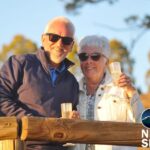
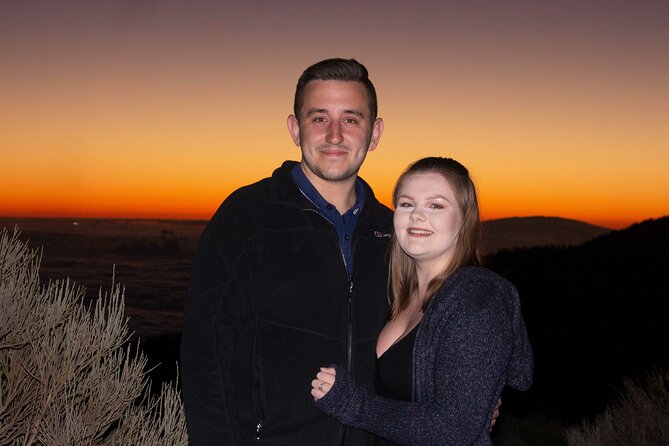
This tour’s first act is built for people who love a good payoff fast: you head to Mirador de los Poleos, a west-facing viewpoint with wide sightlines out over La Gomera and La Palma. As the sun drops, the sky doesn’t just get darker—it often shifts tones that make Teide look like it’s warming up from inside. That’s your moment for photos, because the light changes quickly once the horizon starts to sink.
The cava toast matters more than you might think. It keeps the group relaxed while the sky does its thing, and it gives you a reason to slow down instead of sprinting for the best angle. You’ll also hear the kind of simple, place-based context that makes the surroundings feel specific—like why this volcanic setting connects to old logbook references tied to 1492.
If you’re a casual night-sky watcher, this stop is also a gentle way to transition into astronomy. You’re not going from street level to deep space with no bridge—your guide sets you up for what’s next as the light fades.
You can also read our reviews of more evening experiences in Tenerife
A Self-Drive Start, Guided Night: How the Pace Works
The word self-drive can sound like you’re totally on your own. In practice, it’s closer to this: you manage your trip to the meeting point, and then you stay with the team for the sunset-to-stars sequence. After sunset, you move with the group up into the park and onward to the stargazing point, which can vary depending on weather.
That’s great if you want less stress. It means you don’t have to figure out where to go once the sky goes dark—especially important in a place where viewpoints and road choices can feel confusing when visibility drops.
The tradeoff is independence. If your dream is to come, park, and roam freely without following any van or plan, this won’t feel like that. One review called out that the fee can feel steep if you’re expecting more freedom—but if you like structure, telescope access, and live guidance, the setup makes sense.
Group size is capped at 45, which usually keeps things moving without feeling chaotic. Still, plan for some crowding at the meeting spot—multiple tours can converge at the same viewpoint area. Arrive a little early so you’re not hunting for your exact place once everyone starts to line up.
Teide National Park: Volcano Clues and a Better Meaning for the Sky
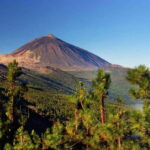
After the sunset toast, the experience shifts from “pretty view” to “why this place looks like this.” The tour follows the volcanic story across key points, including a reference to the first recorded eruption described by Christopher Columbus in 1492, and later discussion of the last recorded eruption in 1909. You’ll hear how those eruptions shaped what you see now—dark rock, sharp silhouettes, and a volcanic landscape that looks dramatic even in daylight.
Then you continue to another lookout point on the way to stargazing, described around Mount Samara. From there, the sky often offers wider context too: you can see clouds taking on color as twilight transitions, and on clear nights you may catch islands like El Hierro. That matters for stargazers because it sets the stage. Your eyes start adapting while the horizon is still visible, so the “switch” to full night vision feels less abrupt.
One practical upside here: because the team chooses where to aim, you’re not left guessing. When you’re dealing with astronomy, guessing is expensive in time and frustrating in results.
Telescopes and Star Talk: What You’ll See Beyond the Moon
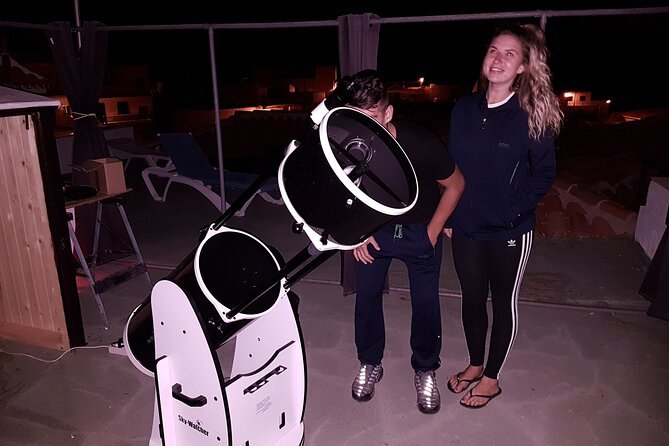
The main event is the large computerized telescope and a setup designed for real viewing, not just group spectacle. You’ll be shown the Moon first, with guidance to help you make sense of what you’re looking at—craters, edges, and the way the Moon’s light changes across the sky.
But the telescope session isn’t only about the Moon. People have reported seeing planets and more detailed sky objects like galaxies, nebulae, clusters, and not just the easy-to-find patterns. Even if you’re brand-new to stargazing, the team’s tone tends to be friendly and conversational, with explanations that don’t talk over your head.
You’ll also get a laser guide for stars. This is one of those tools that instantly improves the experience. Instead of pointing vaguely into darkness, the guide can show you exactly where objects are, then help you find them again with your own eyes. That’s a big deal if you want the night sky to feel learnable.
A quick reality check: full-moon nights can mute star visibility. One common tradeoff is that stars may look fewer or less crisp, but the Moon itself can become a highlight—especially as it rises over the mountainous silhouette. So don’t assume a bright Moon is a “bad” night. It’s just a different kind of show.
Also, you should know the cold can be intense. Multiple people stress this, and some mention warm jackets being available to borrow. Layer like you mean it: a warm base, a mid-layer, and something wind-resistant. If you run hot, you still want at least one real warm layer for sitting still in the dark.
Photography Advice for Red Sunsets and the Milky Way
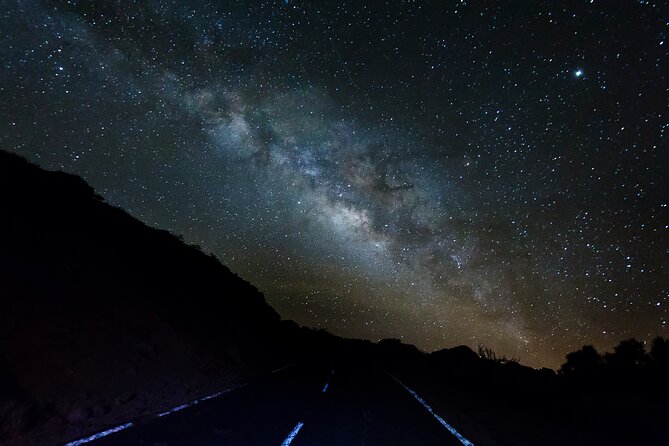
If you care about photos, this tour is set up to help you get more than one lucky snapshot. The guide focuses on the best moments for photography during the transition from sunset to night. That’s when colors shift fastest—when Teide can show warmer tones and when clouds can turn dramatic.
For night shooting, you’ll get astrophotography guidance tied to the telescopes and sky targets. Even if you don’t plan to do long-exposure photos, the advice helps you understand composition and timing: where to frame, when to switch from horizon shots to sky shots, and how to make the most of what the telescope is showing you.
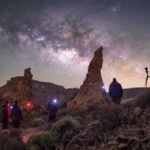
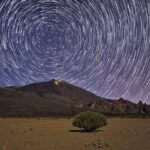
If you’re traveling with a camera or smartphone, keep expectations realistic. The sky isn’t always cooperative, and weather can change the plan. But when the sky is clear, this is a strong setting for capturing the Milky Way and standout constellations in Tenerife’s darker conditions.
One more tip: be ready to move your attention quickly. The experience runs on timing, because the sky changes fast once darkness arrives. If you get stuck only shooting the first object, you can miss what comes next.

Who This Tour Fits Best (and Who Might Want Another Option)
This works best for people who want a guided night-sky experience without doing homework. If you’re the type who enjoys a sunset but also wants the learning piece—what you’re seeing and how to find it—this is a satisfying combo.
It’s also a good fit for families with older kids who handle English well. One review mentioned that it suits children around 12 and up, with younger kids benefiting if they have help understanding.
If you’re totally new to stargazing, you’ll likely appreciate the laser pointer and the telescope show, plus the way the guide explains what matters. If you’re a more experienced astronomy person, you might wish for deeper technical instruction, but you can still use the setup to locate targets quickly and confirm what you’re seeing.
Where expectations can trip people up is the “self-drive” label. You’re not roaming independently for the entire evening. You’re meeting at one point, then following a plan that includes group movement and telescope sessions. If that sounds like a dealbreaker, look for a different format.
Price and Value: Why $48.01 Can Make Sense
At about $48.01 per person for roughly 2 hours 30 minutes, the value is driven by what’s included. You’re getting a guided sunset experience, alcoholic drinks included (cava or a non-alcoholic alternative), and telescope access as part of the program. Admission to the park is listed as free, and the time is short enough that you don’t feel like you’re sacrificing your whole evening.
The telescope and guide time are the big “value anchors.” A comparable private guided stargazing session elsewhere can cost far more once you factor in equipment and expertise. Here, the experience is designed to fit a predictable block of time, which helps you plan around dinner and other Tenerife activities.
That said, value depends on what you want. If you were hoping for a mostly independent experience where you pay mostly for a ride or a viewpoint, one review felt the fee didn’t match that expectation. But if you want the telescope show, the sky coaching, and the guided rotation through viewpoints, you’re paying for those specific components—and they’re included.
Should You Book This Teide Sunset Stars Tour?
I’d book it if you want a low-stress way to combine sunset views, volcano context, and real stargazing in one evening—especially if you’re not keen on figuring out where to go after dark. The included cava makes the sunset part feel like a proper moment, and the telescope plus laser guidance makes the night sky feel less random.
I’d think twice if you hate group plans, or if you’re arriving expecting pure independence. Also, don’t treat the clouds as an afterthought. Weather is key here, and the experience needs a decent night sky to really deliver.
If you dress warmly, arrive with realistic expectations about the Moon and stars, and lean into the guide’s prompts, this is one of those Tenerife nights that can turn into a highlight you’ll remember long after the last constellation fades.
FAQ
What is the meeting point for the sunset stars tour?
You meet at Mirador de los Poleos, 38690 Santiago del Teide, Santa Cruz de Tenerife, Spain.
Where does the tour end?
The tour ends at Mirador de Samara, 38688 Guía de Isora, Santa Cruz de Tenerife, Spain. The exact stargazing point can vary based on weather conditions.
Is the tour offered in English?
Yes. The tour is in English only.
What drinks are included?
A glass of cava (Spanish sparkling wine) is included, or a non-alcoholic drink if you prefer that option.
Is a telescope included in the experience?
Yes. The tour includes a telescope, including a large computerized telescope for viewing the Moon and stars.
Is admission to Teide National Park included?
Admission is listed as free, and an admission ticket is included with the experience.
How does the self-drive part work?
You handle getting yourself to the meeting point. After that, you follow the team’s plan to move to the stargazing areas as conditions allow.
What happens if the weather isn’t good enough for stargazing?
This experience requires good weather. If it’s canceled due to poor weather, you’ll be offered a different date or a full refund.