REVIEW · TENERIFE
Tenerife: Teide Stargazing with an Astrophysicist
Book on GetYourGuide →Operated by A donde vamos hoy · Bookable on GetYourGuide
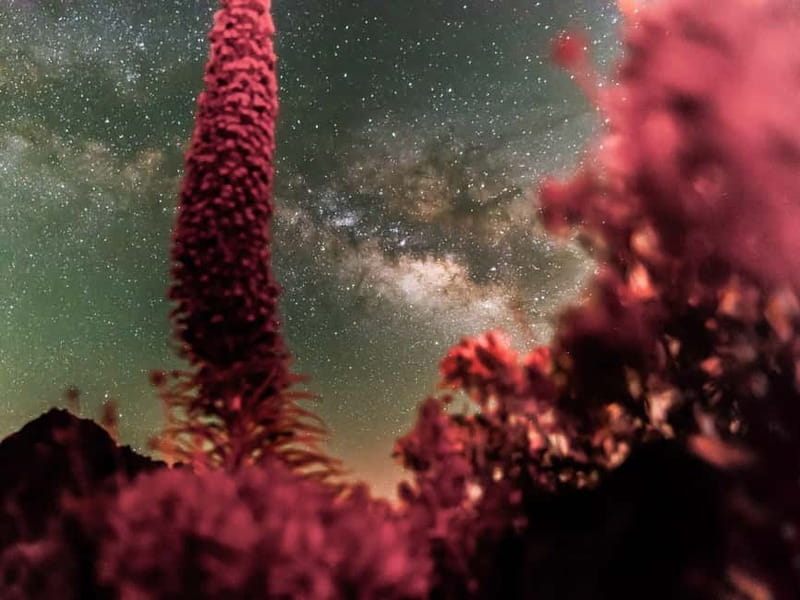
Teide night turns astronomy into hands-on show. From the Parador de Cañadas del Teide, an astrophysicist guides you under Teide National Park skies, with Moon, planets, and shooting stars in the mix.
I especially like the small group size (max 10). And I love that the guide is both a trained astrophysicist and a certified official guide, so you get clear explanations plus real telescope time.
One key consideration: Teide weather can be harsh at altitude, and the tour may be canceled if conditions aren’t safe. You’ll also want warm layers and proper shoes before you step outside.
In This Review
- Key Things I’d Not Miss
- Teide National Park: Why the Sky Looks Different Here
- Meeting at the Parador de Cañadas del Teide (and Getting Ready)
- The 1.5 Hours: How the Night Usually Flows
- Getting oriented: laser guidance and quick sky matching
- Telescope time: learning how to use the 8-inch scope
- What you might see: planets, Moon detail, and star objects
- Constellations, mythology, and modern astrophysics
- The Telescope: What an 8-Inch Means for Your View
- Weather, Cold, and Real-World Expectations at Teide
- Small Group Size and the Guide Style: Why It Feels Personal
- Who This Tour Is Best For (and Who Should Skip It)
- Price and Value: Is $47 Worth It?
- Practical Tips That Make the Night Better
- Should You Book This Teide Stargazing Tour?
- FAQ
- How long is the Teide stargazing experience?
- What group size should I expect?
- What languages are offered?
- Is transport to the meeting point included?
- What should I wear or bring in cold mountain weather?
- Is this tour suitable for children?
Key Things I’d Not Miss
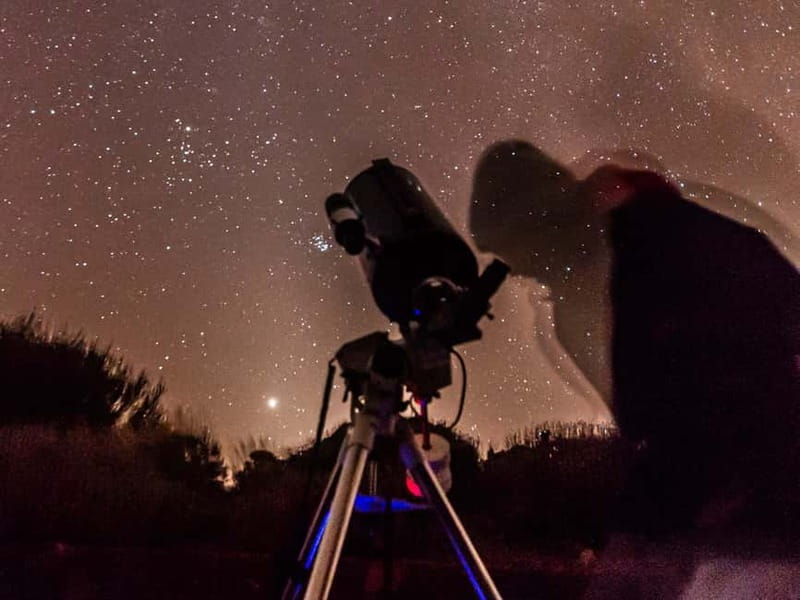
- 8-inch telescope (about 20 cm): expect close views of bright targets like the Moon and major planets, when conditions allow
- Astrophysicist + certified official guide: science-focused explanations that still stay fun and approachable
- Laser-guided experience with a lantern: helps you connect the dots in the sky without fumbling in the dark
- Constellations plus telescope training: you learn the sky and the gear, not just what to look at
- Short, focused 1.5 hours: enough time to see highlights without turning it into a long night
- Small-group feel: questions land easily, and the pace stays human
Teide National Park: Why the Sky Looks Different Here
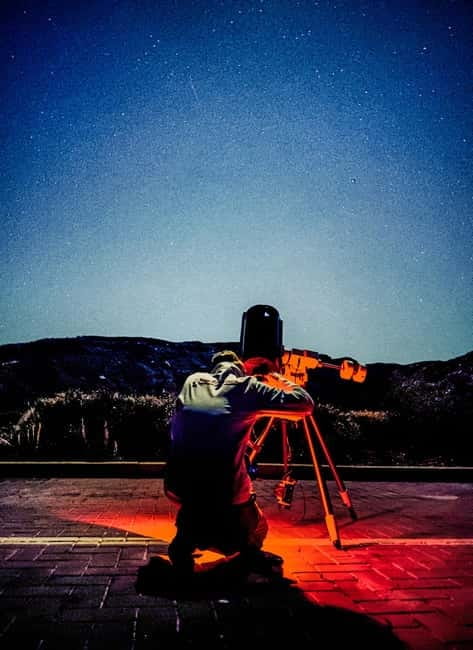
If you’ve ever stared at stars and felt like you were seeing only a small slice, Teide helps fix that. This is high-altitude viewing in the Canary Islands, where the air is typically crisp and the sky tends to show more stars than you’ll find back at sea level.
What makes Teide stargazing practical (not just poetic) is the mix of guidance and equipment. You’re not expected to figure everything out in the dark. A professional astrophysicist points you toward what’s actually worth seeing that night, then backs it up through the telescope.
And yes, the Moon can be in the scene too. That’s not a deal-breaker. When the Moon is up, you often get a high-contrast show—think sharp lunar detail—while the guide still keeps the rest of the sky moving.
You can also read our reviews of more tours and experiences in Tenerife.

Meeting at the Parador de Cañadas del Teide (and Getting Ready)
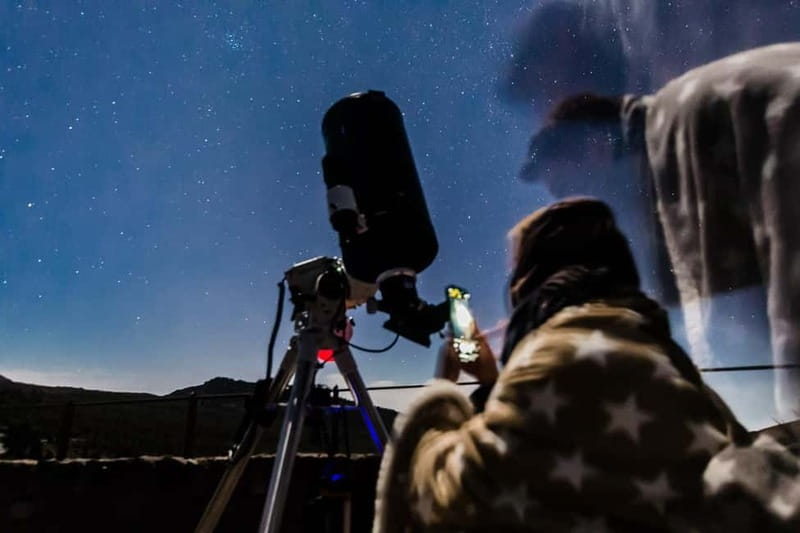
Your stargazing night starts at the entrance or outdoor patio of the Parador Cañadas del Teide. It’s a clear “arrive, gather, then go out into the night” setup, which matters because nobody wants to spend the best part of the evening hunting for the group.
Transport is on you. The tour doesn’t include getting there, so plan for your own car or a taxi to reach the meeting point. If you’re driving, build in extra time for mountain roads and slower conditions—at night, you want to be calm, not stressed.
Before you go, I’d treat this as a proper cold-weather outing. You’ll want comfortable shoes (the ground at altitude can be tricky), plus warm clothing and layers you can actually move in. The guide will do the “what to look at” part. You’re responsible for dressing for the temperature.
The 1.5 Hours: How the Night Usually Flows
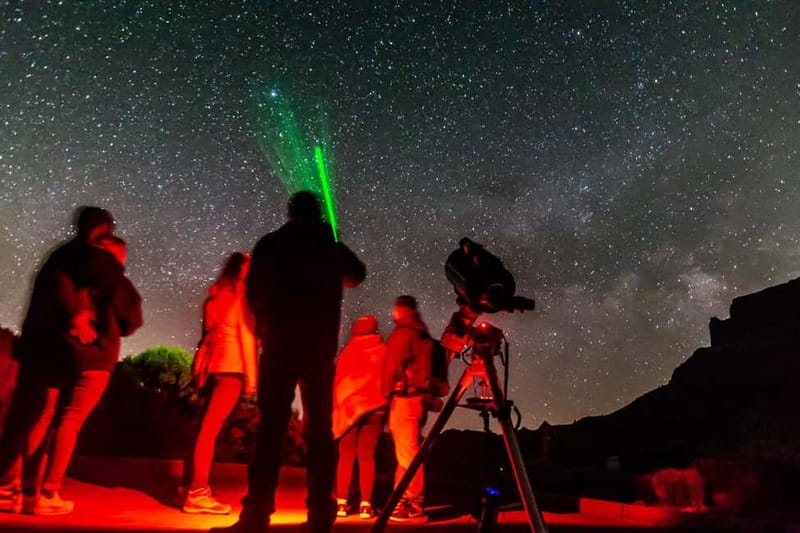
This tour is designed to be compact and satisfying. Ninety minutes is long enough to get oriented in the sky, use the telescope properly, and still have time for questions.
Getting oriented: laser guidance and quick sky matching
The session starts with the guide helping you connect the stars to real shapes—constellations and key points in the sky. A laser-guided setup makes a difference here. In dark viewing, it’s easy to point in the wrong direction. Laser guidance helps you get your bearings fast.
You’ll also get a lantern. That might sound small, but it’s huge for comfort. You need light for safety and basic movement, without blasting your eyes with bright headlamp glare.
Telescope time: learning how to use the 8-inch scope
Once you’re settled, the astrophysicist focuses on the telescope. Some tours just plop people behind equipment. Here, you get a real explanation of the telescope and how observing works.
That training is a big part of the value. When you understand what you’re looking at—magnification, aiming, and why targets appear differently—you don’t just “see something.” You learn how the view is being created.

What you might see: planets, Moon detail, and star objects
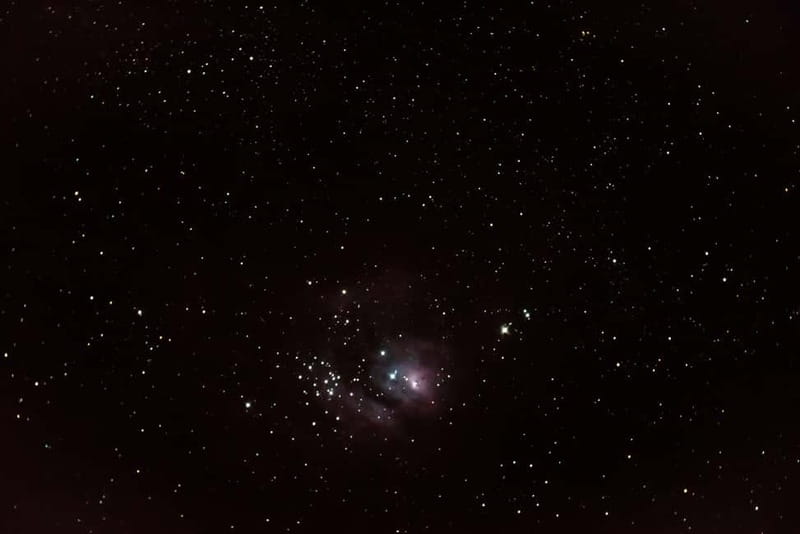
The exact targets depend on conditions, but the experience is built around major sky objects. In past sessions, people have seen Jupiter and Saturn with clear ring views, the Moon with visible craters, and other highlights like star clusters and nebulae. Neptune has come up too.
A fun detail from the way this tour is taught: it’s not only a list of objects. The guide also explains what makes each object scientifically interesting—how they fit into research and why astronomers care.
Constellations, mythology, and modern astrophysics
You’ll hear both the storytelling side and the science side. Expect constellation mythology, then a move toward forefront astrophysics and the history of astronomy. The goal isn’t to turn you into an expert overnight. It’s to make the sky feel meaningful.
The Telescope: What an 8-Inch Means for Your View
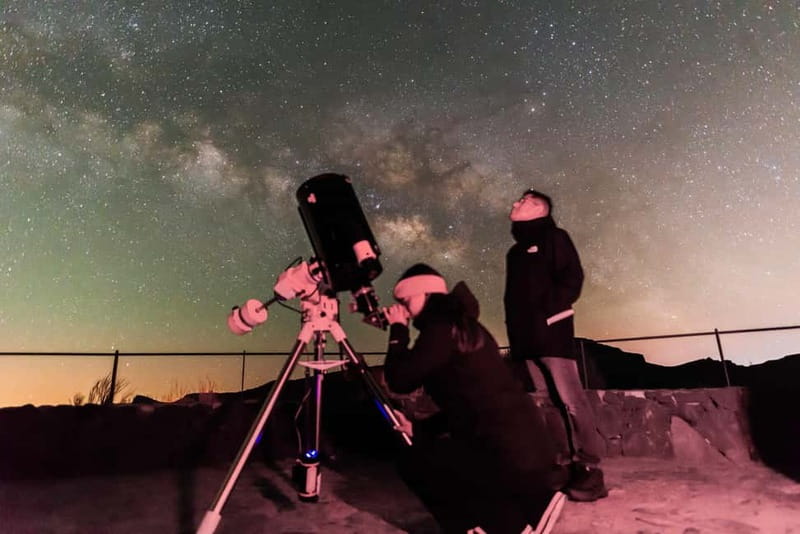
An 8-inch telescope is a sweet spot for a stargazing experience. It’s large enough that you can see more than just bright dots, but not so unwieldy that the session turns into complicated technical downtime.
In plain terms, this scope size supports:
- Clear views of the Moon’s surface detail when it’s up
- Better chances to identify major planets and features (like Saturn’s rings, when they’re favorably placed)
- Views of fainter objects like clusters and nebulae, depending on night conditions
The telescope itself is included, and the guide takes time to set you up so you’re not lost. That’s one reason this tour tends to work for both total beginners and astronomy fans.
If you’re the type who likes to ask questions—about what you’re seeing, why it looks that way, or how the telescope is adjusted—this is the right format. A small group and an astrophysicist guide means you’re not shouting into the dark.
Weather, Cold, and Real-World Expectations at Teide
Teide sits high, and the temperature drop can be real. The tour notes warm ranges by season: between 0–4°C from October to March, and roughly 10–15°C from April to September. Either way, you’re outside at night, so dress like the cold is already there.
Here’s what I’d pack based on the tour’s guidance:
- Warm clothing and thermal layers
- Warm shoes (not just “sneakers”)
- Water
- Comfortable clothes you can layer without overheating
Also, be mentally prepared for weather changes. Activity may be canceled due to high-mountain conditions. Safety comes first at altitude, and a refund is offered if the tour is canceled by the operator.
One more honest consideration: even at strong stargazing sites, you can be limited by the night’s specifics—cloud cover, wind, and local light. The good news is the guide adapts the plan to what the sky gives that night, instead of sticking rigidly to one script.
Small Group Size and the Guide Style: Why It Feels Personal
Max 10 people is a big deal in astronomy. It changes the whole vibe.
With a smaller group:
- You get more time with the telescope and less waiting
- It’s easier for the guide to answer questions at your level
- Explanations stay clear instead of rushed
The guide’s teaching style also shows up in how the session is described—energetic, funny at times, and ready to explain both basics and deeper astrophysics. In multiple accounts, the guide is praised for tailoring explanations and not brushing off questions, even ones that start from beginner confusion.
If you’re going as a couple, solo, or with kids who are old enough for the cold and night setting, the format tends to work well because it stays focused and human-sized.
Who This Tour Is Best For (and Who Should Skip It)
This is a stargazing tour, but it’s also a learning experience with a science-heavy guide. That makes it ideal for:
- Couples who want a memorable night out
- Solo travelers who like asking questions and getting direct answers
- Families with older kids who can handle cold and nighttime outdoor conditions
- Anyone who wants more than a quick “look up” moment
It’s specifically noted as not suitable for children under 8, and babies under 1. It may also not be appropriate for kids under 7–9 due to mountain weather.
If you’re bringing very young kids, or if you hate being cold and standing still for a while, you’ll likely feel the mismatch fast.
Price and Value: Is $47 Worth It?
$47 for 1.5 hours isn’t a bargain price, but it’s also not an over-the-top luxury fee. For what you get, it tends to land in the “good value if you care about the details” category.
Here’s where the value comes from:
- An included 8-inch telescope (real observing time, not just sightseeing)
- A trained astrophysicist and certified official guide
- A small group cap (max 10), which usually means better engagement
- Laser guidance and lantern included, which improves the experience immediately
Transport and food/drinks aren’t included, so factor that into your total budget. If you’re driving, think about fuel and parking time. If you’re using a taxi, plan for the round trip.
Bottom line: if you want a structured, science-forward stargazing session that actually helps you understand what you’re seeing, this price makes sense.
Practical Tips That Make the Night Better
- Wear layers you can regulate. Cold wind plus a heavy coat can be sweaty if you’re not careful.
- Bring water. Even if you’re not hiking for miles, altitude and cold can still make you feel off.
- Keep your phone brightness low. You want the guide to use the lasers and lantern, not a screen glow washing out your night vision.
- Ask questions early. The best part of a small-group astrophysics session is getting quick answers while the telescope view is still in play.
Should You Book This Teide Stargazing Tour?
I’d book it if you want Teide’s famous dark-sky setting plus real telescope time, guided by a professional astrophysicist in a small group. The short duration works for most schedules, and the mix of constellations, mythology, and actual astrophysics makes it interesting whether you’re brand new or you already know your way around the sky.
I’d reconsider if you’re traveling with very young children, if you hate cold nights outside, or if you’re expecting a guarantee of every single celestial object. Weather can change plans at altitude, and the operator may cancel for safety.
If you’re flexible with dates and dressed for the cold, this is the kind of experience that makes the sky feel close enough to touch.
FAQ
How long is the Teide stargazing experience?
It lasts 1.5 hours.
What group size should I expect?
It’s a small group limited to a maximum of 10 participants.
What languages are offered?
The live guide is available in English and Spanish.
Is transport to the meeting point included?
No. You’ll need your own car or arrange a taxi to get to the Parador de Cañadas del Teide meeting spot.
What should I wear or bring in cold mountain weather?
Bring comfortable shoes and warm clothing, plus water. The guidance is warm clothing for temperatures between 0–4°C (October to March) and 10–15°C (April to September). Thermal clothing is recommended.
Is this tour suitable for children?
It may not be appropriate for kids under 7–9 years old due to mountain weather conditions, and it is not suitable for children under 8 or babies under 1.