REVIEW · TENERIFE
Tenerife: Scuba Diving for Certified Divers in Tenerife
Book on GetYourGuide →Operated by DIVE CENTRE TRAVEL SUB · Bookable on GetYourGuide
Puerto Colón makes the start easy. This small-group scuba experience focuses on real underwater variety off Tenerife’s south coast, with frequent departures and sites chosen on the day. I like the way the crew runs things smoothly from the moment you walk in, and I also love that you don’t have to think about gear logistics because it’s prepared for you. One thing to consider: it’s not suitable for pregnant women, and if you’re over 55 you’ll need a medical certificate.
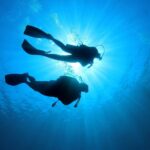
What keeps it interesting is the scale. You’re looking at up to 20 underwater sites across the day’s plan, reached by speedboat in about 5–20 minutes, plus the option for night water time where you can look for larger Atlantic species. The pace is hands-on and practical, and the small group (max 10) helps the instructors keep an eye on buoyancy and comfort.
In This Review
- Key Highlights I’d Put on Your Radar
- Where This Experience Fits on Tenerife
- Meeting at Travel Sub in Puerto Colón (and What to Do First)
- Safety Briefing: The 30 Minutes That Makes Everything Easier
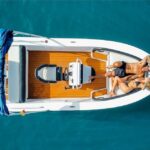
- The Speedboat Ride: Short Trips, Real Variety
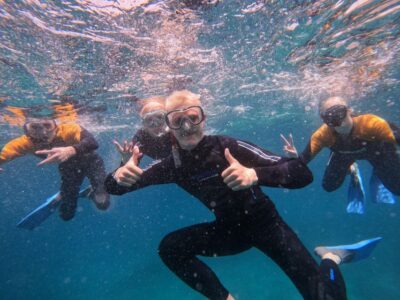
- Your Underwater Time: 45 Minutes to See the Best Stuff
- Wrecks and Caves: Why These Stops Are Worth Your Time
- Night Water Time for Atlantic Giants (Read This Part Carefully)
- Equipment and Tank Details: What You Actually Get
- Small Group Size: Up to 10 Means Better Attention
- Who the Crew Is (and Why Their Help Sticks)
- Price Value: What $63 Covers (and What It Doesn’t)
- Practical Notes Before You Go
- Should You Book This Tenerife Certified-Scuba Experience?
Key Highlights I’d Put on Your Radar
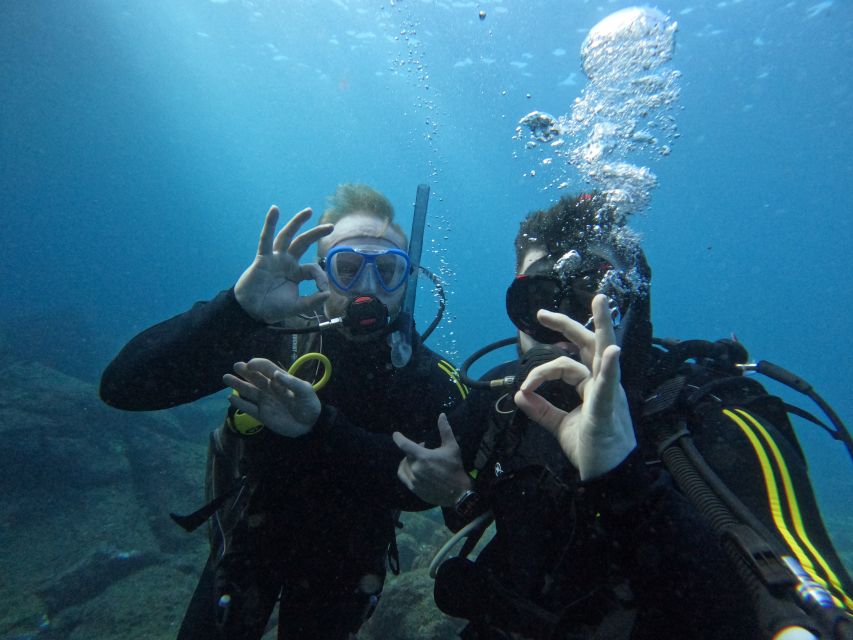
- Small group size (up to 10) so you get real attention, not a shuffle.
- Speedboat access to multiple sites with short rides of about 5–20 minutes.
- Wrecks and caves are part of the plan, not an afterthought.
- Friendly, well-organized staff, including crew members like Tobi who help with small comfort issues.
- Night water time is mentioned, giving you a different feel and new animal behavior.
Where This Experience Fits on Tenerife
Tenerife is a big island with a few “sweet spots” for water activities. This one is built around the south coast, where you can go from a convenient harbor-area meeting point straight out to calmer access routes and a wide spread of underwater stops.
You’ll be working from Puerto Colón, which is handy because it’s close to the water and easy to reach without turning your day into a long commute. For certified divers, that matters: more time on the water and less time managing transportation.
You can also read our reviews of more scuba diving tours in Tenerife
Meeting at Travel Sub in Puerto Colón (and What to Do First)
You meet at the reception of the Travel Sub center in the building called Escuela Náutica, in front of pier 5, inside the private parking area at Puerto Colón. Plan to go inside the building and find the reception, even if you can already see boats in the water. It’s a small detail, but it avoids that first-day “where do we go” moment.
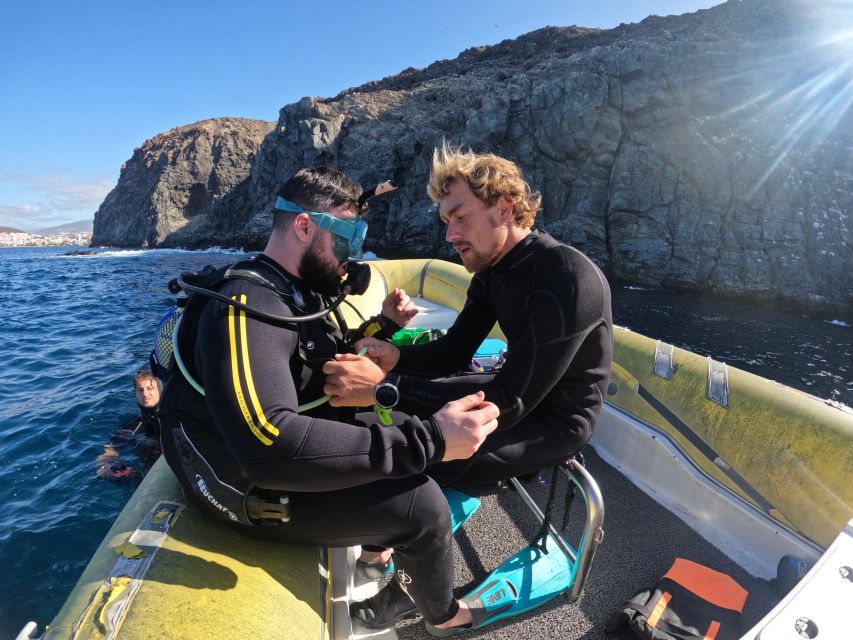
From there, the crew sets the tone for the whole session. The equipment is prepared for you, and that cuts down on the usual pre-water chaos of assembling BCDs, regulators, and weights.
Bring swimwear and a towel. Add sunscreen too. You’ll be in the sun before and after, and you’ll want to protect your skin before the day’s water time.
Safety Briefing: The 30 Minutes That Makes Everything Easier
Before you head out, there’s a safety briefing that runs about 30 minutes. This is where you get the day’s basic plan and what the instructors/DMs want you to focus on.
For me, that’s not filler time. A good briefing means you’re not guessing once you’re underwater. Since this is open to certified divers (PADI, SSI, and more), the briefing is likely more about matching the group, reviewing key procedures, and setting expectations than teaching from scratch.
Also keep in mind the age requirement: if you’re over 55, you need a medical certificate. Don’t wait until the day of—have it ready so you don’t lose time (or get turned away).
The Speedboat Ride: Short Trips, Real Variety
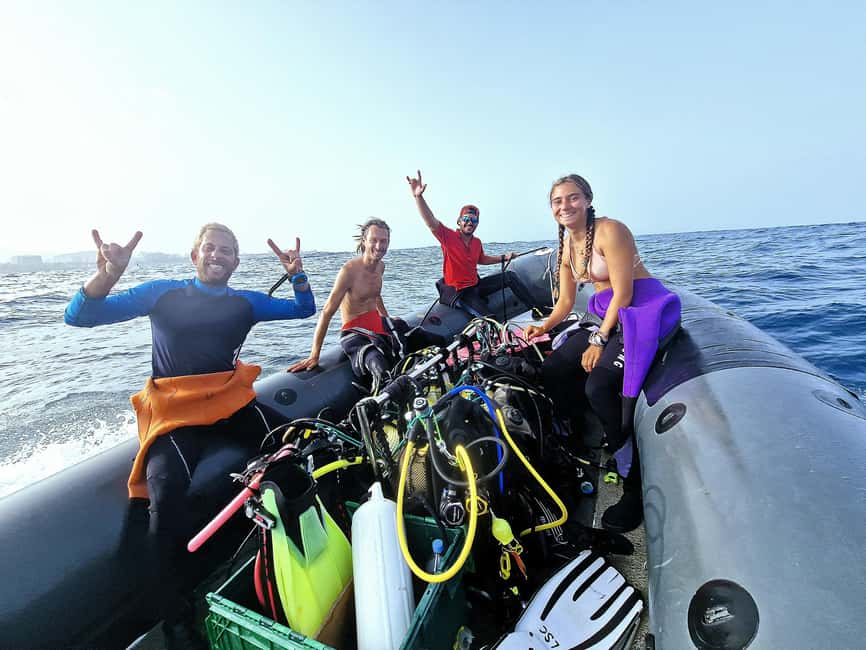
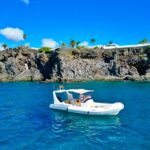
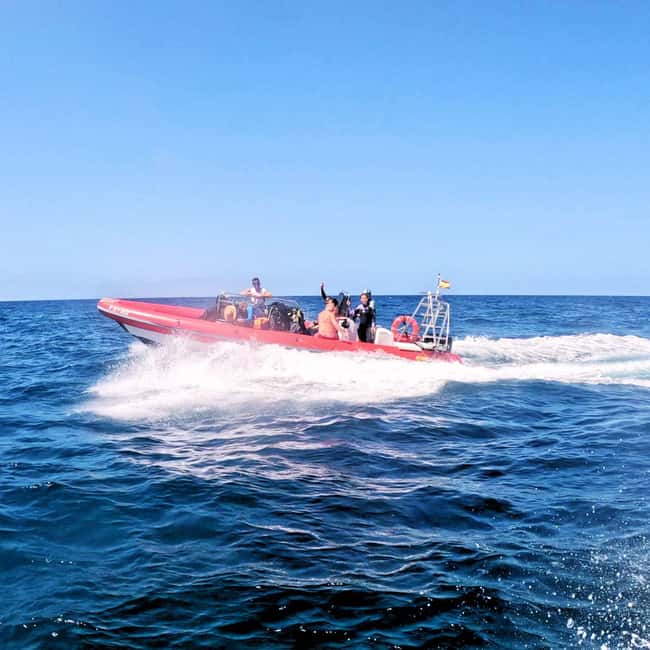
Once the briefing is done, you jump on a speedboat for about 15 minutes, then you return with another 15 minutes. Those rides matter because they control how many different underwater stops you can realistically do.
The plan is built for variety: sites are reached roughly 5–20 minutes by speedboat from the center. That’s a practical sweet spot. Long boat days can feel slow and tiring. Very short ones can mean lots of movement but not enough time underwater. Here, it’s structured so you still get a solid underwater block (about 45 minutes).
You’ll likely notice the advantage immediately: you spend less time staring at the horizon and more time in the water, looking at animals.
Your Underwater Time: 45 Minutes to See the Best Stuff
The underwater portion is scheduled for about 45 minutes. That timing is useful because it balances a satisfying look with maintaining energy and comfort.
You can expect excellent visibility (the experience emphasizes crystal-clear conditions). When visibility is good, you start noticing details fast: animal behavior, shapes against the rock, and the way light moves through water.
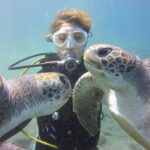
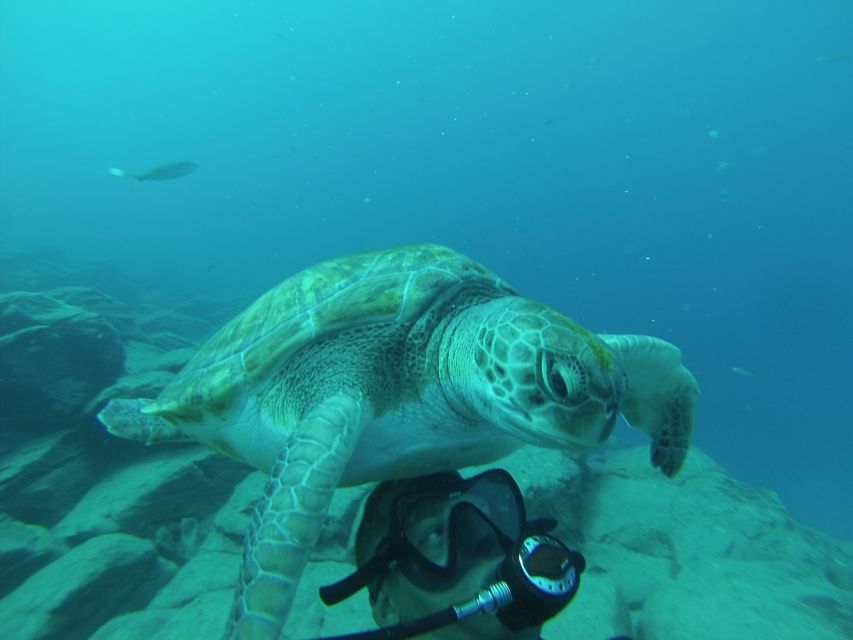
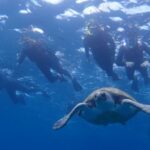
The animal list is one of the best parts of this experience, because it’s not just “fish are everywhere.” You can look for:
- turtles
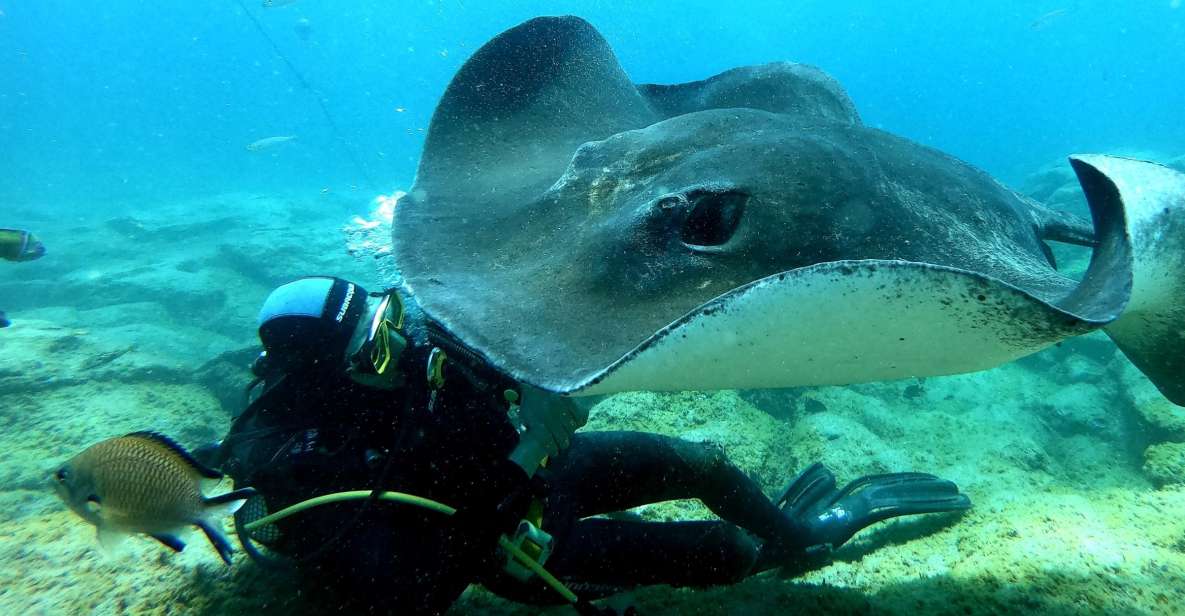
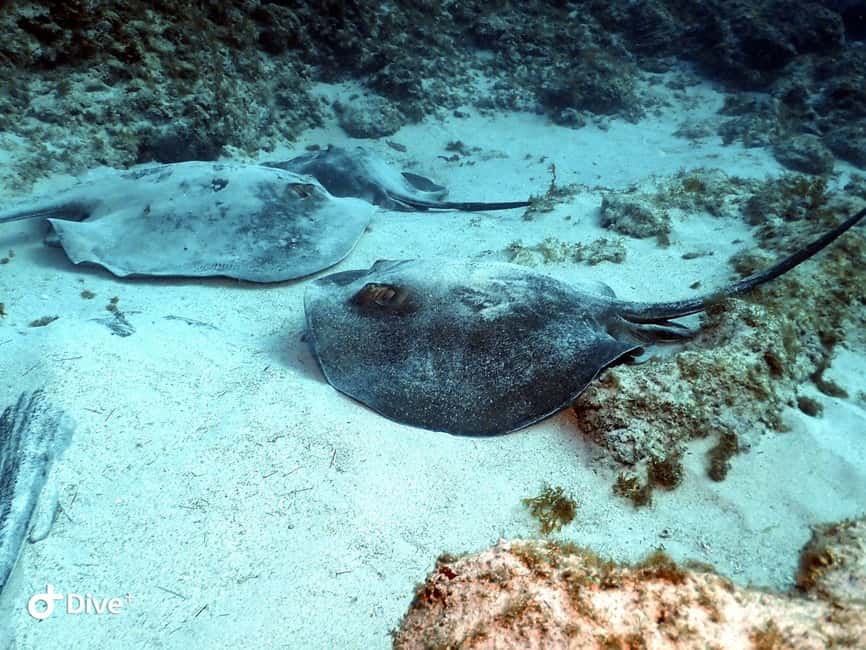
- rays
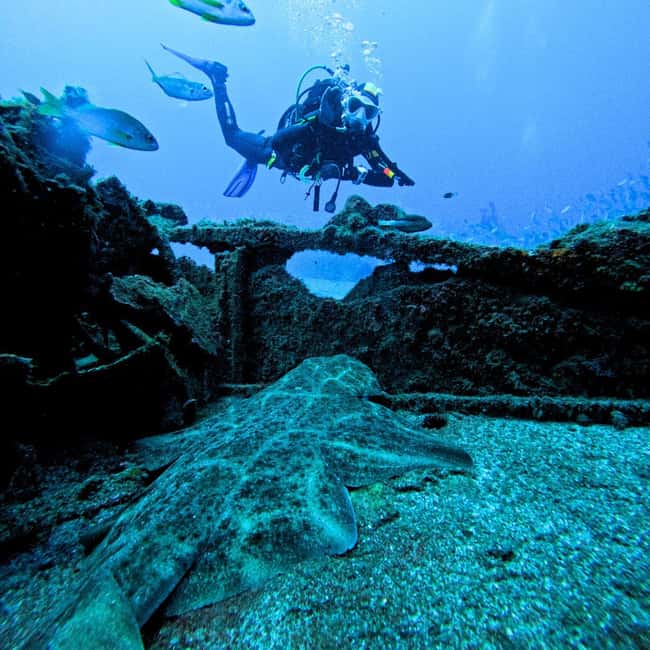
- angel sharks
- moray eels
- octopuses
- plenty of Atlantic fish
This matters for value. If you’re paying for a boat trip, you want more than generic scenery. With species like angel sharks and turtles mentioned, the expectation is that the crew is targeting areas where bigger sightings can happen.


Wrecks and Caves: Why These Stops Are Worth Your Time
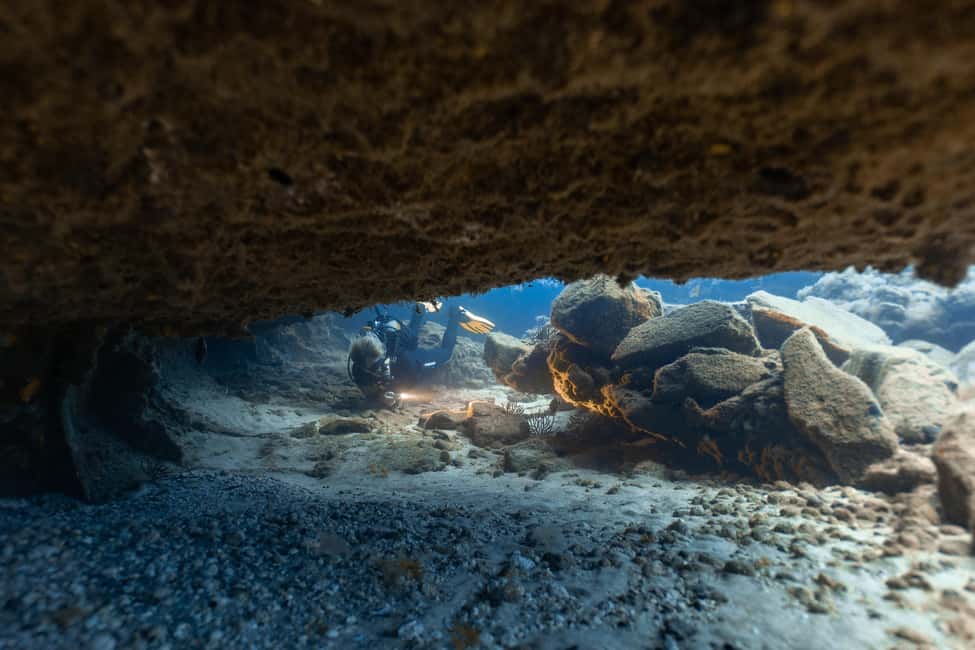
You don’t just get open-water scenery. The experience specifically highlights wrecks and caves as part of what you should plan to explore.
Why I like that for certified divers: wrecks and caves tend to reward good buoyancy and calm finning. They also change the whole mood of a session. Instead of a flat view, you get structure—shadows, ledges, and hiding spots where marine life likes to hang out.
Caves can also mean you’ll see animals using the “edges” of the space. Wrecks often concentrate fish, and sometimes the bigger visitors show up when conditions and site selection line up.
If you’re the type who likes photographing shapes and textures underwater, these stops are where you’ll get the most visual payoff.
Night Water Time for Atlantic Giants (Read This Part Carefully)
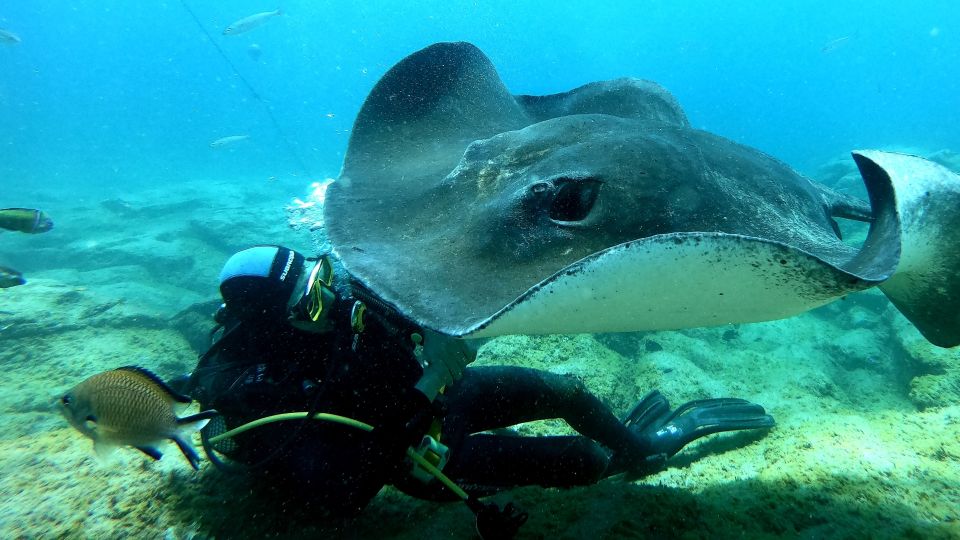
The experience mentions night water time, with the chance to see Atlantic giants. That’s a compelling twist because nighttime changes everything: visibility is still possible, but the animals’ activity patterns shift, and you may see different species behavior than you do in daylight.
Here’s the practical way to think about it: night sessions aren’t for everyone. You need confidence staying relaxed underwater and following the instructor’s cues, especially around low-light navigation.
If you’re comfortable, night water time can be one of those “only happens after the sun goes down” experiences. If you’re new to night sessions, it’s still worth asking questions during the briefing so you know what the crew expects from you.
Equipment and Tank Details: What You Actually Get
The included gear list is clear and important:
- BCD
- regulator
- weights
- fins
- boots
- wetsuit
You also get a tank (12 or 15 l) and a water drink. Since equipment is included, you’re not dealing with rental comparisons or last-minute extra costs for gear you might not want to bring.
A smart tip: even though gear is provided, double-check your fit before you leave the prep area. If something feels off—strap placement, boot sizing, regulator comfort—speak up early while adjustments are easy.
Small Group Size: Up to 10 Means Better Attention
This is limited to 10 participants. That small number changes the feel of the day. On a boat, groups like this are easier to manage, and underwater the instructor/DM can keep an eye on buoyancy and spacing without spreading attention too thin.
Languages are listed as Spanish, English, Italian, French, Russian, and Dutch. That’s helpful if your dive team language matters for comfort and understanding.
In my experience, multi-language crews are often a good sign: it usually means they deal with visitors often, and the communication is structured.
Who the Crew Is (and Why Their Help Sticks)
The reviews point to a consistently friendly vibe, with staff who make the check-in and briefing feel less like logistics and more like a calm start. One name that stands out is Tobi, a crew member who’s noted for helping with small comfort issues like glasses.
That might sound minor, but it’s exactly the stuff that makes a scuba outing smoother. When the staff takes care of the small things, you can focus on the real job: breathing, buoyancy, and watching what’s around you.
Price Value: What $63 Covers (and What It Doesn’t)
At $63 per person, the price is relatively straightforward, and the included items do real work for your budget.
What’s included:
- scuba gear (BCD, regulator, weights, fins, boots, wetsuit)
- boat access to sites reached in about 5–20 minutes
- a 12 or 15 l air tank
- instructor and/or DM
- baby sitter if parents want to dive together
- water
What’s not included:
- insurance
- photos
Value check: if you were to rent full gear + arrange a guided boat outing, $63 can make sense for certified divers, especially because the boat access and instructor time are included. The main “cost risk” is personal—if you need insurance you’ve arranged elsewhere, and if you want photos, you’d have to pay separately.
Also, the session is about 2.5 hours total, so you’re not burning a half day for a short amount of underwater time.
Practical Notes Before You Go
Not suitable for:
- pregnant women
- divers without certification
What to bring:
- swimwear
- towel
- sunscreen
Also, check your comfort with time underwater. The plan includes about 45 minutes in the water, which is solid for one guided session tied to a boat schedule. If you’re planning multiple activities in one day, leave a buffer for changing and drying off after you’re back on shore.
Should You Book This Tenerife Certified-Scuba Experience?
I’d book this if you want:
- a small-group guided experience with clear organization
- a chance at multiple underwater sites off Tenerife’s south coast
- structured gear support so you can travel lighter
- wrecks, caves, and the possibility of night water time
Skip it if:
- you’re not comfortable with the requirements (medical certificate if over 55, certification required)
- you’re looking for something designed for beginners
- you need pregnant-friendly participation (it’s listed as not suitable)
If your goal is to maximize underwater variety in a short window, this is the kind of operation that makes that easy. You start at Puerto Colón, you get set up with gear, you head out quickly, and you spend the time where it counts—looking for turtles, rays, angel sharks, and the rest of the Atlantic crowd.