REVIEW · TENERIFE
Tenerife : clases de surf para principiantes y intermedios
Book on GetYourGuide →Operated by Volcano Surf Center · Bookable on GetYourGuide
Surfing on Tenerife can feel like instant freedom. I love the small-group setup (max 6) and the way the instructors keep you moving from basics to actual wave time. You’ll also get real coaching from an experienced team, including instructors like Israel, who focuses on making beginners feel safe and confident. The one catch: this is an extreme sport and you’ll need a moderate fitness level—and it’s not a good fit if you’re a non-swimmer.
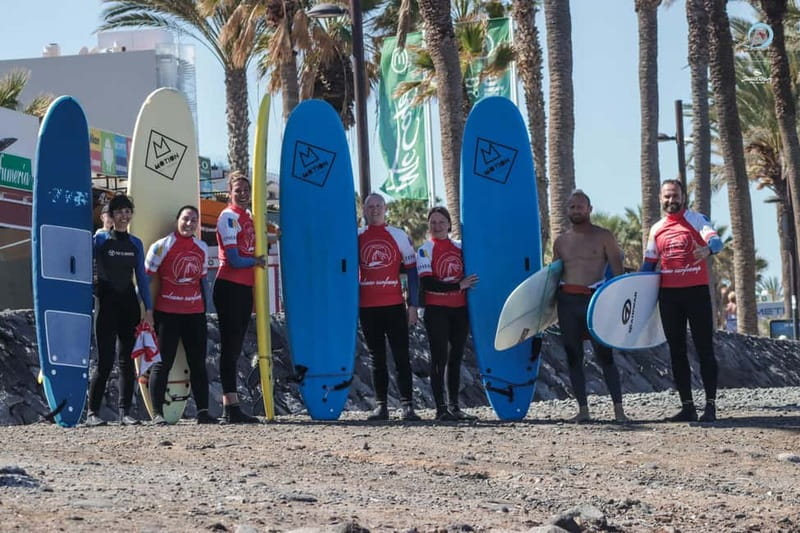
You’ll meet at the Surf Market Volcano surf school by the bar in the Parque Santiago 2 area, then head into action at Playa de Las Americas, one of Tenerife’s best-known surfing beaches. The lesson is 2 hours total, with a 30-minute theory block, wetsuit and board time right after, and an instructor who stays close to help you catch waves and correct your technique on the spot.
In This Review
- Key things to know before you get in the water
- Playa de las Americas: where your first waves actually happen
- The 2-hour flow: theory, wetsuit, and wave attempts
- Getting ready: gear included, towel and sunscreen are on you
- The coaching style: how instructors help you stand up
- Price and value: is $38 worth it?
- Who should book (and who should skip this surf lesson)
- Practical tips that will help you feel confident fast
- Should you book this beginner surf class in Tenerife?
- FAQ
- Where is the meeting point for the surf lesson?
- How long is the surf class?
- Does the lesson include theory time?
- What is included in the price?
- Do I need to bring a towel or sunscreen?
- Is the class suitable for non-swimmers?
- What age limits should I know about?
- What languages does the instructor speak?
- Can I cancel for a full refund?
Key things to know before you get in the water
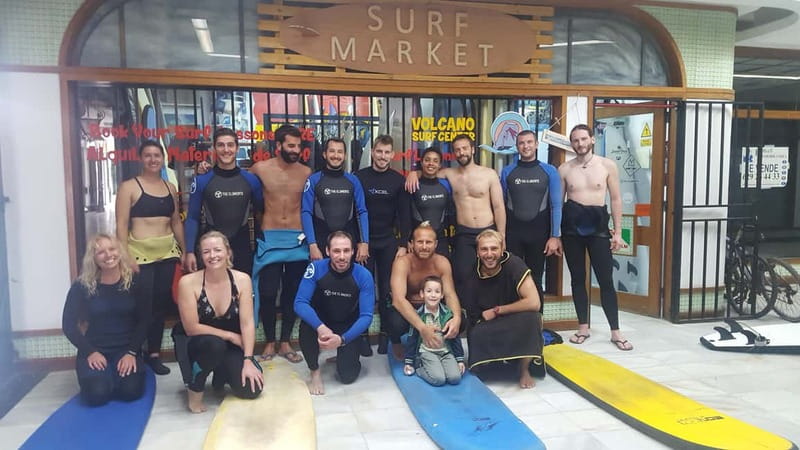
- Max 6 people per group means more attention and less waiting around
- 30 minutes of theory plus immediate practice so you learn and use it fast
- Instructor stays close for safety and wave-catching support
- Equipment included (wetsuit, board, boots) so you travel lighter
- Water and fresh fruit after the session helps you recover quickly
- Professional photo option is available, but you may want your own action cam for extra memories
Playa de las Americas: where your first waves actually happen
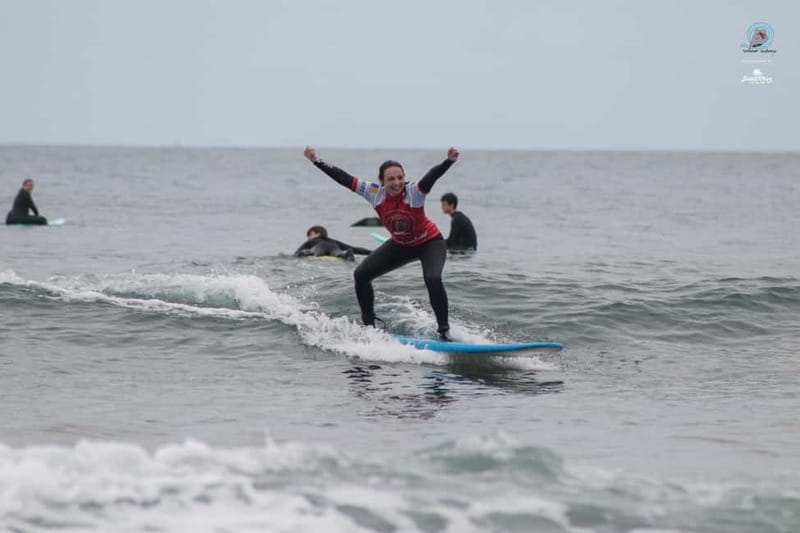
Playa de Las Americas is the reason this class works for beginners. It’s one of the most famous surf areas on Tenerife, so you’re not guessing where to go or whether you picked the right day. The lesson is built around getting you into the water with others, learning the basics, then translating that into real attempts on the waves.
There’s also a social side here that surprises people. You’re in a small group, learning something new, and you’ll be changing, suiting up, and walking to the water together. That turns the session into more than a workout. It becomes a chat-with-strangers kind of afternoon—many languages in one place, plus the shared goal of standing up without face-planting.
One more practical angle: the school’s meeting point is in the Parque Santiago 2 area, and the meeting location is Surf Market Volcano surf school next to the bar. That’s useful because it keeps things simple. You’re not trekking across the island, and you don’t need complicated public-transit math to show up on time.
You can also read our reviews of more tours and experiences in Tenerife.

The 2-hour flow: theory, wetsuit, and wave attempts
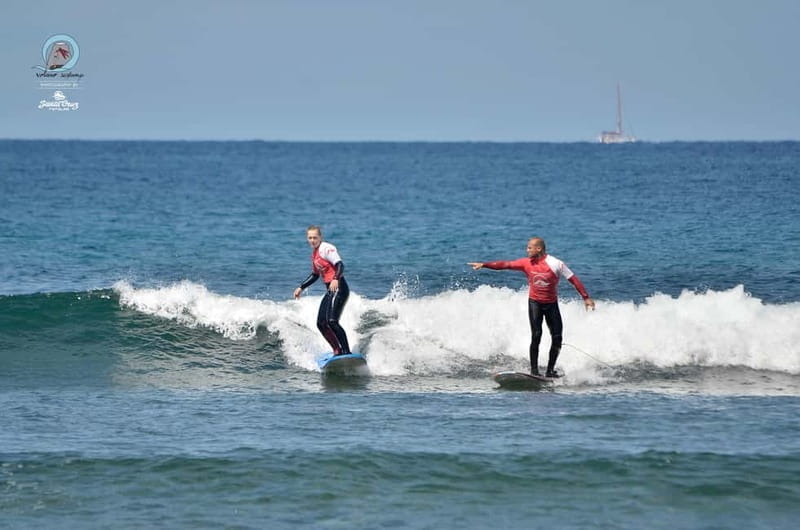
This is not a long, slow “watch and wait” lesson. The structure is straightforward: 30 minutes of theory, then you get kitted up and go right into the water together. That theory time matters because you’re not just learning surf tricks—you’re learning how to handle the environment safely.
Here’s what the lesson rhythm looks like:
First, you gather at the meeting point and start with instruction. The class covers what you need to know before you hit the surf, including how to go into the water safely. This is especially important for first-timers, because getting on the board is only half the battle. The other half is timing, positioning, and not panicking when the ocean has its own plan.
Next comes the gear step. You’ll put on a wetsuit and the required board boots, then everyone heads into the water together. The instructor stays close, so you’re not stuck on your own once you’re out there.
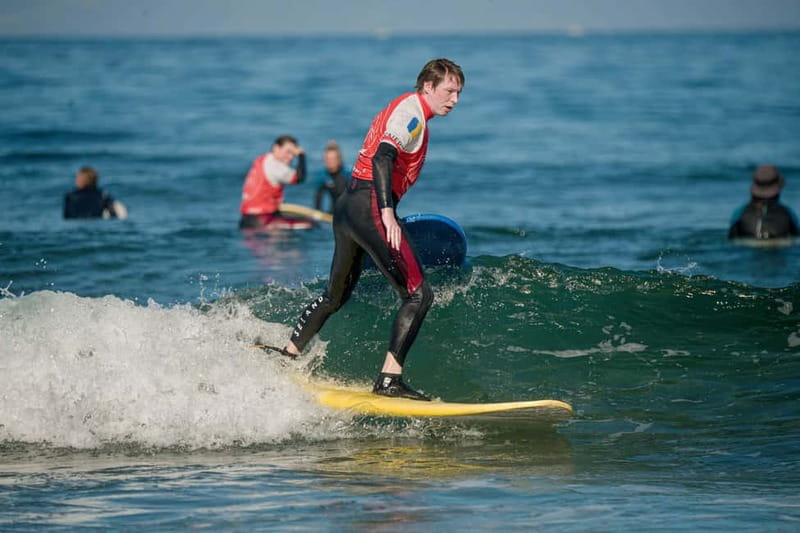
Then you practice wave skills. For beginners, that means learning how to start, how to balance, and how to catch and ride small waves. For intermediate surfers, it usually becomes about improvements—better positioning and more reliable wave catching. The goal is always the same: get you from “I think I’m doing it” to “I actually did it.”
At the end, you return to the school to store equipment and change clothes. Then there’s a short wrap-up where you talk through what you felt during the session. If you bought personal photos taken by a professional photographer, this is also where you’ll get that conversation going.
Getting ready: gear included, towel and sunscreen are on you
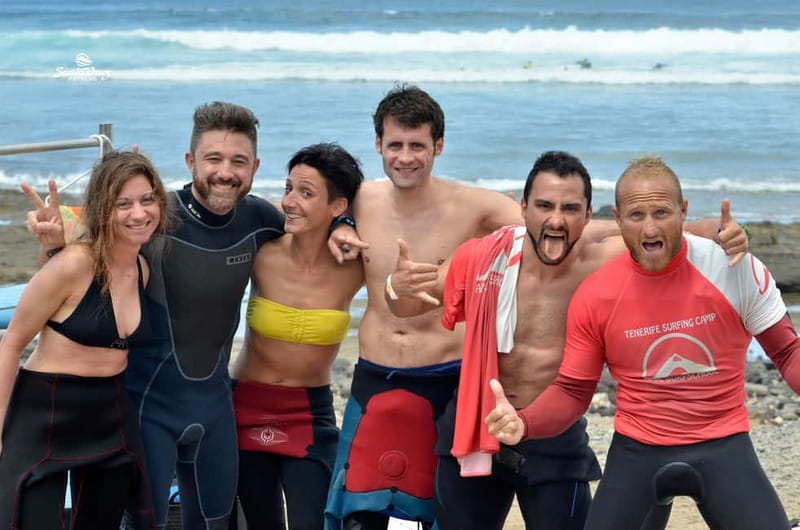
The best part of this course for your packing list is what they provide. Your ticket includes full surf equipment: wetsuit, board, and boots. That’s a big value win, because renting or buying those things can quietly inflate your costs.
But a few basics are still your job:
- Bring a towel (not included)
- Bring sunscreen (not included)
- Wear swimwear under your wetsuit setup
- Bring flip-flops for moving around before and after the session
- Bring beachwear you’re comfortable getting changed in
Also, keep your identity docs handy. You’re asked to bring a passport. And have either cash or a credit card available, since personal photos may be offered by a professional photographer.
Finally, think about fitness and comfort. They describe the activity as an extreme sport and note that a moderate fitness level is required. That doesn’t mean you need to be a gym hero. It does mean you’ll be using your legs and core in a wet environment, and you’ll be wearing a wetsuit in conditions that can feel colder than you expect.
The coaching style: how instructors help you stand up
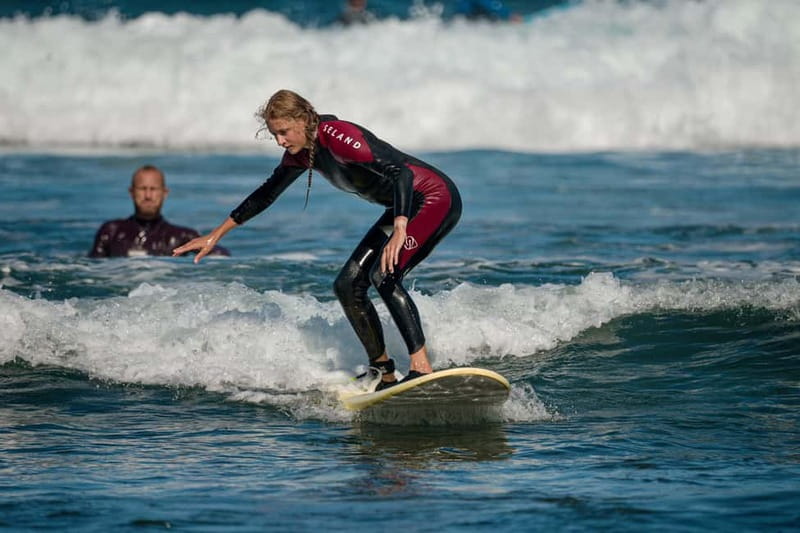
A lot of surf lessons fail beginners with one problem: the instructor teaches concepts, then disappears. This class keeps the instructor close, so you’re not left to figure things out while the waves keep rolling.
Instructors here—Spanish, Italian, English, or French—work in a way that’s friendly but focused. A standout example from what people report is Israel’s approach. People describe him as patient, supportive, and tuned in to making sure everyone gets chances to try. That matters because beginners don’t just need technique. They need timing, calm, and quick feedback.
There’s also a big difference between “you’re learning” and “you’re actually surfing.” The session is built to get you catching waves with instructor support right there in the moment. That’s why the small group size is more than a nice perk—it’s the reason you don’t get lost.
You’ll also notice the lesson adapts to what’s happening out in the water. If conditions aren’t ideal at the start, you might end up with extra time in the water (some sessions can stretch longer). That’s a smart way to handle surf reality. The ocean doesn’t care about your schedule, so a good school adjusts.
Price and value: is $38 worth it?
At about $38 per person for a 2-hour lesson, the value comes from three things, not just the low headline price.
First, you get equipment. Wetsuits and boards aren’t free. Even if you already surf occasionally, you’ll likely save money and hassle by showing up without renting.
Second, you get instruction and safety support. The class includes a titled instructor and civil/medical insurance, plus structured teaching time with guidance on how to enter the water safely. For a sport like surfing, insurance and supervision aren’t small details—they’re part of the actual cost of doing things right.
Third, you get a social, destination experience in one package. The session is at a major surf beach in the south of Tenerife. You’re not paying extra for a long transfer across the island, and you end with water and fresh fruit, which is a real recovery touch after you’ve worked your shoulders and legs.
One careful note: towel and sunscreen aren’t included, and transfers aren’t included. So plan for those modest add-ons. Still, overall, the combination of included equipment, guided practice, and small-group attention makes the price feel fair.

Who should book (and who should skip this surf lesson)
This surf class is designed for beginners and intermediates. That’s why the structure makes sense: beginners start with basics and safety, and intermediates still get value through corrections and wave-catching support.
This is likely a great fit if you:
- Want a hands-on activity that gets you in the water fast
- Like learning in a small group (max 6)
- Want an adrenaline experience that still has clear instruction and supervision
- Enjoy meeting people from different countries while doing the same challenging thing
This is not for everyone. The class isn’t suitable for:
- Children under 10
- Pregnant women
- People with back problems
- Non-swimmers
- People with a cold
- People with haemophilia
- People over 55
If you’re on the edge for any of those categories, it’s worth double-checking with the provider before booking. Surf isn’t a casual stroll, even when it’s beginner-friendly.
Practical tips that will help you feel confident fast
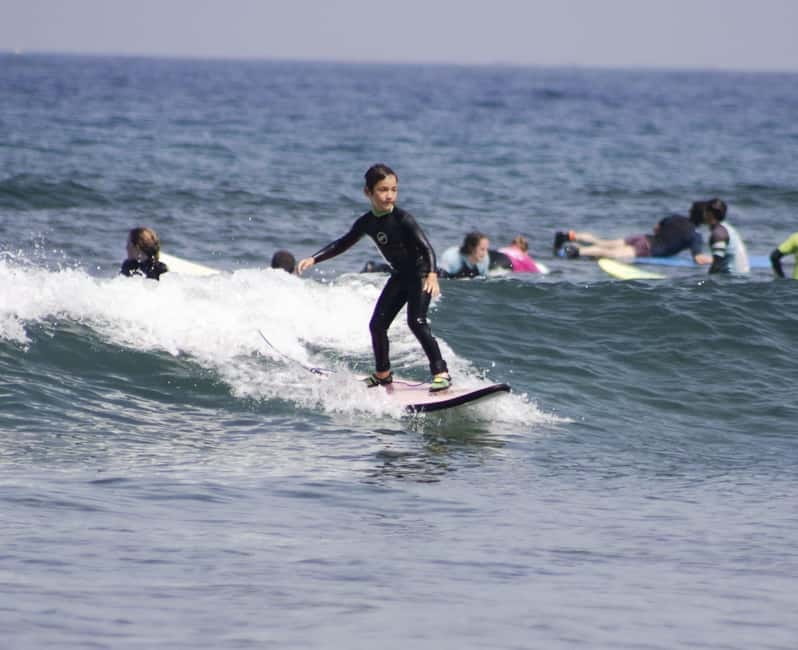
Here are the things that tend to improve your experience immediately—based on how these lessons are run and what’s emphasized in the session format.
Bring the right mindset: you’re learning technique under wave pressure. That means you’ll wipe out sometimes. The goal isn’t to be perfect; it’s to be coached, corrected, and able to try again.
Wear what you can move in. You’ll be out in the water and changing soon after. Flip-flops make the pre- and post-session walk way easier.
For photos and memory: there’s an option to buy personal pictures taken by a professional photographer. If you want more control over your own angles and timing, consider bringing an action cam (people sometimes plan for this because the lesson may not cover you the way you’d expect for every try).
Finally, be ready for the water to decide the pace. If wave conditions aren’t great at first, a good lesson adapts, possibly extending the time so you still get real attempts. That flexibility is part of why this format can feel more satisfying than a fixed “two hours no matter what” schedule.
Should you book this beginner surf class in Tenerife?
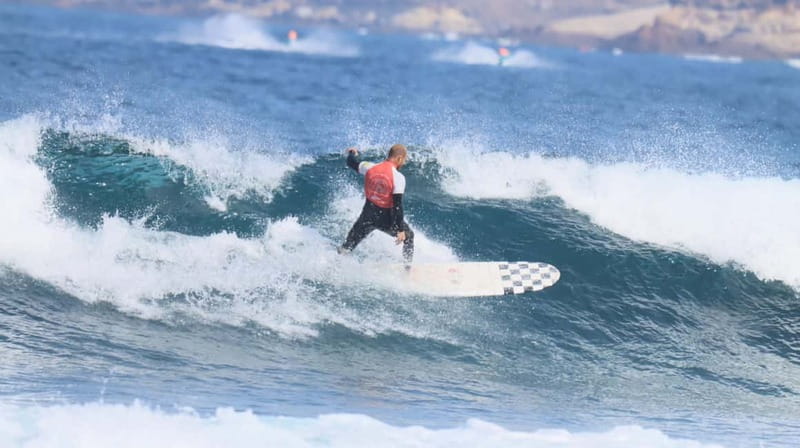
If you want a first-time-friendly surf lesson with small-group attention, equipment included, and coaching that helps you get onto the board, I’d book it. The mix of safety instruction, immediate practice, and instructor support (including instructors like Israel) is a strong match for people who learn best with guidance and feedback in the water.
Book it if your goal is simple: stand up more than once, feel the waves, and leave with a real sense of progress—not just a souvenir t-shirt.
Skip it if you don’t meet the fitness needs or any of the stated non-suitability categories apply (non-swimmers, back problems, pregnancy, and so on). Surf is amazing, but it should be the right kind of amazing for your body and comfort level.
If you’re checking one thing before you go: pack your towel and sunscreen, and plan to arrive ready for a wet, active 2 hours at Playa de Las Americas. That’s the difference between enjoying the lesson and spending the first wave worrying about what you forgot.
FAQ
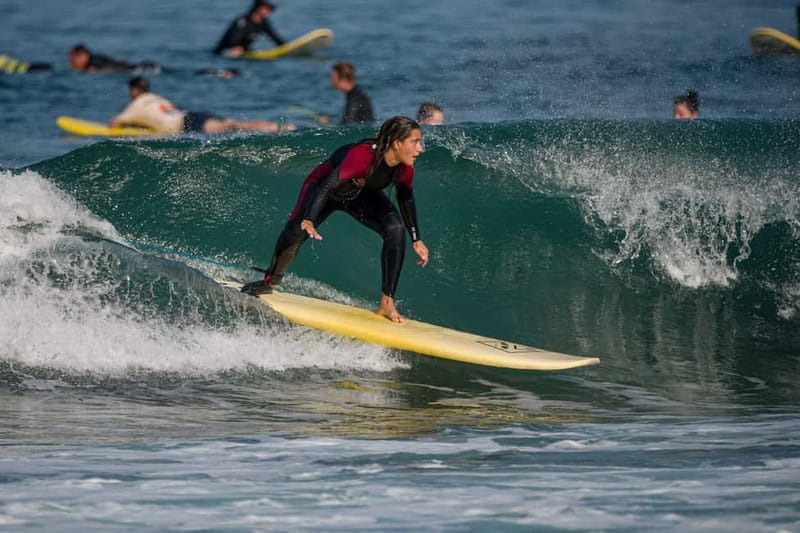
Where is the meeting point for the surf lesson?
You’ll meet at Surf Market Volcano surf school, next to the bar, in the Parque Santiago 2 area.
How long is the surf class?
The total duration is 2 hours.
Does the lesson include theory time?
Yes. The lesson includes a 30-minute theoretical part before you go into the water.
What is included in the price?
Included are the 2-hour surf lesson, full equipment (wetsuit, board, and boots), a titled instructor, civil/medical insurance, and water and fresh fruit after the lesson.
Do I need to bring a towel or sunscreen?
Yes. A towel and sunscreen are not included.
Is the class suitable for non-swimmers?
No. People who are non-swimmers are not suitable for this activity.
What age limits should I know about?
Children under 10 are not suitable.
What languages does the instructor speak?
Instructors can teach in Spanish, Italian, English, and French.
Can I cancel for a full refund?
Yes. You can cancel up to 24 hours in advance for a full refund.