REVIEW · TENERIFE
PADI Advanced Open Water Diver Course (AOWD) – 2 days
Book on Viator →Operated by Scubanana Dive Center · Bookable on Viator
A good course is less about paperwork and more about good coaching. In Tenerife, this PADI Advanced Open Water Diver (AOWD) program runs as a small-group experience based out of Radazul, so you get real feedback as you build comfort at new depths. I especially like that the gear and PADI fees are included, which means you can travel lighter and focus on learning.
The best part is the mix of skills: buoyancy and navigation practice, plus deeper water work, shipwreck training, and a night underwater session—so your AOWD doesn’t feel like one long repeat of what you already know. One consideration: you do need to already hold an Open Water Diver certification and be fit to go in the water, and you should avoid doing it too close to a flight time.
In This Review
- Key things I’d plan around
- Why Tenerife and Radazul fit AOWD so well
- How the AOWD format builds real confidence fast
- Scubanana’s setup in Puerto Deportivo (and why it matters)
- The AOWD skill mix you should expect in Tenerife
- Gear, learning materials, and the value of $539.48
- What your two days actually feel like (9:00 am start)
- Instructor quality: the difference between doing skills and mastering them
- Practical tips to make the course easier on you
- Who should book this AOWD in Tenerife—and who should pause
- Should you book Scubanana’s PADI Advanced Open Water Diver course?
- FAQ
- What certification do I need to take the PADI Advanced Open Water Diver course?
- How long is the course in Tenerife?
- What time does the experience start?
- How many people are in the group?
- Is the course offered in English?
- What’s included in the price?
- What is not included?
- Do Adventure components count toward PADI specialty courses?
- Should I bring my own mask or log book?
Key things I’d plan around
- Max group size of 8 keeps instructor attention high
- Gear included (no rental shopping stress on arrival)
- AOWD activities span buoyancy, navigation, deep, shipwreck, and night
- Small base in Radazul makes it easy to access local water sites
- Adventure components may count toward PADI specialty first sessions
- Bring your own mask idea if fit matters to you, and don’t forget your log book
Why Tenerife and Radazul fit AOWD so well
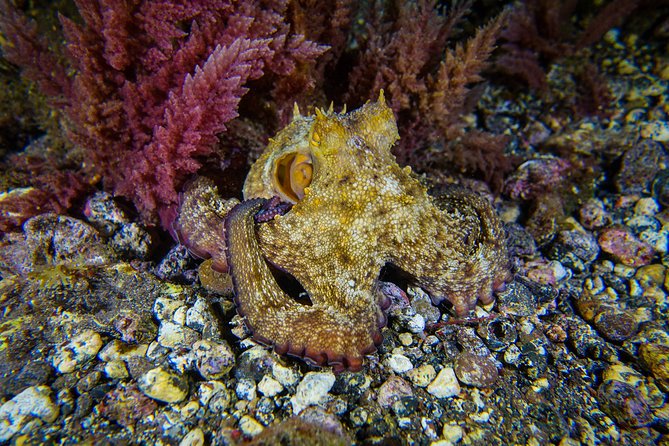
Tenerife is one of those places where the learning feels practical. You’re based in Radazul (Puerto Deportivo) and then work your way through sites along the east coast, so you spend less time stuck on logistics and more time actually improving your control underwater.
The other smart detail is the pace. This is a 2-day course that’s designed to build skills step-by-step, not just check boxes. With a max of 8 people, the instructors can slow down when your trim, buoyancy, or navigation needs extra attention.
You’ll also appreciate the meeting setup. You start at the Scubanana facility near the Puerto Deportivo area (Av. Colón, nº1, 38109 Radazul), and the area is described as close to public transportation—helpful if you’re not renting a car.
You can also read our reviews of more tours and experiences in Tenerife
How the AOWD format builds real confidence fast
PADI AOWD is not really for people who feel perfectly “advanced” already. The intent is pretty clear: you can enroll right after earning your Open Water Diver certification, and the course is built to help you expand comfort and control through different Adventure components.
In your log, you’ll do a series of underwater skills sessions that match the AOWD structure. Based on what you’ll experience here, think of it as a blend of technical practice and fun exploration: you work on how to move and manage yourself, and then apply it in new kinds of conditions and themes.
A nice added value is the credit possibility. Each Adventure component may credit toward the first session of the matching PADI Specialty course. If you already completed a specialty, ask ahead whether you can still apply credits from the AOWD work.
Scubanana’s setup in Puerto Deportivo (and why it matters)
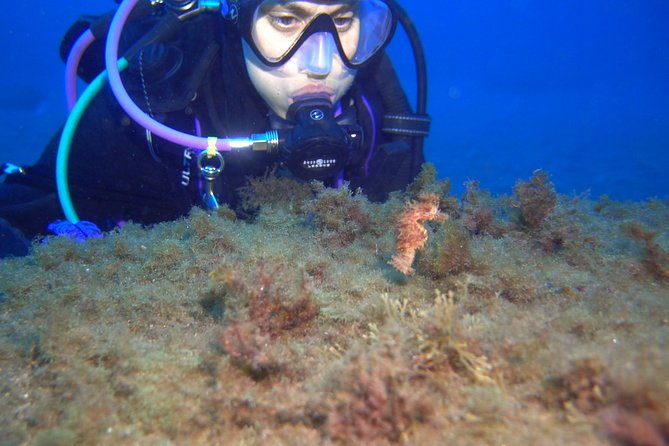
Your base matters more than most people expect. When the training center is easy to get to, it reduces stress on both mornings and keeps you focused on learning rather than logistics.
Scubanana runs the program out of the Puerto Deportivo area in Radazul, with classes starting at 9:00 am. From there, you go to nearby underwater locations and come back to the same meeting point at the end of the activity.
What stands out from the way the center is described is how organized and clean it feels. The equipment is also described as being in excellent condition, which matters because well-maintained gear reduces the time you spend fighting small issues (like fit or performance) and increases the time you spend practicing the skills your instructor is teaching.
The AOWD skill mix you should expect in Tenerife
Your AOWD here is structured around the classic “spread” of experiences that make the course feel like a step forward rather than a repeat. Across the five core underwater sessions, you’ll cover:
- Buoyancy control: This is where you learn to hold position and manage your body in the water with less effort. Buoyancy is often the first thing that makes new divers feel “scared,” so getting coached early pays off.
- Navigation: You’ll practice finding direction and moving more confidently underwater instead of drifting.
- Deep water work: You’ll build comfort at greater depth than you did in Open Water, with guidance to keep everything calm and controlled.
- Shipwreck training: You’ll experience a structured wreck theme in a way that’s meant to teach awareness and handling, not just sightseeing.
- Night underwater session: This is a big one for many students because visibility and timing feel different. You’ll get supervised practice so it’s not random or improvised.
Instructors are a big part of why this program gets strong marks. Names that come up include Pauline, Giulia, Fran, Denis, and Izaac, with others such as Benny, Isaac, Henning, Kathi, and Ubay mentioned across different course participants. The overall pattern is consistent: instructors prioritize safety first, then keep the atmosphere relaxed so you can actually learn without feeling rushed.
Gear, learning materials, and the value of $539.48
At $539.48 per person, the headline question is whether you’re paying for real training or just paying for access. Here, a lot of the cost is tied up in what you’d otherwise have to solve yourself.
Included in the price:
- Local taxes
- Diving instructor
- Diving gear
- Learning materials
- PADI fees
Not included:
- Diving insurance
- photos
What that means for you: this pricing is easiest to justify if you’re arriving without scuba gear already sorted. Gear rental can add up quickly, and dealing with rental pickups at your travel pace is rarely fun. With gear included, you can spend your time preparing mentally for the skills—buoyancy, trim, navigation—rather than hunting for equipment compatibility.
A practical note from the program experience: one mask-fit lesson shows up repeatedly. If you’re picky about comfort, consider bringing your own mask. A mask that doesn’t seal well makes everything harder, especially at night or during more technical skills where you want to stay focused on technique. Also, don’t forget your log book.


What your two days actually feel like (9:00 am start)
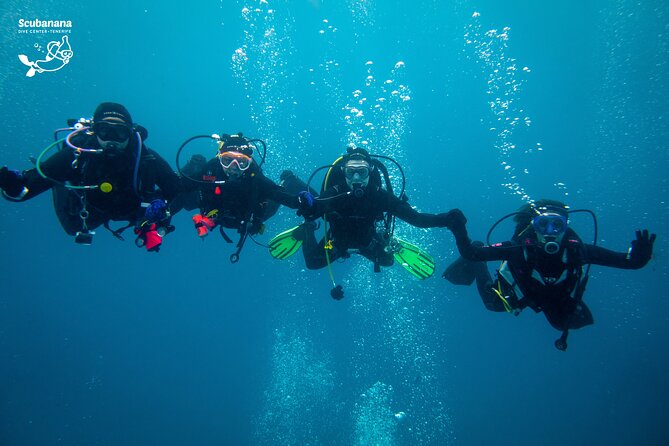
Even without a minute-by-minute schedule listed, you can count on the rhythm of an AOWD: morning arrival, equipment and briefing, then a water session built around that day’s focus. Because the meeting time is 9:00 am, you’re not fighting a late start, and you’ll likely feel a bit of “real training” momentum right away.
Day 1 tends to get you squared away with core skills (buoyancy and navigation are commonly early priorities), while Day 2 moves deeper into variety—deep water and wreck themes—then wraps with the night underwater experience or places it in the sequence depending on conditions.
The good news is you’re not bouncing all over the island. The experience is described as including water sites around Radazul and along the east coast, which keeps travel time reasonable. Still, expect the ocean to influence timing. Conditions can affect which sites are used and when, so build flexibility into your Tenerife plans.
Instructor quality: the difference between doing skills and mastering them
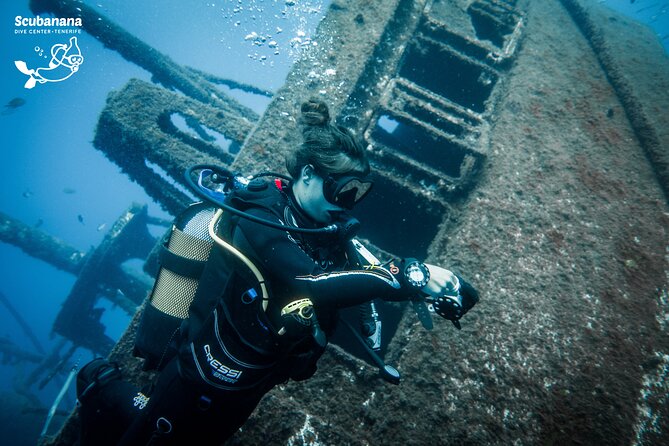
AOWD works when your instructor can correct quickly and clearly. The descriptions around this program repeatedly point to instructors who are both professional and approachable—people who keep safety central while still making the experience enjoyable.
You’ll also notice that different instructors have different coaching styles, which is helpful if you learn better through certain explanations or demonstrations. Names mentioned include Pauline and Giulia for buoyancy and navigation, while Fran is linked with deep and shipwreck work and even first-time night underwater guidance.
There’s also a strong theme of close supervision when multiple divers are in the group. Small-group size helps, but the real win is that your instructor can respond to different comfort levels without letting the course speed up in a way that leaves less-confident students behind.
Practical tips to make the course easier on you
Here are the things I’d do before you show up, based on what the experience emphasizes and the practical advice you’ll hear from instructors:
- Be rested and realistic about flights: you should avoid going in the water within 12 hours of a flight.
- Plan for moderate fitness: the program asks for travelers with moderate physical fitness, so if you get winded easily, train walking and basic mobility before you arrive.
- Bring your own mask if you can: fit matters a lot once you’re busy with buoyancy and navigation.
- Don’t forget your log book: it’s part of what you’ll use as you build credentials and track your training progress.
Also, if you’re taking this course because you want a future specialty, pay attention to which Adventure components feel most satisfying. Those are often the skills that motivate you to continue with PADI Specialty courses next.
Who should book this AOWD in Tenerife—and who should pause
This program is a great match if:
- You hold Open Water Diver certification and want to expand your range.
- You want strong supervision without a big crowd.
- You like the idea of learning a mix of skills rather than only repeating shallow comfort.
- You’re planning future PADI specialties and want AOWD to support that progress.
You might want to pause if:
- You’re not currently certified Open Water Diver (the course requires it).
- You aren’t physically able to dive right now.
- Your travel schedule includes a flight too soon after your training (the “12 hours” rule is there for a reason).
- You’re uncomfortable with night and navigation-style skills; these can be challenging, but the coaching is designed to make them teachable.
Should you book Scubanana’s PADI Advanced Open Water Diver course?
If you want a high-value AOWD that’s structured, instructor-led, and easy to manage logistically, I’d lean yes. The small group size, gear included, and the full set of AOWD skill themes (buoyancy, navigation, deeper water, wreck work, and a night underwater session) add up to a course that feels like progress, not just time in the water.
It’s especially worth it if you’re visiting Tenerife and you don’t want to wrestle with equipment rentals or complicated scheduling. Just go in knowing you’ll need to be certified, physically ready, and willing to focus on technique. If that’s you, this course is a solid next step.
FAQ
What certification do I need to take the PADI Advanced Open Water Diver course?
You need to be a certified Open Water Diver to take part.
How long is the course in Tenerife?
It runs for about 2 days.
What time does the experience start?
The start time is 9:00 am.
How many people are in the group?
The maximum group size is 8 travelers.
Is the course offered in English?
Yes, it’s offered in English.
What’s included in the price?
Local taxes, the diving instructor, diving gear, learning materials, and PADI fees are included.
What is not included?
Diving insurance and photos are not included.
Do Adventure components count toward PADI specialty courses?
Each Adventure component may credit toward the first session of the corresponding PADI Specialty course. If you’ve already taken a specialty, ask whether you earned credit from the AOWD components.
Should I bring my own mask or log book?
It’s recommended to bring your own mask for comfort and fit, and you should also not forget your log book.