REVIEW · TENERIFE
First Dive Experience in Tenerife
Book on Viator →Operated by Marcin Andrzej Glowacki · Bookable on Viator
Stingrays and turtles, your first try-scuba day. I love that you start in Bay of Stingrays with a calm, friendly animal vibe, and that the staff runs a one-to-one student-to-instructor approach for new people. I also like how instructors such as Kamil and Jordi keep the mood steady when you’re nervous. One consideration: stingray sightings are common, but they’re not guaranteed every single session.
This experience is built for first-timers who want the real underwater feeling without needing prior certification. You’ll get an introductory scuba experience from Puerto de Santiago, with English offered and training tailored to the language you understand. Hotel pickup is available, but the route cost depends on where you’re staying in the south.
The total time is about 4 hours, with a minimum age of 8. Plan to share your height and shoe size when you book, since fitting matters. If you’re sensitive to ear pressure, tell your instructor and go slowly, since at least one first-timer had ear discomfort and worked through it with expert help.
In This Review
- Key Things to Notice Before You Go
- First Try-Scuba in Puerto de Santiago’s Bay of Stingrays
- The 30-Minute On-Land Training: Safety, Gear, Breathing
- What the Underwater Session Feels Like (20 vs 40 Minutes)
- Marine Life You Can Expect: Rays, Sea Turtles, and Volcanic Reef Stops
- Instructor Attention and Calm Coaching for First-Timers
- Getting There from Arona, Costa Adeje, and El Médano
- Price and Value at $90.51: What’s Included and What You’ll Pay Extra For
- Best Fit for Families, Nervous Swimmers, and Future Underwater Plans
- FAQ
- FAQ
- Do I need scuba certification to do this experience?
- How long is the underwater time, and how much training do I get?
- What is the minimum age for this activity?
- What’s included in the price, and what costs extra?
- How does pickup cost work from different areas in Tenerife?
- Can I cancel for free?
- Should You Book This Try-Scuba Session in Tenerife?
Key Things to Notice Before You Go
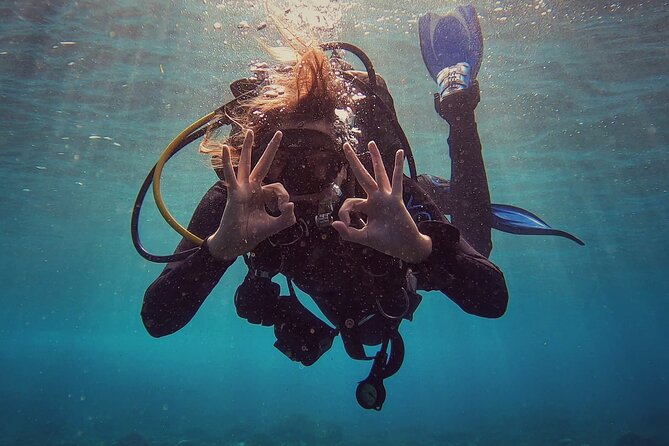
- Bay of Stingrays is volcanic-reel country with lots of fish life around the bottom, so you’re not just waiting for one animal sighting.
- You choose 20 or 40 minutes underwater, which is perfect when you’re trying the sport without committing to a longer day.
- Max 2-to-1 supervision during the water time keeps things controlled and reduces the “lost in the group” feeling.
- Instructors adjust fast for nervous beginners, including patient coaching from staff members like Kamil, Jordi, and Gaya.
- Language support can be real support, including translation help you may get from staff like Yulia if you’re not fluent in English.
- Stingrays are peaceful, not aggressive, but you should still expect that sightings can vary.
First Try-Scuba in Puerto de Santiago’s Bay of Stingrays
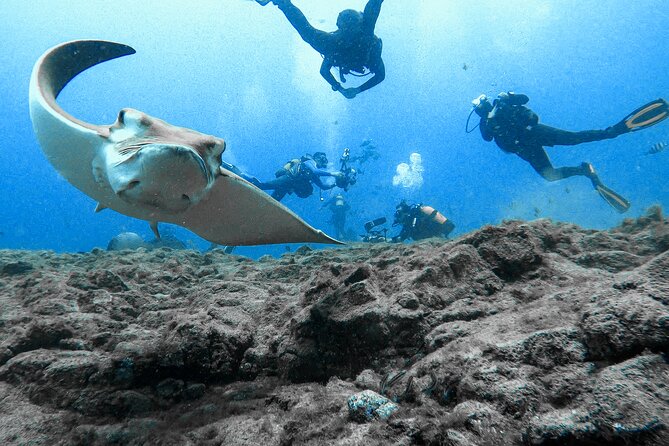
Tenerife is a strong pick for a first scuba experience because the water is set up for beginners. This one runs from Puerto de Santiago, and the star location is the Bay of Stingrays. The whole point here is simple: you learn the basics, then you watch marine life close up in a calmer environment.
What makes the Bay of Stingrays feel beginner-friendly is the animal behavior. The rays you’re likely to see are described as peaceful and friendly, not aggressive. Add to that the volcanic reef along the bottom, and you get more than a single “spot check” wildlife moment.
Also, you’re not dealing with a big boat day. The operator’s center is right by the water entrance in the bay, which usually means less time shuffling around and more time getting comfortable. Review stories repeatedly praise how the crew kitted people quickly and stayed attentive once everyone was in the water.
You can also read our reviews of more tours and experiences in Tenerife.

The 30-Minute On-Land Training: Safety, Gear, Breathing
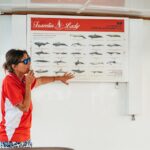
Your day starts with training—about 30 minutes. This is where you learn the essentials of scuba safety, equipment, and breathing techniques. It matters because the underwater part only works if your brain and body get the rules down early.
You’ll do a pre-water briefing in a language you understand. Even if the tour offers English, the setup is meant to match you, and that showed up in real ways. One review noted translation help from Yulia so the participant could follow the instructor clearly while staying relaxed.
Then comes equipment prep. You’ll get geared up with supervision, which is a big deal for beginners. With most first-timer experiences, the most stressful moment is not the underwater time—it’s the gear confusion and trying to remember steps while you’re cold, excited, and a bit overwhelmed.
Here, the staff focus is on getting you comfortable with breathing and control first. That’s why people often mention feeling safe and looked after the entire time in the water, not just at the start.
What the Underwater Session Feels Like (20 vs 40 Minutes)
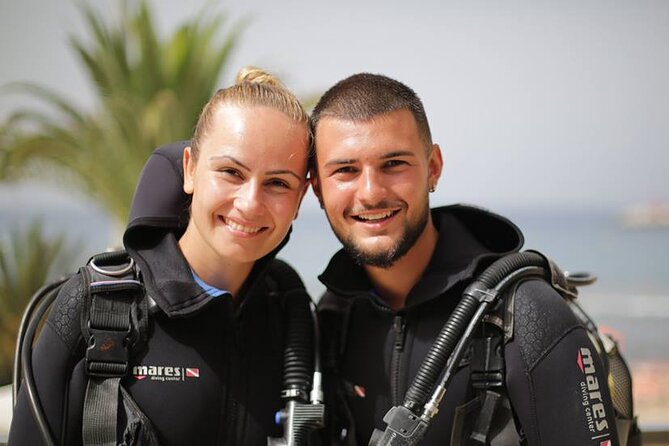
You can choose your underwater session length: 20 minutes or 40 minutes. For many first-timers, that choice is what makes the experience feel worth it. Short enough to stay confident, long enough to actually understand what scuba feels like underwater.
The experience is also structured to keep you from feeling “solo.” During the water time, your try-scuba group stays under instructor supervision at a maximum 2-to-1 ratio, and some personal stories point to an even closer one-to-one approach. That tight ratio helps you keep your bearings, manage breathing, and ask questions without losing the group rhythm.
If you’re anxious, the format helps. Several reviews mention instructors doing a calm job of putting beginners at ease. One person specifically said the instructor handled them the whole time in the water. Another highlighted patience and clear explanations from Gaya, with no rushing.
One practical note: stingray sightings aren’t guaranteed for every session. The bay has them often, and the operator says you encounter stingrays daily, but conditions can still affect what you see. That’s normal in marine life watching, and it’s also why you should aim to look for the full ecosystem, not only one animal.
Marine Life You Can Expect: Rays, Sea Turtles, and Volcanic Reef Stops
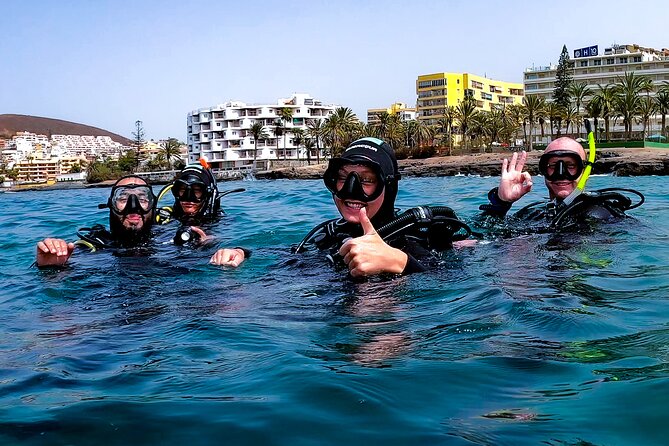
This is not just a “try scuba, then swim past rocks” situation. The experience is framed around wildlife-rich waters in Stingray Bay. The operator describes a bottom partly covered by volcanic reef, and that matters because reefs act like magnets for fish.
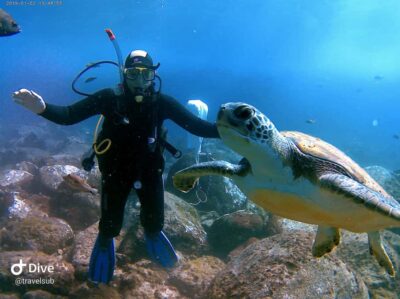
They say you can watch around 15 species of fish and marine animals during the session. The listed possibilities include rays and turtles, plus crabs, moray eels, octopus, cuttlefish, shrimps, and more. That range helps beginners feel like the trip is delivering value, even if visibility isn’t perfect.
Two things I’d focus on when you’re down there:
- Look for motion patterns, not just single animals. Schools of fish can be easier to spot than a single turtle at distance.
- Stay calm and slow, because the calmer you are, the more your eyes adjust and the more you notice smaller creatures.
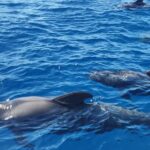
In review accounts, people often mention seeing stingrays and schools of fish. One person also described encountering schools of silvery fish and colorful fish. Another said they saw stingrays around the bay area, and someone else mentioned even an angel shark. That last one is a nice reminder: Tenerife waters can surprise you.
And yes, ears can be part of the story. One first-timer mentioned ear issues during descent, but the instructor helped them adapt and they enjoyed the session afterward. If you’ve had ear problems on planes or in pools, bring it up early and let the instructor control the pace.
Instructor Attention and Calm Coaching for First-Timers
The best part of this experience is how strongly it’s built around beginner comfort. You’re not dropped into a group and told to follow. The training includes safety and breathing, and the water time is supervised at a tight ratio.
In real reviews, you see the same themes again and again: attentive instructors, clear explanations, and a crew that doesn’t treat first-timers like a nuisance. Kamil comes up often, including stories about nervousness turning into confidence. Jordi is praised for attentiveness and helping manage issues during descent.
You’ll also find strong staff energy in the pre-water stage. One review described help with kitting from Mass and Samu before the underwater time. Another mentioned a manager welcoming the group and helping with translation needs. These details matter because a smooth start makes the whole session feel safer.
Also, the experience is designed so you don’t need certification or prior underwater experience. That removes a huge barrier. You’re paying for instruction time and supervision, not for your existing skills.
If you want a “learn to feel safe” first day rather than a “bucket list photos only” day, this style fits.

Getting There from Arona, Costa Adeje, and El Médano
Location-wise, you’ll either meet at the starting point or use pickup. The meeting point is on Paseo Maritimo, 17, 38650 Arona, Santa Cruz de Tenerife, Spain. The activity ends back at the meeting point.
Pickup is offered, but there are set surcharges depending on where you’re staying in the south. If you’re in Callao Salvaje, Playa Paraíso, La Caleta, Fañabe, Costa Adeje, Las Américas, Los Cristianos, or Costa Silencio, pickup costs 4 euros per person. If you’re around Puerto Santiago, Playa la Arena, or El Medano, pickup is 15 euros per car, max 8 passengers. From Golf del Sur, it’s 10 euros per car.
That setup matters for value. If you’re traveling with a small group and you’re near the pickup zones, the car price can be spread out and pickup may feel more reasonable. If you’re farther out or alone, budget that pickup fee in your total mental math.
One more practical note: an air-conditioned vehicle is not included. If you’re going in hot months, plan for standard comfort, and bring water on your own for before or after the session.
Price and Value at $90.51: What’s Included and What You’ll Pay Extra For
The listed price is $90.51 per person for roughly 4 hours. For a first scuba experience, the value isn’t just the underwater time. It’s what you’re buying:
- Instruction and safety briefing before you go in
- Supervision during the water time with strict control for beginners
- Equipment provided, so you’re not renting gear all over town
Included items list driver/guide and use of snorkeling equipment. Food and drinks are not included, so plan to handle snacks and hydration separately. Souvenir photos are also not included, though you can purchase them. Several review stories mention photos that turned out great, so if you want that “I was there” proof, budget for photo purchases.
Pickup is “offered,” but it’s not free everywhere. Remember those pickup fees by zone so you don’t get surprised. In the south, pickup can be a small line-item, but it can still change the total cost in your head.
If you’re debating between doing this now versus later, here’s the simple logic: this is built to remove the intimidation factor. You get a guided first underwater experience without certification barriers, and you get to decide if the sport is for you afterward.
Best Fit for Families, Nervous Swimmers, and Future Underwater Plans
This experience works well if you’re bringing kids or you’re a true beginner. The minimum age is 8 years, and the training plus supervision structure is clearly aimed at younger participants who need steady coaching.
It’s also a good fit if you get nervous before water activities. Reviews mention anxiety turning into comfort thanks to staff who explain clearly, don’t rush, and stay close in the water. If you’re the type who needs a calm voice and clear steps, instructors like Kamil, Gaya, Jordi, Cristian, and others show up repeatedly in positive feedback.
If you’re a non-English speaker, don’t assume you’re out of luck. The experience offers English, but training is done in a language understood by the participant, and at least one review described translation help from Yulia.
Who might hesitate:
- If you strongly prefer long underwater time, the 20 or 40 minute options are limited on purpose. It’s a first experience, so the session stays controlled.
- If you want a guaranteed animal checklist, you should know stingrays aren’t guaranteed every time, even though they’re encountered daily.
FAQ
FAQ
Do I need scuba certification to do this experience?
No. The experience is designed for people with no scuba certification or prior experience.
How long is the underwater time, and how much training do I get?
You’ll get about 30 minutes of training, and you can choose either a 20-minute or 40-minute introductory underwater session. The overall experience is about 4 hours.
What is the minimum age for this activity?
The minimum age is 8 years.
What’s included in the price, and what costs extra?
Included items are the driver/guide and use of snorkeling equipment. Food and drinks are not included, souvenir photos are available to purchase, and an air-conditioned vehicle is not included.
How does pickup cost work from different areas in Tenerife?
Pickup is available with different prices by area:
- 4 euros per person from Callao Salvaje, Playa Paraíso, La Caleta, Fañabe, Costa Adeje, Las Américas, Los Cristianos, Costa Silencio
- 15 euros per car from Puerto Santiago, Playa la Arena, and El Medano (max 8 passengers)
- 10 euros per car from Golf del Sur
Can I cancel for free?
Yes. You can cancel for a full refund if you cancel at least 24 hours before the experience start time.
Should You Book This Try-Scuba Session in Tenerife?
Book it if you want a real first underwater experience with tight supervision, beginner-focused training, and a high chance of seeing rays, turtles, and a lot of fish around a volcanic reef. The combination of a calm setting, patient coaching from instructors like Kamil and Jordi, and the ability to choose 20 or 40 minutes makes it a smart way to test the sport.
Skip it if you’re chasing guaranteed stingray sightings or you specifically want very long underwater time. This is intentionally a controlled try-scuba experience, not a long technical training day.